


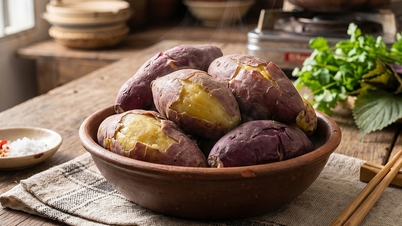
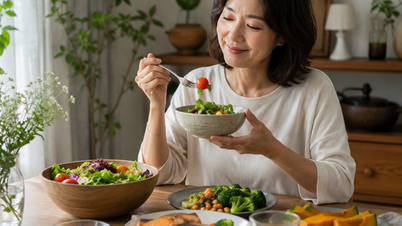
Vegetables provide fiber that is good for the digestive system - Illustration: XUAN MAI
How does fiber work?
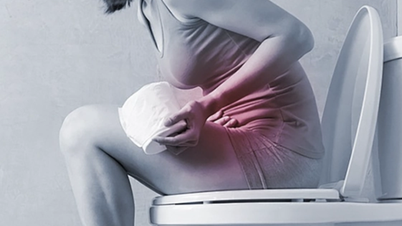
Sharing her insights on this issue, Ms. Tran Thi Tham, M.Sc., from Bach Mai Hospital, stated that fiber in vegetables plays a crucial role in preventing and improving constipation. Fiber's mechanism involves absorbing water, swelling, increasing stool volume, and softening it, thereby stimulating bowel movements and facilitating easier digestion.
However, if the body is not adequately hydrated, fiber can draw water back from the stool and into the intestines, making the stool drier and harder, and worsening constipation. This is why many people eat a lot of vegetables but still have difficulty digesting them.
Nutrition experts say that fiber is divided into two main groups:
Soluble fiber is found in oats, bananas, apples, beans, etc. This type of fiber forms a gel, which helps soften stool and nourish beneficial gut bacteria.
Insoluble fiber is abundant in leafy green vegetables. It helps increase stool bulk and aids in the elimination of feces.
Each type of fiber plays a different role. Therefore, instead of eating a lot of just one type of vegetable, it's important to diversify your diet, combining leafy greens, whole fruits, beans, nuts, and whole grains.
What can I do to improve my digestion?
According to experts at Bach Mai Hospital, to effectively improve the aforementioned situation, a combination of factors is needed instead of simply increasing the amount of green vegetables.
First and foremost, it's essential to drink enough water every day, preferably plain water. Water requirements depend on weight, weather, activity level, and health conditions. For adults, the average water intake is approximately 40-50ml/kg/day.
However, people with heart failure, kidney failure, edema, or ascites should follow their doctor's instructions and not increase their fluid intake on their own.
In addition, adults need a minimum of 20-22g of fiber per day (equivalent to 600-800g of fruits and vegetables). To reach this level, each meal should include about one cup of cooked vegetables, along with fruits, nuts, and whole grains.
Increasing fiber intake should be done gradually, avoiding eating too many vegetables in one meal and then neglecting them in other meals.
Exercise also plays an important role in supporting bowel movements. Walking, light exercise, or maintaining appropriate physical activity can help improve constipation. For bedridden patients, it is advisable to consult a healthcare professional for suitable exercises.
In addition, it's important to develop a regular bowel movement routine, avoid holding back bowel movements, and limit low-fiber foods such as fast food, processed foods, or refined carbohydrates. Foods containing probiotics, such as yogurt and fermented foods, are also beneficial for the digestive system.
When should I see a doctor?
Dr. Tham advises against self-treating constipation by simply eating more vegetables or overusing laxatives. Patients should seek medical attention if constipation is prolonged, worsens, is accompanied by severe abdominal pain, vomiting, fever, unexplained weight loss, bloody stools, or occurs in the elderly or those with underlying medical conditions.
To improve constipation, simply eating more vegetables isn't enough. It's crucial to drink enough water, consume a variety of fiber-rich foods, maintain physical activity, and adopt a healthy lifestyle.
Source: https://tuoitre.vn/vi-sao-an-nhieu-rau-van-bi-tao-bon-20260528160246084.htm


![[Image] Nearly 125,000 Hanoi students completed the Literature exam for the 10th grade entrance exam.](https://vphoto.vietnam.vn/thumb/1200x675/vietnam/resource/IMAGE/2026/05/30/1780117233041_ndo_br_thiet-ke-chua-co-ten-2-png.webp)

























![[Photo] Admire the coral "masterpiece" amidst the million-year-old heritage of Dak Lak province.](https://vphoto.vietnam.vn/thumb/1200x675/vietnam/resource/IMAGE/2026/05/30/1780107638639_y25-jpg.webp)










































































Comment (0)