

The issue of employment linked to environmental protection, greenhouse gas emission reduction, and contributing to sustainable growth is becoming increasingly necessary in the face of the worsening climate change situation.
The demand for "green" jobs is increasing.
Vietnam is aiming for green growth, with the participation and contributions of many industries, creating a large demand for "green" jobs and "green" skills in the labor market. "Green" jobs are a new concept referring to jobs created in manufacturing and service industries that focus on environmental protection, emission reduction, and fulfilling the sustainable development criteria of businesses.

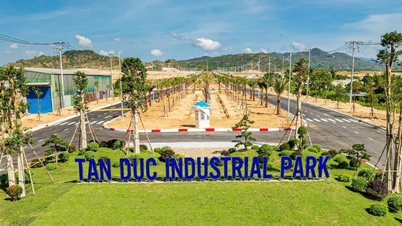
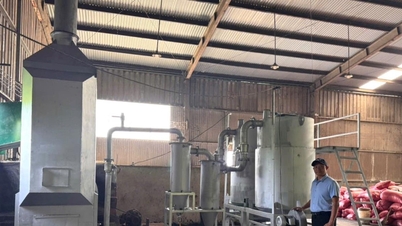
Green jobs: A new direction for the "green" generation of youth. (Illustrative image)
According to economist Dinh Trong Thinh, green jobs don't just appear out of nowhere, but are formed from the awareness of businesses and from people's thoughts and responsibilities in protecting the common environment. Mr. Thinh emphasized: "When businesses make commitments to sustainable development, they must also have plans for environmental protection, thus creating a demand for green job positions."
Ms. Nguyen Thanh Huong, National Human Resources Director of ManpowerGroup Vietnam, said that while previously candidates were more interested in the company's industry, salary, and location, recruiters now receive more questions about the company's social activities. Candidates, especially young candidates, are more interested in recruitment advertisements about businesses with a high level of responsibility towards the environment and community.
According to a survey by ManpowerGroup Vietnam, "green" jobs applied from 2022 to the present are mainly positions such as project engineering manager, construction supervisor, investment director, operations management director, etc. The demand for "green" jobs is receiving increasing attention from workers. This is clearly demonstrated by candidates' search for jobs in "green" businesses. To date, the highest demand for "green" jobs comes from manufacturing (48%), energy (34%), agriculture (11%), and technology (4%).
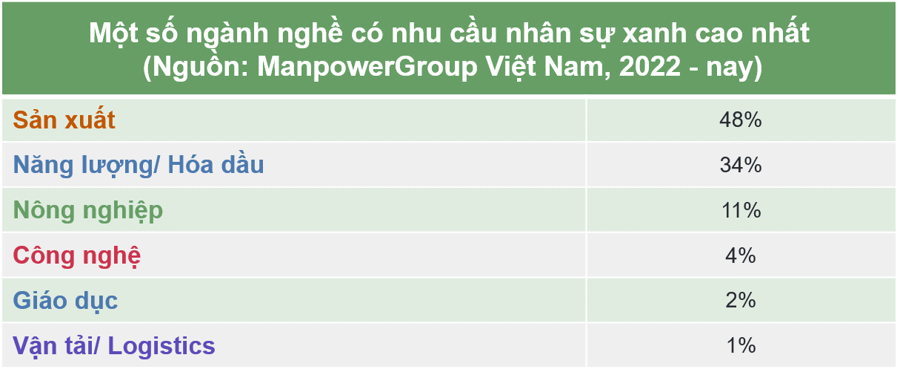
According to ManpowerGroup Vietnam, some industries have had the highest demand for green professionals from 2022 to the present. (Image: VnEconomy)
Sharing more about the growing demand for "green" jobs, Andree Mangels, General Director of ManpowerGroup Vietnam, said that businesses are increasingly prioritizing "green" practices in their operations, especially in the area of talent acquisition.
"We have been actively collaborating with domestic businesses and foreign corporations to create more 'green' job opportunities for Vietnamese workers," affirmed Andree Mangels.
Many promising career fields
According to research conducted by the World Bank in collaboration with the General Statistics Office, green jobs currently account for only a small fraction of total employment, at 3.6%, across 39 "green" occupations. This rate is comparable to the green job rate in the United States, Indonesia, and Cambodia.
However, there are 88 other occupations with the potential to become "green" jobs, accounting for 41% of total employment, demonstrating the enormous benefits that can be brought about by greening the Vietnamese economy. Even industries with significant environmental impact, such as cement, steel, and industrial materials, still have opportunities to expand into "green" jobs.
According to Abla Safire, senior economist at the World Bank, the sectors with the highest concentration of green jobs are electricity, gas and water (23%), mining (5%), and market services (5%). While these sectors may not directly provide environmentally friendly goods and services, they all offer green jobs. For example, environmental engineers and environmental protection specialists are green occupations within the mining industry.
According to Mr. Ngo Xuan Lieu, Director of the National Center for Employment Services (Department of Employment, Ministry of Labor, Invalids and Social Affairs), the issue of "green" jobs and "green" skills in Vietnam, although studied, has not yet been systematically evaluated and measured. In the future, it is necessary to continue improving policies that integrate climate change response and promote the creation of "green" jobs.
"We need to research and implement 'green' employment models, climate change-responsive employment models, and study and assess the impact of climate change on employment according to updated national scenarios," Mr. Lieu emphasized.
According to Mr. Tran Quang Chinh, Head of the Analysis and Forecasting Department of the National Center for Employment Services, it is necessary to further strengthen the forecasting of human resource needs and the supply capacity in general, and the demand for human resources for green growth in particular. Accordingly, it is necessary to assess and update information on "green" professions to develop appropriate human resource training plans.
Mai Anh

![[Photo] Prime Minister Pham Minh Chinh attends the Conference on the Implementation of Tasks for 2026 of the Industry and Trade Sector](/_next/image?url=https%3A%2F%2Fvphoto.vietnam.vn%2Fthumb%2F1200x675%2Fvietnam%2Fresource%2FIMAGE%2F2025%2F12%2F19%2F1766159500458_ndo_br_shared31-jpg.webp&w=3840&q=75)





















































































Comment (0)