

 |
| The World Bank recommends that the Vietnamese government consider extending the economic support program until 2024 to allow investment projects to be fully implemented. (Source: Getty Image) |
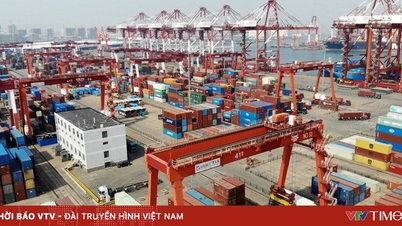
The World Bank (WB) announced on November 22nd its October 2023 Vietnam Macroeconomic Update report that Vietnam's merchandise exports and imports continued to recover in October due to gradually recovering demand from trading partners.
According to World Bank experts, Vietnam's exports are gradually recovering, but domestic consumption remains relatively sluggish. In October 2023, merchandise exports and imports continued to recover, increasing by 1.6% and 1.05% respectively. Import growth is closely linked to the recovery of exports, as imported raw materials for the production of export goods account for 94% of total imports.
However, according to the World Bank, both exports and imports in the first 10 months of the year still decreased compared to the same period last year, falling by 6.9% and 12.4% respectively.
The World Bank stated that supply-side economic activity continues to show slight improvement. The monthly Industrial Production Index (IIP) has begun to show positive growth since April 2023. The IIP increased by 2.89% in October due to a continued recovery in industrial goods exports.
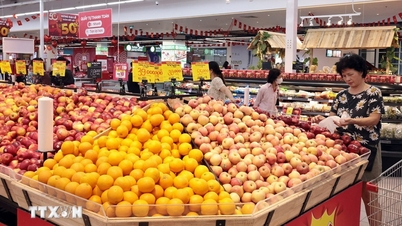
However, the outlook remains uncertain as Vietnam's Purchasing Managers' Index (PMI) in October was still in contraction territory (49.6), similar to September (49.7). Retail sales growth in October was almost unchanged compared to September's growth rate of 0.55%.
According to WB experts, this improvement stems from the continued expansion of industrial production of key export products such as footwear and leather products, electronics, computers, mobile phones, motor vehicles and transport equipment, reflecting the continued recovery of external demand.
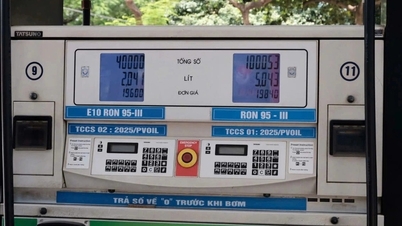
The World Bank assesses that, although the Industrial Production Index (IIP) data shows that the decline in industrial production has bottomed out, the prospect of a strong recovery remains uncertain. The consumer price index (CPI) rose 3.6% in October, driven by transportation costs (+0.06 percentage points), while core inflation fell to 3.4%, lower than the 2023 inflation target of 4.5%.
Regarding FDI activities, cumulative FDI commitments for the first 10 months of 2023 reached US$25.7 billion. A World Bank expert commented: “This is 14.7% higher than the same period in 2022, despite global uncertainties, mainly due to foreign investors' confidence in Vietnam's stability and openness.”
Cumulative realized FDI reached US$18 billion, a 3.2% increase year-on-year. Industrial production continued to be the main sector attracting FDI into Vietnam. However, credit growth remained sluggish, with October's growth reaching only 9.3% year-on-year, compared to 9.9% in September. This figure is significantly lower than the State Bank of Vietnam's credit growth target of 14% and the pre-Covid-19 pandemic level of 12-15%.
The World Bank assesses that the prolonged weakness of the private investment sector and investor confidence continue to be the main reasons for slow credit growth.
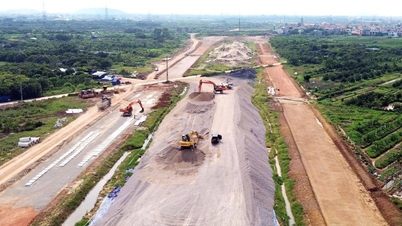
The World Bank acknowledges the Vietnamese government 's continued efforts to support the economy by boosting public investment disbursement, which increased by 35% year-on-year in the first 10 months of the year. However, challenges in implementation continue to affect the deployment of investment budgets. Therefore, the World Bank recommends that the Vietnamese government consider extending the economic support program until 2024 to allow for the full implementation of investment projects.
The World Bank also emphasized that preparing higher-quality projects, including through better feasibility studies and reforms to public investment procedures, will help accelerate implementation.
WB experts also suggested a strategic investment roadmap, focusing on green, resilient, and regional infrastructure to help promote sustainable economic development.
Source
![[Photo] Prime Minister Pham Minh Chinh holds a phone call with the CEO of Russia's Rosatom Corporation.](/_next/image?url=https%3A%2F%2Fvphoto.vietnam.vn%2Fthumb%2F1200x675%2Fvietnam%2Fresource%2FIMAGE%2F2025%2F12%2F11%2F1765464552365_dsc-5295-jpg.webp&w=3840&q=75)

![[Photo] Closing Ceremony of the 10th Session of the 15th National Assembly](/_next/image?url=https%3A%2F%2Fvphoto.vietnam.vn%2Fthumb%2F1200x675%2Fvietnam%2Fresource%2FIMAGE%2F2025%2F12%2F11%2F1765448959967_image-1437-jpg.webp&w=3840&q=75)





































![[OFFICIAL] MISA GROUP ANNOUNCES ITS PIONEERING BRAND POSITIONING IN BUILDING AGENTIC AI FOR BUSINESSES, HOUSEHOLDS, AND THE GOVERNMENT](https://vphoto.vietnam.vn/thumb/402x226/vietnam/resource/IMAGE/2025/12/11/1765444754256_agentic-ai_postfb-scaled.png)












































Comment (0)