

People with kidney disease can add macadamia nuts, walnuts, and pumpkin seeds to their daily diet to supplement nutrients and fight inflammation.
Nuts are good for people with chronic kidney disease because they are rich in protein, healthy fats, antioxidants, vitamins, and minerals. Below are some types of nuts that can help improve kidney health.
Macadamia nuts
People with kidney problems should add macadamia nuts to their diet because they are low in protein, carbohydrates, and potassium. These nuts are rich in calcium, healthy fats, folate, magnesium, manganese, copper, and iron.
People with chronic kidney disease are at risk of low blood selenium levels or selenium deficiency. Selenium is a nutrient excreted by the body during the blood filtration process. Adding macadamia nuts to your diet may help prevent selenium deficiency.
However, people with kidney disease who are on a diet should avoid eating macadamia nuts because they contain high levels of phosphorus.
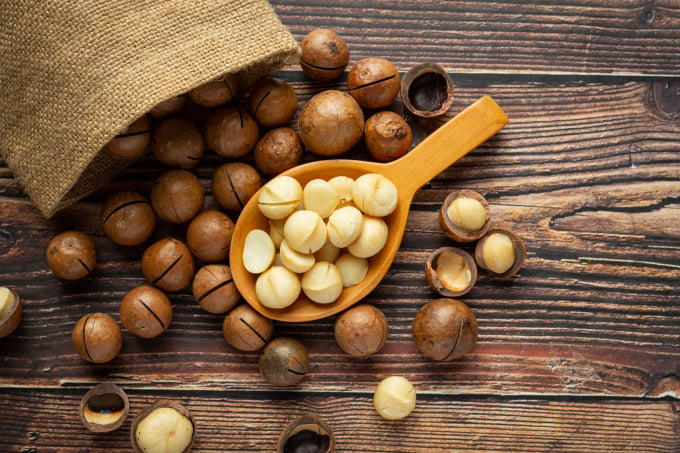
Macadamia nuts contain many nutrients that are beneficial for the kidneys. Photo: Freepik
Walnuts
According to a 2016 study of 15,000 people by Southern Medical University (China), folic acid slows the progression of chronic kidney disease in people with mild to moderate renal impairment. 100g of walnuts contain 98µg of folic acid. Eating walnuts helps reduce kidney inflammation.
Flax seeds
Flaxseed has been shown to improve kidney function by reducing blood viscosity, lowering cholesterol levels, and reducing inflammation. Studies on animals with chronic kidney disease have shown that dietary supplementation with flaxseed may offer kidney protection.
Pumpkin seeds
The antioxidants in pumpkin seeds act as a diuretic, helping to remove harmful substances from the kidneys. Eating pumpkin seeds also has a positive impact on circulation as well as kidney and liver function, thereby preventing the accumulation of uric acid in the body and reducing the risk of kidney stones.
Sesame seeds
According to a 2014 study by the University of Belgrade (Serbia), 30 people with kidney disease who ate 6g of sesame seeds daily for three months experienced reduced inflammation and improved itching symptoms caused by the disease. In addition to sesame seeds, they were also given a choice between 6g of pumpkin seeds and 18g of flax seeds.
Huyen My (According to Kidney.org, Healthline )
| Readers can submit questions about kidney disease here for doctors to answer. |
Source link
![[Photo] General Secretary and President To Lam works with the Party Committee of the Ministry of Health on the work of Vietnamese traditional medicine.](https://vphoto.vietnam.vn/thumb/1200x675/vietnam/resource/IMAGE/2026/05/20/1779294323718_a1-bnd-2978-3319-jpg.webp)


![[Photo] National Assembly Chairman Tran Thanh Man working with the Standing Committee of the National Assembly's Delegation Affairs Committee.](https://vphoto.vietnam.vn/thumb/1200x675/vietnam/resource/IMAGE/2026/05/20/1779294340023_ndo_br_1-1691-jpg.webp)

![[Image] "Journey of Hope" promotes the organ and tissue donation movement in Vietnam.](https://vphoto.vietnam.vn/thumb/1200x675/vietnam/resource/IMAGE/2026/05/20/1779294400833_1-8910-jpg.webp)




































































































Comment (0)