


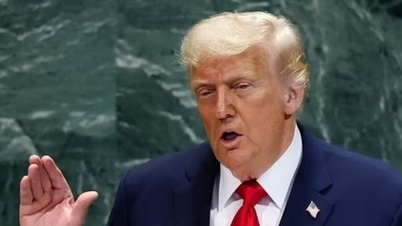
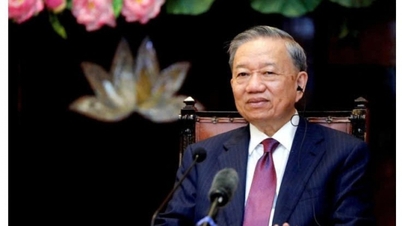
US President Donald Trump. Photo: THX/VNA
US President Donald Trump said Washington and Tehran are close to reaching an agreement to end the conflict in the Middle East. However, the two sides have yet to release the full contents of the document, and many core issues remain significantly different.
According to US and Iranian officials, the five most important issues currently are Iran's nuclear program, control of the Strait of Hormuz, Tehran's frozen assets, allied forces in the region, and Iran's missile arsenal.
1. Iran's nuclear program
According to The New York Times, one of the biggest issues is the future of Tehran's nuclear program. The U.S. and Israel have long demanded that Iran abandon its stockpile of highly enriched uranium, fearing it could be used to build nuclear weapons. However, Iran has consistently opposed this demand.
According to the International Atomic Energy Agency (IAEA), Iran currently possesses approximately 440 kg of uranium enriched to 60%, along with about 11 tons of uranium enriched to various other levels.
A U.S. official said Washington and Tehran have reached an agreement in principle on how Iran will handle its highly enriched uranium stockpile, but the specifics are still being negotiated. The U.S. also said the issue of Iran continuing to enrich uranium in the future will be discussed in subsequent rounds of talks.
Meanwhile, three Iranian officials told the New York Times that no final agreement had been reached regarding the nuclear stockpile and that all nuclear issues would continue to be negotiated over the next 30-60 days.
2. The Strait of Hormuz and the blockade measures
The Strait of Hormuz – a vital shipping lane for global oil and gas – is also a focal point of the negotiations.
Following the outbreak of conflict in late February, Iran disrupted maritime activity in the Strait of Hormuz, causing a sharp rise in global energy prices. In response, the US implemented a naval blockade of ports and ships linked to Iran.
Tehran is currently seeking to assert control over the strait by imposing fees on passing ships. However, experts argue that charging fees for passage in this international shipping lane could violate international law.
Iranian officials said that under the current proposal, Tehran would allow ships to pass through the Strait of Hormuz without imposing fees, in exchange for the US lifting its maritime blockade.
President Trump signaled that Washington might consider ending the lockdown, but insisted that current measures would remain in place until a final agreement is reached.
3. Assets are frozen.
Iran wants to recover assets frozen in offshore accounts due to years of international sanctions. According to Iran, the proposed agreement could free up approximately $25 billion in assets.
However, a U.S. official said that at this stage, Washington has not proposed lifting the freeze on any Iranian assets. Nevertheless, the U.S. affirmed its readiness to begin this process if Iran fulfills its commitments related to its nuclear program. The official did not specify which assets or amounts might be released.
President Donald Trump has in recent weeks continued to criticize former President Barack Obama for his decision to release $1.7 billion in frozen Iranian assets in 2015 under the nuclear agreement that the Obama administration had signed. Trump withdrew the U.S. from that agreement in 2018.
4. Iran's allied forces in the region
Iran backs numerous armed groups in the Middle East, the strongest of which is Hezbollah in Lebanon. Despite a ceasefire agreement in Lebanon, Israel and Hezbollah have continued fighting in recent weeks.
One of the big questions is whether the new agreement can end the current clashes. Another issue is whether Iran will agree to restrain its allied forces in the region.
Iran stated that under the current proposal, fighting would cease on all fronts, including in Lebanon.
Meanwhile, the US has not officially mentioned Hezbollah or Iranian-allied forces as part of the agreement.
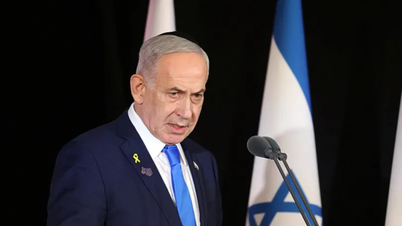
Nevertheless, Israeli Prime Minister Benjamin Netanyahu said he had spoken by phone with President Trump and was assured that Israel still has the right to defend itself against threats “on all fronts, including Lebanon.”
5. Iran's missile stockpile
Iran's ballistic missile arsenal has long been a major concern for Israel and the Gulf Arab states allied with the United States, as they are all within Tehran's range.
In the early stages of the conflict, the Trump administration stated that Iran had to abandon its missiles or limit their range. However, according to a U.S. official, the current draft agreement does not address Iran's missile arsenal.
Israeli leaders are expected to be disappointed if any agreement does not include the missile issue. Prime Minister Netanyahu insists that he and President Trump remain united in their goal of preventing Iran from acquiring nuclear weapons. However, analysts suggest that the current draft may not meet Israel's expectations.
Experts also warn that unresolved disagreements over missiles could sow the seeds of a new conflict in the future, especially if Israel decides to act alone to destroy Iran's missile capabilities.
According to baotintuc.vn
Source: https://baophutho.vn/5-van-de-then-chot-quyet-dinh-thoa-thuan-hoa-binh-my-iran-254908.htm




![[Photo] General Secretary and President To Lam presides over the meeting to approve the draft report on the results of the second inspection by the Politburo of the Standing Committee of the Hanoi City Party Committee.](https://vphoto.vietnam.vn/thumb/1200x675/vietnam/resource/IMAGE/2026/05/26/1779789811432_a2-bnd-4430-9620-jpg.webp)






















































































Comment (0)