

Selecting varieties with clear origins and suitable for the production conditions is a crucial factor in improving productivity, quality, and economic efficiency.
At the nursery of Nghia Hoa Agricultural Service Cooperative (Hamlet 2, Chu Pah Commune), hundreds of thousands of coffee seedlings are being carefully tended to ensure they are ready for farmers. Although it's not yet time for sale, many customers from within and outside the province have come to inquire about and register to buy seedlings.
Mr. Nguyen The Minh, Director of the Cooperative, said: This year, the cooperative has propagated more than 500,000 coffee seedlings, an increase of over 200,000 seedlings compared to last year. The main varieties include TR4, TRS1, and dwarf green. Many farmers, dealers, and organizations in the province have proactively registered to purchase seedlings early to serve replanting and new planting.
According to Mr. Minh, the TR4 and TRS1 varieties continue to be chosen by farmers due to their good growth potential, stable yield, and suitability to the climate and soil conditions of the Central Highlands. "The demand for seedlings this year is high, so the cooperative had to prepare early to ensure a sufficient supply for the farmers," Mr. Minh shared.
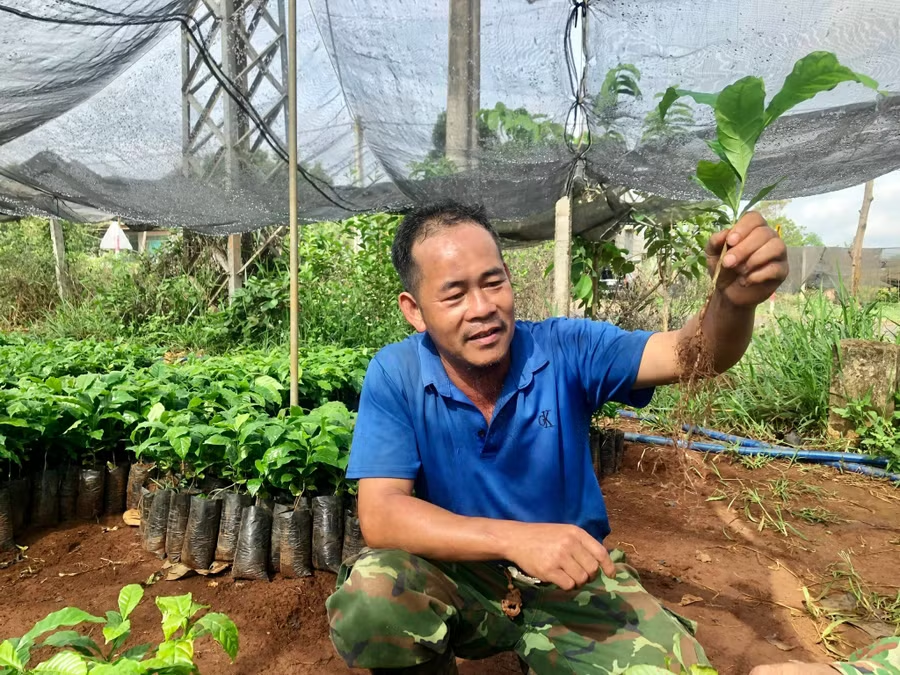
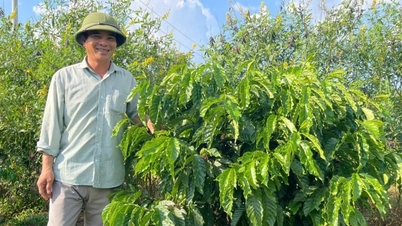
Besides replanting old coffee plantations, many households are also boldly investing in new plantings as coffee prices have remained high for an extended period. Mr. Rơ Châm Klunh (Dốch 1 village, Ia Ly commune) said that his family has registered to buy 1,500 dwarf green coffee seedlings through the commune's Farmers' Association for new planting.
According to Mr. Klunh, choosing seedlings with a clear origin is very important because coffee is a crop that requires large capital investment and a long period of care. "If the plants are healthy and disease-free, subsequent care will be easier, reducing risks during production," Mr. Klunh said.
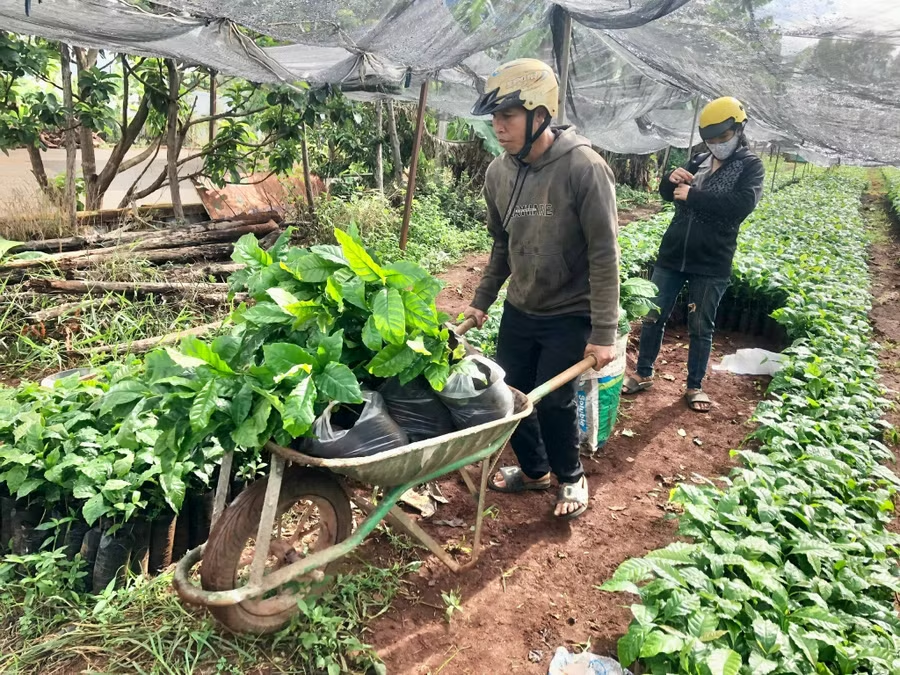
To ensure the quality of seedlings, all coffee seeds of Nghia Hoa Agricultural Service Cooperative are imported from the Western Highlands Agricultural and Forestry Science and Technology Institute, with full invoices and documents, and are strictly controlled throughout the germination process.
The cooperative follows strict technical procedures for soil preparation, irrigation, and pest control. Seedlings are only sold when they are healthy, disease-free, and have at least 4-5 pairs of leaves. This is a crucial factor determining the plant's adaptability and growth after planting.
In addition to focusing on the quality of seedlings, cooperatives also strengthen technical guidance for farmers before replanting. According to recommendations, after removing old coffee plants, farmers need to thoroughly treat the soil and eliminate remaining pathogens to minimize the risk of reinfection of new plants.
Along with cooperatives, many seedling production facilities in the province are also proactively preparing coffee seedlings for the new season. Ms. Cao Thi Tuyet, owner of a seedling production facility in Hamlet 9 (Bien Ho commune), said: Currently, the facility has propagated about 100,000 seedlings, enough to serve the replanting of nearly 100 hectares of coffee.
The facility currently does not have large-scale seed supply contracts with businesses. However, many households have registered to purchase seeds early, including some who have placed large orders for replanting large areas.
"People are quite cautious now, often seeking out reputable establishments with clear seed sources instead of buying indiscriminately as before," Ms. Tuyet said.
According to Ms. Tuyet, the seedlings currently have only about 2-3 pairs of leaves, so they are not yet ready for mass sale. According to technical procedures, it will take about another month for the seedlings to be ready for planting. Meanwhile, there is already a problem of premature seedling sales on the market, making quality control difficult.
According to producers, people still prefer to choose varieties that have been recognized by specialized agencies, such as TR4 and TRS1. Some new varieties are only grown in small quantities to meet the specific needs of customers.
With coffee prices remaining high, many households are boldly investing in replanting to improve the productivity and quality of their plantations. Proactively securing high-quality seedlings not only gives farmers peace of mind when investing in production but also lays the foundation for enhancing the value and quality of Gia Lai's coffee region in the coming years.
This is also an important prerequisite for the coffee industry to develop sustainably and adapt to the increasingly high demands of the market.
Source: https://baogialai.com.vn/bao-dam-nguon-giong-ca-phe-chat-luong-cho-vu-moi-post587857.html
![[Photo] General Secretary and President To Lam presides over the meeting to approve the draft report on the results of the second inspection by the Politburo of the Standing Committee of the Hanoi City Party Committee.](https://vphoto.vietnam.vn/thumb/1200x675/vietnam/resource/IMAGE/2026/05/26/1779789811432_a2-bnd-4430-9620-jpg.webp)

































































Comment (0)