

 |
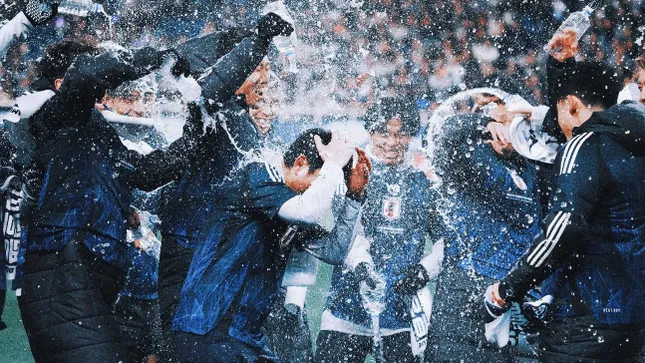
The third round of the 2026 World Cup qualifiers in Asia concludes today (June 10th). Japan, Iran, Uzbekistan, South Korea, and Jordan have already secured their places. The final direct qualification spot is in Group C, decided by tonight's match between Saudi Arabia and Australia. In reality, Saudi Arabia (13 points, goal difference 0) has very little chance against Australia (16 points, goal difference +8). Therefore, they should consider securing their place through the fourth round, where Indonesia, Qatar, Iraq, UAE, and Oman (or Palestine) are waiting.
At the 2026 World Cup, Asia has 8.5 qualifying spots. In addition to the 6 spots determined from the third qualifying round, 2 spots from the fourth qualifying round, and one spot in the intercontinental play-off, which goes to the winner of the fifth qualifying round.
The Asian qualifying campaign is undeniably challenging. If a team makes it through all the rounds, they'll have to play a total of 22 matches. This significantly reduces the chances of upsets, as an underdog is unlikely to cause an upset in such a large number of matches.
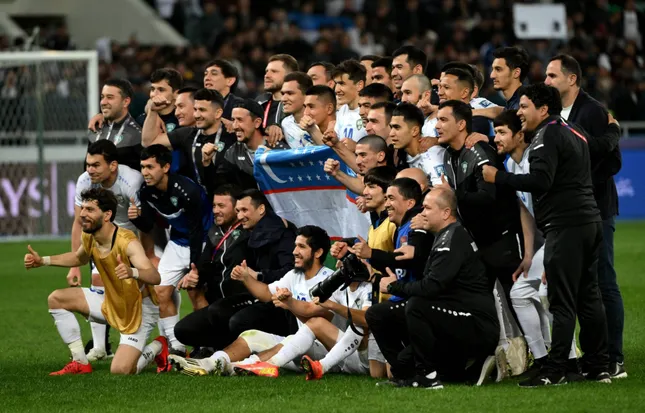 |
Uzbekistan will participate in the World Cup for the first time in 2026. |
That's why World Cup qualification for Asia has always been consistent. From 1990 to 2022, Asia only introduced two newcomers to the World Cup: China in 2002 and Qatar in 2022 (as hosts). The rest have always been Japan, Saudi Arabia, South Korea, Iran, and Australia, also known as the "big five".
Therefore, the rest of the world's most populous continent has reason to celebrate as the planet's biggest football tournament expands to 48 teams. This allows Uzbekistan and Jordan to fulfill their World Cup dreams, while Indonesia and Oman (or Palestine) still harbor hopes of becoming the next newcomers.
Any team that qualifies deserves it, and it demonstrates their improvement in raising the quality of football. For example, Uzbekistan reaped the rewards of its youth revolution, even encouraging the entire football system to participate, from discovery and training to providing opportunities and building playing fields.
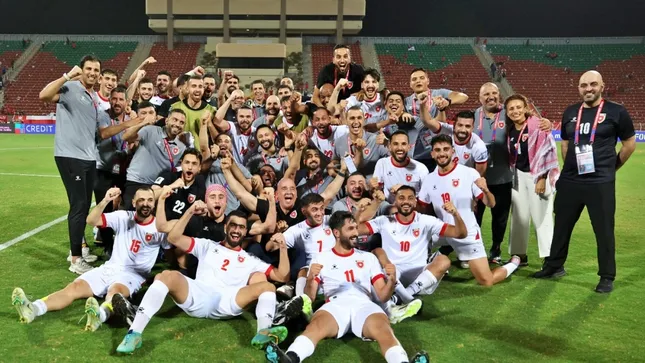 |
Jordan is another Asian newcomer at the 2026 World Cup. |
However, it should be noted that a gap still exists between the newcomers and the five major powerhouses, especially Japan and South Korea. These two East Asian nations have the financial resources to invest, establish a solid foundation over many years, and consistently produce new generations of high-quality, world-class players.
However, even for Japan and South Korea, the goal of progressing deep into the World Cup remains elusive. The Blue Samurai have never gone beyond the round of 16, while the Taegeuk Warriors have only reached the semi-finals once, in 2002 when the World Cup was held on home soil (along with Japan), and this was accompanied by considerable controversy.
Furthermore, North Korea also reached the quarter-finals once in 1966, when the World Cup only had 16 participating teams. Otherwise, the round of 16 is almost exclusively reserved for Asian teams. From 2006 to the present, across five World Cups, not a single Asian team has reached the quarter-finals. Moreover, the fact that 16 out of 20 teams in the semi-finals are from Europe and South America further emphasizes that this is a competition dominated by these two footballing nations.
 |
The World Cup remains a competition between two footballing nations: Europe and South America. |
In a recent article in The Guardian, journalist Jonathan Wilson argues that in the near future, the World Cup title will still belong to one of the European powerhouses such as France, Spain, Germany, England, Portugal, Italy, or the Netherlands, or one of the two South American teams, Argentina and Brazil.
The 2026 World Cup with 48 teams, including 8 (or 9) Asian teams, also doesn't do much to increase the chances of making history. As Wilson commented, the champion team needs to play 8 matches instead of 7, making shocks less likely (similar to what happened in the Asian qualifying rounds).
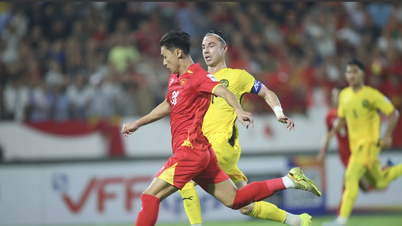
Looking back, Asian teams have only won 26 out of 146 matches, a win rate of 17.8%, while losing 90 matches, a rate of 61.6%. The increase in the number of teams, but the disparity in skill level remains, increases the risk of heavy defeats, such as Iran 2-6 England (2022), Saudi Arabia 0-5 Russia (2018), North Korea 0-7 Portugal, and Australia 0-4 Germany (2010).
 |
The World Cup remains an unattainable dream for Asian nations. |
However, according to Wilson, compared to football in Africa, Central and North America, and Oceania, Asia still has a more realistic chance of winning the title someday. This stems from its economic potential, its passion for football, and the increasingly high quality of its players.
As seen, Kim Min-jae became the most expensive Asian player in history when he moved to Bayern Munich for €50 million, or more recently, Abdukodir Khusanov became the first Uzbekistani player to play in the Premier League after a €40 million transfer to Manchester City. Other examples include Son Heung-min captaining Tottenham and lifting the Europa League trophy, Lee Kang-in winning the Champions League with PSG, and Kaoru Mitoma attracting attention from both Bayern Munich and Arsenal. Saudi Arabia, with the backing of its Public Investment Fund (PIF), transforming the Saudi Pro League into a new stage for world football, marks another turning point for Asian football.
Nevertheless, the dream of winning the championship remains a distant one. For now, simply participating in the most prestigious football tournament on the planet is enough to make Asian nations happy. As it is today, many celebrations will take place in the world's most populous continent, as their team has secured a ticket to the 2026 World Cup.
Source: https://tienphong.vn/bao-gio-mot-doi-chau-a-vo-dich-world-cup-post1749942.tpo













![[Photo] Prime Minister Pham Minh Chinh receives the Chinese Ambassador to Vietnam](https://vphoto.vietnam.vn/thumb/1200x675/vietnam/resource/IMAGE/2026/04/05/1775397481797_ndo_br_dsc-5512-jpg.webp)









































Comment (0)