

Speculation that Japan will raise interest rates for the first time in 17 years this spring is causing foreign investment in domestic real estate to fall to its lowest level in five years.
Negative interest rate policies are about to end.
Foreign investment funds have been selling off a series of large real estate properties in Japan around the last quarter of 2023. Singaporean firm Mapletree Investments sold a commercial building in Osaka for 54 billion yen to electronics retailer Edion. US-based investment firm Fortress sold a resort hotel in Okinawa to one of its own real estate investment trusts for approximately 40 billion yen…
According to CBRE, the world's largest commercial real estate investment and services company, new investments by foreign companies fell by 80% in the fourth quarter of 2023 compared to the same period in 2022. In the first nine months of 2023, real estate sales by foreign investors more than doubled compared to the same period last year, reaching 1.05 trillion yen (US$7.1 billion), while their purchases decreased by approximately 20% to 830 billion yen.
For the entire year of 2023, foreign investment in Japanese real estate decreased by approximately 30%, to 1 trillion yen (US$6.7 billion), while real estate sales doubled to approximately 1.37 trillion yen, marking the first full year of net sales since 2018.
The real estate sell-off is partly due to the possibility of monetary policy adjustments by the Bank of Japan (BOJ). BOJ Governor Kazuo Ueda recently reinforced the likelihood of the BOJ raising interest rates this spring. According to experts, the BOJ is closer to deciding to end its negative interest rate policy in April 2024. Investors are worried that once interest rates begin to rise sharply, borrowing costs will increase and reduce returns on real estate investments.
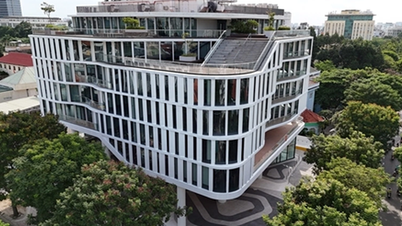
Selling off the building.
The sluggish overseas real estate market also played a role in the aforementioned sell-off. Higher interest rates and the continued trend of working from home have driven down office prices in the US and Europe. Some mitigated losses by selling and taking profits early on properties in Japan, where prices remained relatively high compared to other markets.
The very same international investors who once fueled Japan's office building market are now selling off for the first time as rental prices fall due to oversupply and rising bank interest rates. Analysts predict that foreign investors will continue selling Japanese real estate in 2024.
Meanwhile, Singapore's GIC asset fund began the process of selling a majority stake in Tokyo's Shiodome skyscraper this summer, but how well that will go remains unclear. GIC's nominal annual return over the five years ending March 2023 was 3.7%, its lowest since 2016. As office building prices plummeted in the US and Europe, GIC sold real estate in Japan, where prices are higher, to offset those losses.
According to the Real Estate Securities Association, office buildings are central to the Japanese real estate investment market, accounting for approximately 40% of the portfolios of Japanese real estate investment trusts. While demand for other property types such as residential and hotel properties remains strong, the weak office market is causing difficulties for some real estate investors.
Transaction volumes for office buildings were particularly hard hit, falling 40% to 1.08 trillion yen, the lowest level since 2012. According to Nikkei Asia, the office vacancy rate in Tokyo reached its highest level in 11 years, even though rental prices have fallen 30% compared to four years ago.
Foreign investors are attracted to Japanese real estate largely due to low borrowing costs stemming from the Bank of Japan's extremely loose monetary policy. However, the prospect of higher interest rates this spring is casting a shadow over the market. According to a survey by Mitsubishi UFJ Trust and Banking, while 89% of foreign investors said they were optimistic or somewhat optimistic about Japanese real estate in 2019, that figure has now fallen to 28%.
HANH CHI
Source



![[Image] National Assembly discusses the implementation of the socio-economic development plan.](https://vphoto.vietnam.vn/thumb/1200x675/vietnam/resource/IMAGE/2026/04/20/1776696707422_ndo_br_img-20260420-185419-jpg.webp)
![[Photo] General Secretary and President To Lam meets with National Assembly delegates from ethnic minorities.](https://vphoto.vietnam.vn/thumb/1200x675/vietnam/resource/IMAGE/2026/04/20/1776696701056_a1-bnd-8331-3342-jpg.webp)





















































































Comment (0)