


Farmer Chi A Ung stands by the stone wall surrounding his garden, which he cleared during the process of converting from coffee and pepper to durian cultivation. Photo: D. Phu |
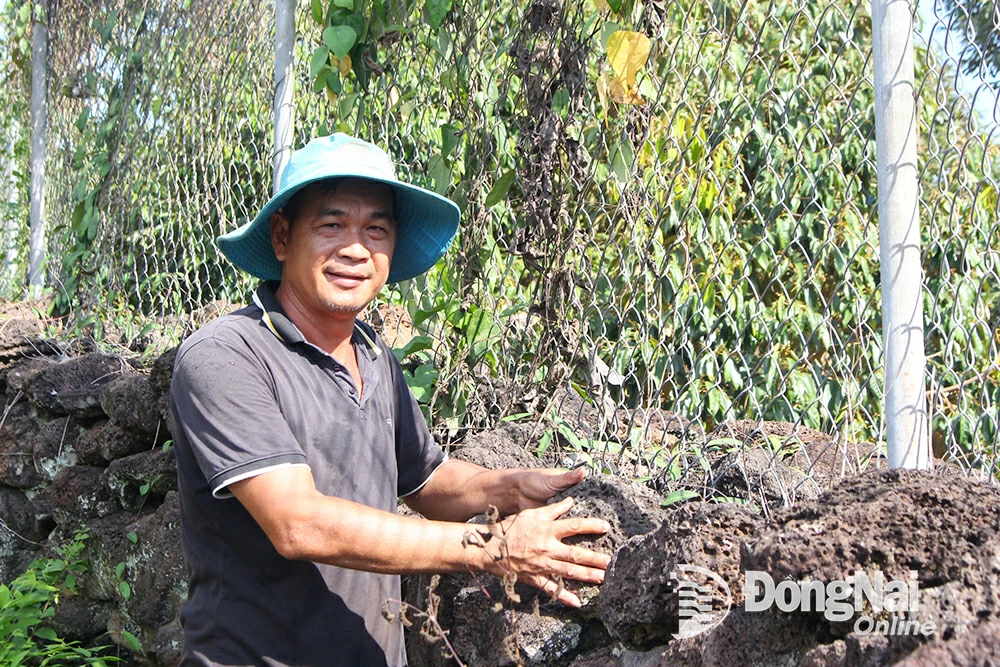
Many Chinese people in the Xuan Thuy neighborhood shook their heads or expressed skepticism upon seeing this: the gold spent on buying saplings has turned into stone.
A bold decision
Leading us on a tour of his 2.6-hectare durian orchard, which generates over 2 billion VND in income annually, Mr. Chi A Ung shared that one of the reasons he made the bold decision to experiment with planting durian on the rocky land of Bau Sen more than 27 years ago was his deep understanding of the characteristics of this land. He wanted to switch crops to increase his income and lift his family out of hardship.
"The durians grown by the Hoa ethnic minority people in Xuan Thuy neighborhood have excellent fruit quality and are free of chemical residues because they are cultivated using organic methods, without forcing the trees or fruits to ripen, thus ensuring quality," said farmer Chang Khenh Quan (residing in Group 1, Xuan Thuy neighborhood, Bau Sen ward). |
Mr. Chi A Ung recounted that he was the youngest of four siblings, all living with his mother in Xuan Thuy neighborhood. Despite their poverty, his mother still sent him to school so he could learn to read and write. Outside of school hours, he followed his mother to the fields to plant and harvest tobacco and other crops (beans, corn, pumpkins, cucumbers, etc.). Even as a teenager, Mr. Chi A Ung could roll and carry stones across the fields to ease his mother's burden while farming.
The rocky land of Xuan Thuy has more rocks than soil. To allow plant roots to absorb soil and water, and to grow among the rocks, young people of the Hoa ethnic group, regardless of their strength, all contribute alongside their parents to clear rocks and weeds so that the plants can easily absorb nutrients to flower and bear fruit. When the rainy season ends and the dry season arrives, farmers here begin harvesting and return to the cycle of clearing the land, waiting for the rain to come again for sowing.
That was Chí A Ửng's childhood. Even in 1989, when he was a mature young man and married Sỳ A Lìn, a village girl of the Hoa ethnic group, the rocks on the fields remained exposed. Because of this, whenever he felt tired, Chí A Ửng would lean against a large rock and think about how to "soften" the rocks.
Having accumulated some capital from his coffee and pepper harvests, Mr. Chi A Ung sold 5 gold bars to buy 250 durian saplings of the Thai Ri 6 variety from a nursery in the Southwestern region of Vietnam to plant interspersed on his family's 2.6 hectares of farmland. To realize this bold idea, he discussed it with and persuaded his mother and wife to agree.
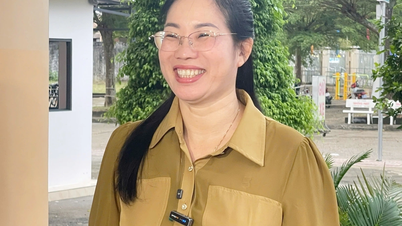
Pham Thi Cam Nhung, Chairwoman of the Farmers' Association of Bau Sen Ward (Long Khanh City), visits the durian orchard of farmer Chi A Ung. |
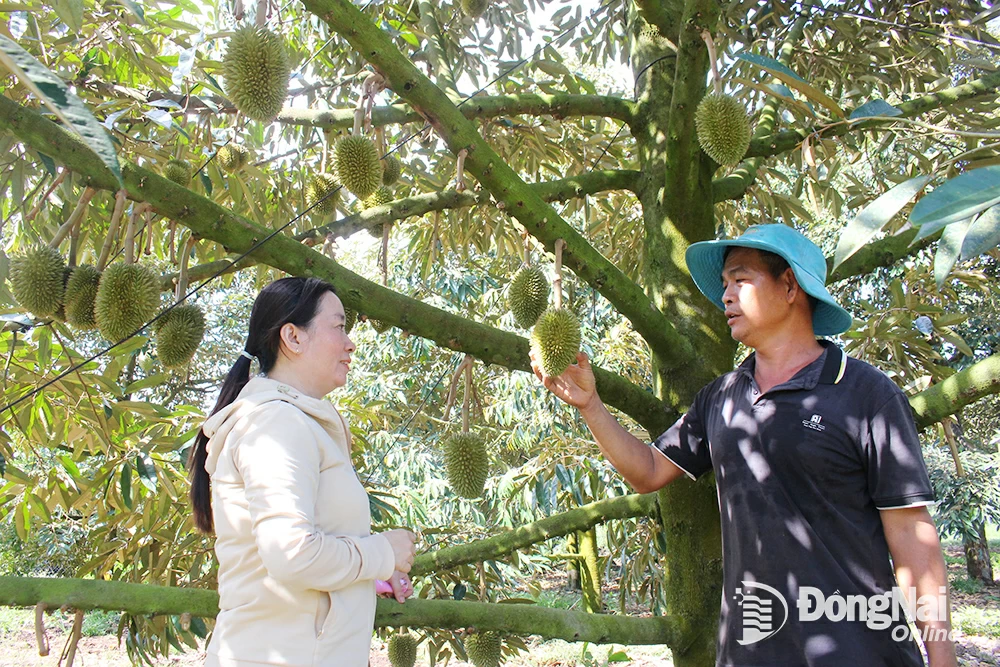
Despite what many people said, Mr. Chi A Ung patiently pried up the stones that were tightly packed together in the coffee and pepper growing areas to plant durian seedlings. To have a more abundant water supply for irrigation, in addition to the two existing wells in his plantation, he continued to spend money drilling new wells, but only 1/3 of the drilled locations had a strong water flow.
“Not only did Mr. Chi A Ung pioneer in durian cultivation, helping his family improve their economic situation , but he also actively encouraged the Hoa ethnic minority people in Xuan Thuy neighborhood to contribute money and land for the construction of rural roads, poverty reduction, and education promotion…” - said Pham Thi Cam Nhung, Chairwoman of the Farmers' Association of Bau Sen Ward (Long Khanh City).
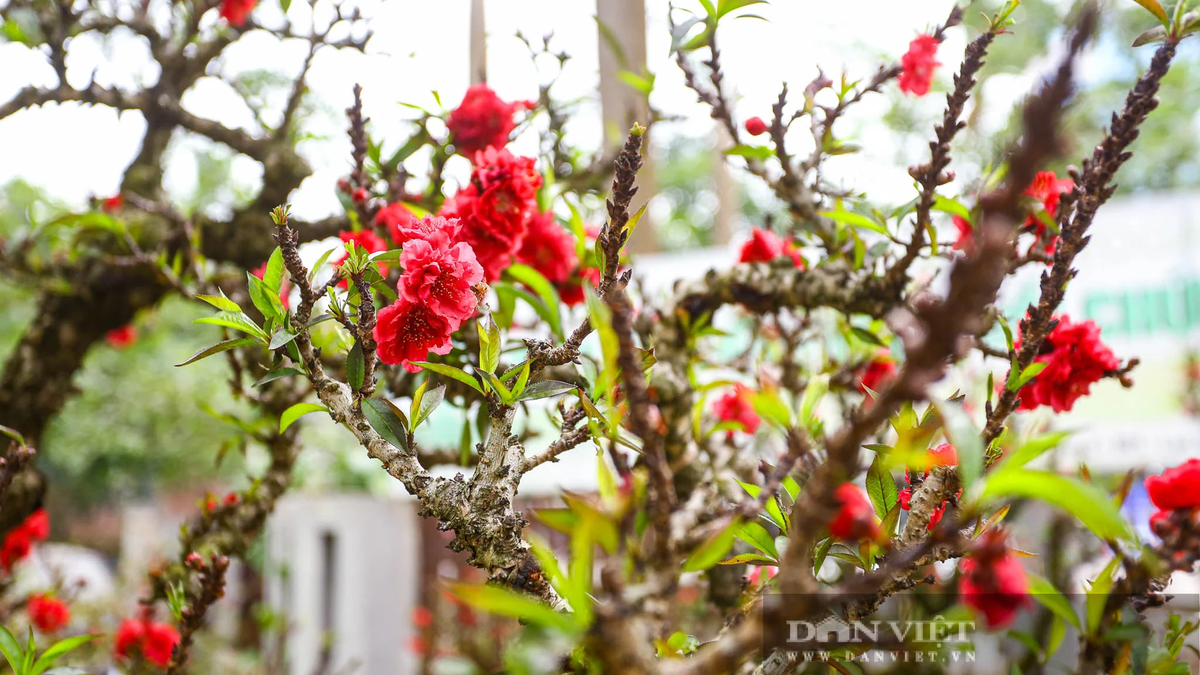
Durian blossoms on rocky ground.
Lacking experience in durian cultivation, out of 250 durian seedlings planted in the rocky field in 1989, only 100 remained after six years (in 1995), and the durian trees began to bear fruit. That year's durian blossoms filled the area with fragrance, and the scent continued to spread once more when the durians ripened and fell.
Mr. Chi A Ung recalled that, despite the winding, narrow, and rocky road from the hamlet to his durian orchard, it still attracted many traders looking to buy durian. Many people of the Hoa ethnic group from within and outside Xuan Thuy neighborhood also came to learn about durian cultivation.
Back in 1995, durian buyers only sought out ripe, fallen durians, not those still on the tree like they do now. Therefore, with 100 durian trees intercropped with pepper and coffee on 2.6 hectares, for two months (July and August in the lunar calendar), he earned over 1 million dong a day collecting and selling the fruit. This was enough to cover the costs of buying seedlings and drilling a well when he started his business.
From then on, many of the Hoa ethnic people in the surrounding area began to follow his example. That was also the time when coffee and pepper prices dropped, so Mr. Chi A Ung removed the pepper plants and replanted durian trees in areas where the trees had died or had sparse canopies.
Farmer Chi A Ung (right) exchanges experiences in durian cultivation with farmers of the Hoa ethnic minority in Xuan Thuy neighborhood (Bau Sen ward, Long Khanh city). |
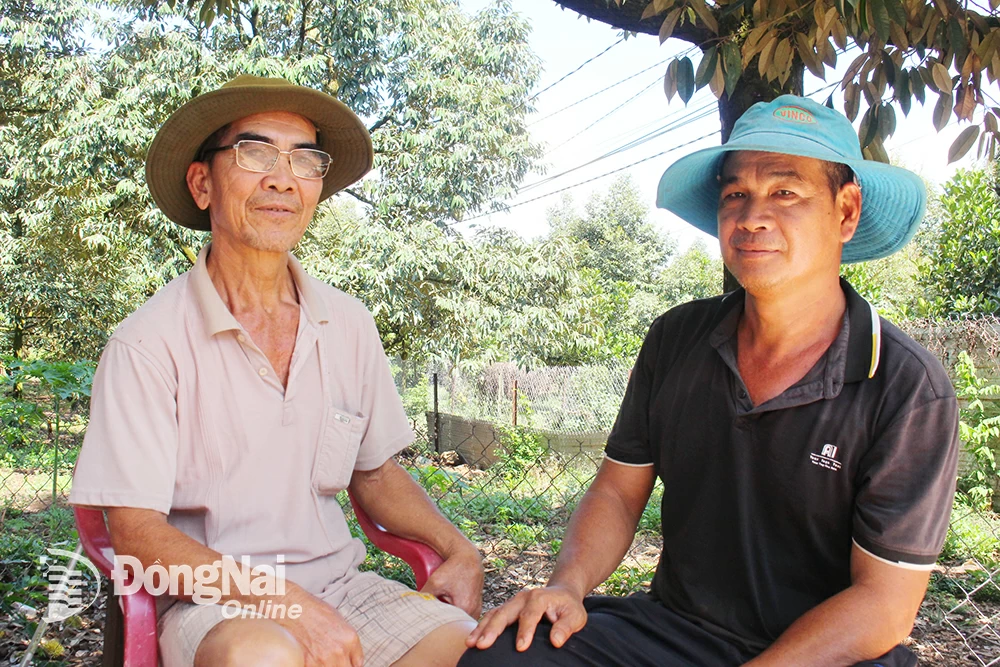
“Indeed, durian trees are picky about soil, but they can also thrive and spread their fragrance even on rocky land. That's why I dared to take the risk of pioneering the cultivation of durian on rocky soil. Thanks to durian, from 1996 to the present, my family's average income has ranged from 800 million to over 2 billion VND per year from 2.6 hectares of durian. Durian not only spreads its fragrance on rocky land, but it also helped me achieve the title of Excellent Farmer in Production and Business at the ward and city level in Long Khánh since 2000,” Mr. Chí A Ửng confided.
Xuan Thuy neighborhood, with over 90% of its population being ethnic Chinese, has nearly 300 hectares of durian orchards. Thanks to the early conversion of land previously used for pepper, coffee, and other crops to durian cultivation between 1997 and 2000, the economy of the residents in the neighborhood, especially the ethnic Chinese, is mostly at least well-off.
According to Pham Thi Cam Nhung, Chairwoman of the Bau Sen Ward Farmers' Association, thanks to Mr. Chi A Ung's pioneering durian cultivation, the Hoa ethnic minority people in the neighborhood have boldly switched to this crop. A special characteristic of durian farmers here is their consistent application of organic farming practices, rejecting the use of chemical pesticides that affect the natural growth of the trees and fruit, thus protecting consumer health and bringing prestige and reputation to this "billionaire" crop in the rocky land of Xuan Thuy.
Doan Phu
Source: https://baodongnai.com.vn/xa-hoi/202505/bien-vung-dat-da-no-hoa-sau-rieng-0a01c82/






















































Comment (0)