


After the August 1945 Revolution, Binh Dinh was one of the four free zones (South, Ngai, Binh, Phu) of Military Region 5. Deeply adhering to the Party and President Ho Chi Minh 's people's war strategy of "total people, comprehensive, protracted resistance," under the leadership of the Party Committee and with the nurturing and support of the people, the armed forces of Binh Dinh were always carefully built, consolidated, and matured.
With the spirit of "fighting to the death for the Fatherland," the army and people of Binh Dinh defeated many sweeping, encroaching, and destructive military campaigns of the French colonialists. This region also served as a strong and reliable rear base, providing manpower and resources to the battlefields, contributing alongside the rest of the country to the historic victory of Dien Bien Phu, a victory that resonated throughout the world.
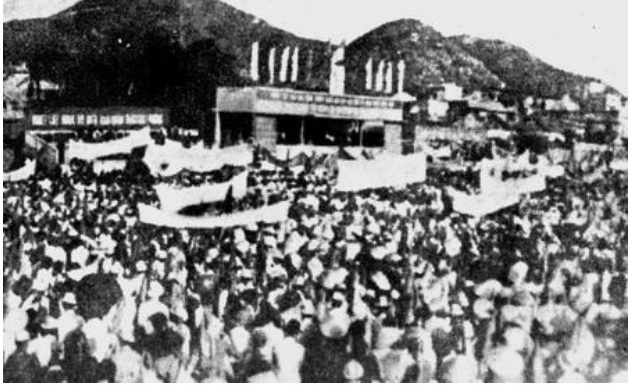 |
A large number of people attended the rally celebrating the liberation of Binh Dinh province. Photo: ARCHIVE |
With the Geneva Accords signed, the whole country joyfully awaited the general election two years after national reunification. Binh Dinh was the staging area for 300 days in Quy Nhon, where soldiers, officials, and students boarded ships to head north.
However, with its extremely belligerent and reactionary nature, the United States replaced France as the new enemy of the Vietnamese revolution.
The beloved land of Binh Dinh was gradually taken over by the US and its puppet regime, which established a puppet government. They relentlessly suppressed, terrorized, attacked, and raided our bases; they arrested and imprisoned the relatives of those who had relocated to the North or left to join the revolution, using many cruel, insidious, and despicable methods... to the point that "heaven would not tolerate, earth would not forgive." The revolutionary movement in Binh Dinh province at that time suffered serious losses.
However, under the leadership of the Party, directly the Party Committee of Zone 5 and the Provincial Party Committee, the vast majority of Party members, loyal grassroots organizations, and revolutionary masses were wholeheartedly loyal to the Party and President Ho Chi Minh, "rather die than lose the country, rather die than be enslaved," and they bravely and tenaciously rose up to fight, persistently clinging to the land and the people, protecting, restoring, expanding the base, and building revolutionary forces...
In the early days, we advocated political struggle to demand the implementation of the Geneva Agreement, but faced with enemy repression, the Provincial Party Committee directed the gradual building of armed forces, combining political struggle with armed struggle.
In January 1959, the 15th expanded meeting of the 2nd Central Committee of the Communist Party of Vietnam was held to discuss the revolutionary line and methods in the South, determining: "The fundamental path of the Vietnamese revolution in the South is an uprising to seize power for the people. According to the specific situation and current requirements of the revolution, that path is to primarily rely on the strength of the masses, combined with the armed forces, to overthrow the rule of imperialism and feudalism and establish a revolutionary government of the people." The meeting also anticipated: "The uprising of the people in the South also has the potential to transform into a protracted armed struggle... and ultimate victory will certainly be ours."
This was a correct and wise policy of immense significance, creating a new impetus and momentum, becoming the driving force that propelled the revolution in the South in general, and the struggle in Binh Dinh in particular, to steadily advance, shifting from a defensive stance of preserving forces to an offensive one.
From here, the armed units of the province in particular and Military Region 5 in general were successively established. From independent companies and battalions, they developed to regiments, building increasingly regular armed forces; they grew stronger with each battle, becoming more mature and powerful, a solid foundation for the development of the political struggle movement. This is also a unique development of Vietnamese military art, a close combination of local people's war with combat by main army units.
The army and people of Binh Dinh skillfully and flexibly applied the "two legs, three prongs, three regions" strategy, creating immense combined strength and a solid, interconnected battle formation. This significantly contributed to the nation's efforts to gradually defeat the US imperialist strategies of "Unilateral War" (1954-1960), "Special War" (1961-1965), "Limited War" (1965-1968), and "Vietnamization of the War" (1968-1972).
On January 27, 1973, the Paris Agreement was signed, forcing the withdrawal of US and allied forces from Vietnam. Building on this victory, under the leadership of the Zone 5 Party Committee and the Provincial Party Committee, the army and people of Binh Dinh, in coordination with the main units of the Military Region, intensified the struggle, offensives, and uprisings, breaking the enemy's grip, destroying many enemy strongholds, dismantling many key government agencies of the puppet regime; maintaining and expanding liberated areas and gaining control of most rural and delta regions; building and developing comprehensive revolutionary strength...
In March 1975, given the favorable developments in the Central Highlands and throughout the country, seizing the opportunity, the Zone 5 Party Committee and the Provincial Party Standing Committee directed the army and people of Binh Dinh to coordinate with the 3rd Golden Star Division to organize a campaign, strategically divide the area, intensify attacks, and simultaneously launch offensives and uprisings to completely liberate the districts...
At 8 PM on March 31, 1975, the flag of victory flew over the puppet regime's administrative building in Quy Nhon town, the enemy's headquarters in Binh Dinh province. From here, Binh Dinh was completely liberated, contributing to the nationwide liberation of the South and the reunification of the country.
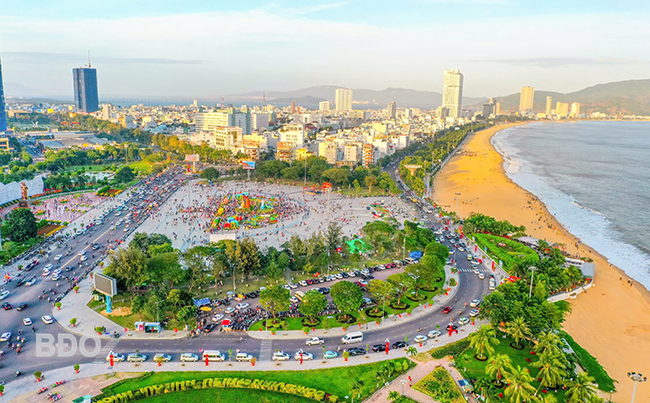 |
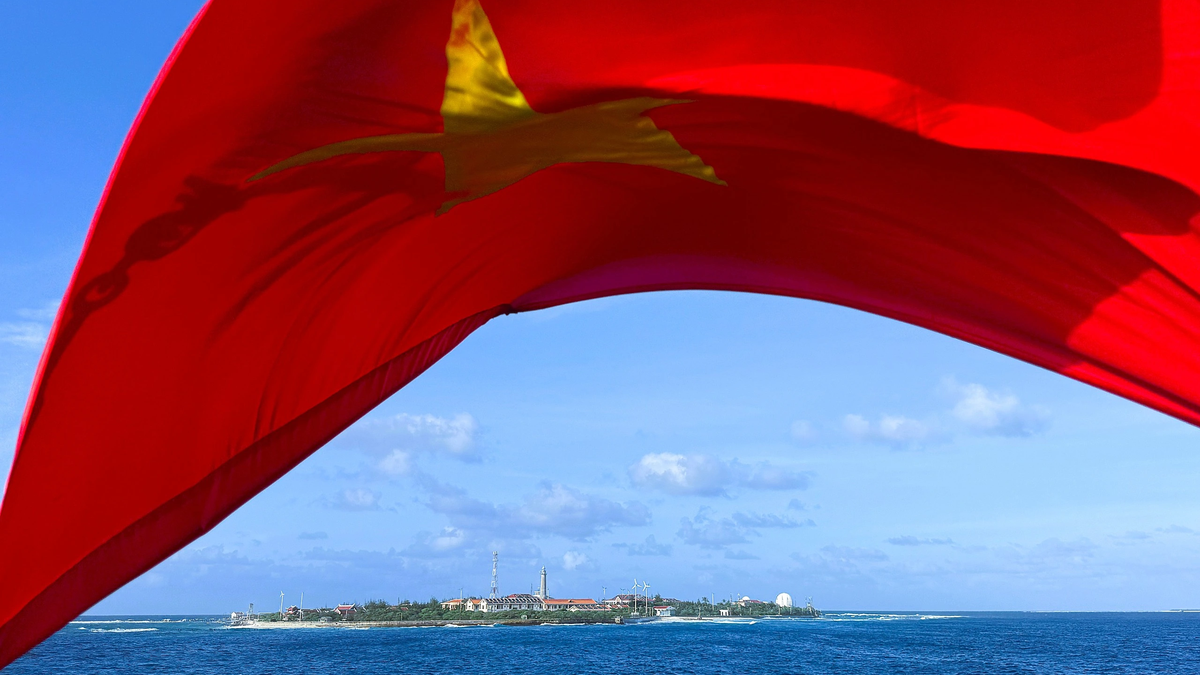
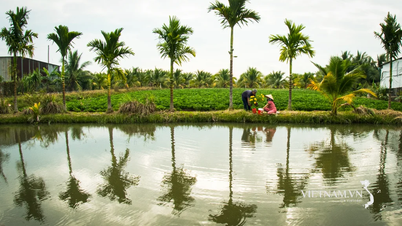
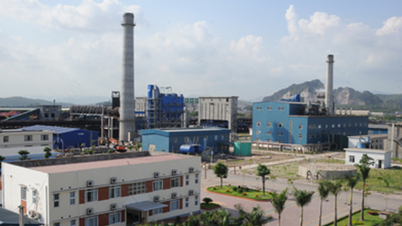
The land of Binh Dinh, which endured years of arduous and fierce warfare, has now transformed and is continuously developing into a prosperous and beautiful place. Photo: NGUYEN DUNG |
This is an immense victory, a momentous historical turning point in the liberation struggle of Binh Dinh province and its people, opening a new chapter in history: building and developing Binh Dinh into an increasingly prosperous, beautiful, and civilized homeland.
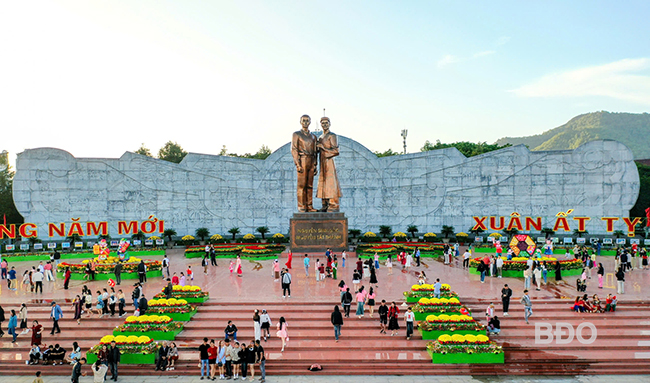 |
Tourists visit and take souvenir photos at the Nguyen Sinh Sac - Nguyen Tat Thanh Monument (Quy Nhon City). Photo: NGUYEN DUNG |
During the historic days of March, commemorating the 50th anniversary of the liberation of Binh Dinh province, people from Binh Dinh and tourists from all over the country gathered in Nguyen Tat Thanh Square (Quy Nhon City) to enjoy the atmosphere of peace, prosperity, freedom, and happiness. Perhaps everyone felt proud, moved, and respectfully grateful for the unwavering courage and indomitable spirit of generations of ancestors who fell and sacrificed their lives for peace, independence, and national unity. Even more proud is that Binh Dinh, a land that endured years of arduous and fierce war, has now transformed and continues to develop into a prosperous and beautiful place. And surely, within each person lies a belief and expectation: with the tradition of "swiftness, surprise, and decisive victory" of the Tay Son rebels with their "cloth robes and red banners," of the national hero Quang Trung - Nguyen Hue, in a region known as the "land of martial arts and literary talent," and under the guiding light of the Party, Binh Dinh will continue to accelerate, break through, innovate, and create, confidently stepping into a new era with the whole country - an era of national progress, towards prosperity, stability, and development, realizing the goal of "a rich people, a strong nation, democracy, fairness, and civilization."
Colonel DO XUAN HUNG
(Commander of the Military Command of Binh Dinh Province)
Source: https://baobinhdinh.vn/viewer.aspx?macm=1&macmp=1&mabb=343516















































Comment (0)