

In August 1945, Nazi Germany surrendered to the Allies. In Indochina, the Japanese army was in disarray, and the revolutionary movement throughout the country was surging. Ho Chi Minh affirmed that the time had come, and independence had to be achieved no matter the sacrifice. He said: “We must seize every second, every minute; the situation will change rapidly, we cannot miss this opportunity.” He decided to hold the National Congress of Delegates in Tan Trao and sent a letter calling on the people of the whole country to rise up in a general uprising before the Allied forces entered our country: “The decisive hour for the fate of the whole nation has arrived; all compatriots, rise up and use our strength to liberate ourselves…”
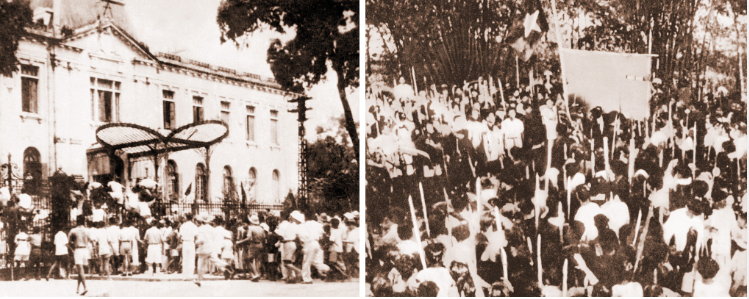
Responding to Ho Chi Minh's call, when the Japanese fascists surrendered and the Allied forces had not yet arrived to disarm them, millions of people rose up as one to launch the General Uprising. The success of the August Revolution was the result of a revolutionary struggle, the organization of forces, and the preparation of conditions from the time the Party was founded, so that when the opportunity arose, they could seize it to launch the General Uprising to overthrow the oppressive yoke of colonial aggression and win national independence.
To protect the independence and unity of our nation, the resistance war against the US for national salvation was one of the greatest and most fierce historical challenges. The victory of April 30, 1975, is one of the three miracles of Vietnamese history in the 20th century, along with the founding of the Communist Party of Vietnam and the victory of the August Revolution.
That victory brought to an end 117 years of struggle against old and new colonialism, affirming the independence and complete unity of the Vietnamese Fatherland on its path to socialism.
The resistance war against the US for national salvation took a turning point when the Central Committee of the Party issued Resolution 15 (1959) on launching armed struggle in the South. The fierce fighting, seemingly an unequal battle between us and the US imperialists, was ultimately decided by the Party's preparation and seizing of opportunities. After the Tet Offensive of 1968 and the victory at Dien Bien Phu in the air in the North, which forced the US to sign the Paris Agreement in 1973 and withdraw all its troops, recognizing the opportune moment, the Party decided to concentrate on building up forces and preparing all conditions for a general counter-offensive. Following the resounding victory at Phuoc Long (December 13, 1974), the Politburo met on January 6, 1975, and made the strategic decision to liberate the South within two years, or within 1975 if the opportunity arose.
Without thorough preparation, accurate situational analysis, and precise strategic vision, it would have been difficult to achieve the complete and resounding victory of April 30, 1975, in ending the war. This "golden milestone" affirms the correct, creative leadership and guidance of our Party, seizing the opportune moment in this historically challenging struggle against foreign invaders—one of the most difficult wars of resistance to gain and preserve independence in our nation's millennia-long history.
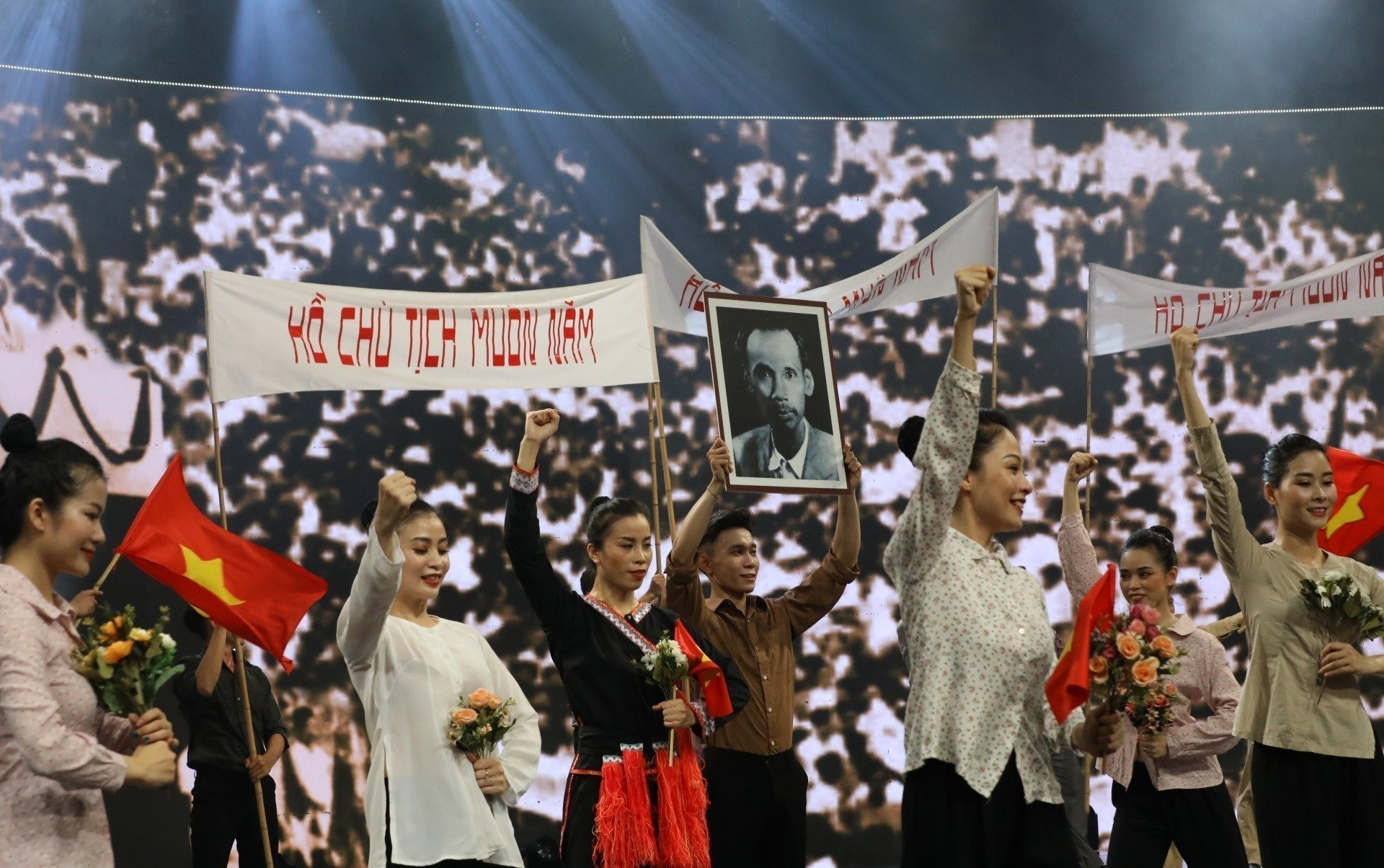
For a revolution to succeed, strategic vision, preparation of forces, and keen foresight regarding opportune moments are necessary. In 1945 and 1975, recognizing that the opportune moment had arrived, a historic decision was needed to promptly mobilize all resources in every aspect to take advantage of the opportunity and bring the revolution to victory.
Under the unifying banner of the Party, the entire nation was united, creating boundless strength. This strength, combined with seizing the right opportunity, defeated "two great imperial powers," achieving independence and national reunification. But as President Ho Chi Minh said: "If the nation is independent but the people are not happy and free, then independence is meaningless." Having achieved independence and reunification, the country faced numerous difficulties after 1975. The embargo and blockade, the unsuitable centralized and subsidized economic policies, continued sabotage by enemies, and the collapse of the Soviet Union and the socialist bloc seemed to leave no way out. Faced with this threat, our Party, with its unwavering resolve and vision for the times, looked directly at the truth, determined to change its thinking, and creatively found a path to reform.
Thus, once again in history, from within difficulties, the Party has recognized and created opportunities to lead the country to continue developing along the chosen path. With a socialist-oriented market economy, with multilateral and diverse international cooperation, with independent and self-reliant thinking, breaking free from the old to see the new, overcoming the "risk of falling behind" and the "middle-income trap," this is a mindset of seizing opportunities appropriate to the new situation and conditions.
Essentially, innovation means recognizing the dynamics of the laws governing the development trends of the era, and first and foremost, correctly addressing the core issues, placing the people at the center; national independence is the principle leading to the integration of individuals, communities, classes, and strata in society, up to the nation and internationally, in harmonious development, with the core being national unity for independence, freedom, and socialism, the boundless strength of our nation.
Faced with the current globalized and unpredictable world, along with the Fourth Industrial Revolution, we can seize this opportunity to integrate and choose a "leapfrog" approach to help our country overcome difficulties and achieve sustainable development.
National identity is emerging as a global phenomenon in the context of integration. Therefore, addressing national issues within the diverse development of the era and proactively anticipating the dynamics of the times during the integration process, in order to attract investment and solve practical problems of the country, each region, and each locality, is a challenge to seize opportunities and take appropriate actions to create a combined strength for the development of the nation.
The documents of the 13th National Congress of the Party affirm: "Our country has never before had such a foundation, potential, position, and international prestige as it does today." We have diplomatic relations with 189 countries regardless of their political systems, employing a "bamboo diplomacy" approach, promoting self-reliance, independence, and seizing opportunities to achieve breakthrough development with the goal of: "A prosperous people, a strong nation, democracy, fairness, and civilization," and "By 1930, a developing country with modern industry and high middle income; by 2045, a developed country with high income."
Source
![[Image] Close-up view of the interchange connecting the two expressways and Long Thanh Airport.](https://vphoto.vietnam.vn/thumb/1200x675/vietnam/resource/IMAGE/2026/05/25/1779703378210_ndo_br_z7863716673926-224453a31600126cce10622af6290afd-4549-jpg.webp)




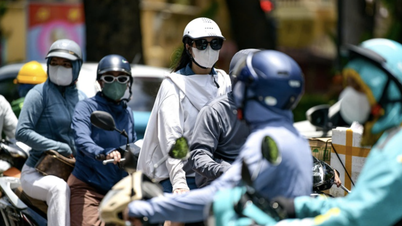
![[Image] Hanoi's urban life under the challenge of a "scorching hot" environment](https://vphoto.vietnam.vn/thumb/1200x675/vietnam/resource/IMAGE/2026/05/25/1779706979265_nang-nong-t5-2026-minh-duy-7-4636-jpg.webp)


































































Comment (0)