

The Asian Development Bank (ADB) on September 29 approved reforms to its capital management system that will unlock $100 billion in new financing over the next decade to address the region's overlapping and concurrent crises.
Increasing available capital will help create even greater leverage through the mobilization of private and domestic capital, turning "billions" into "trillions" needed to address the climate crisis.
Significantly expand capabilities.
These reforms were introduced through an update to the ADB's Capital Adequacy Framework (CAF). The reforms increased the bank's annual new committed capacity by more than $36 billion – equivalent to an increase of $10 billion, or approximately 40%.
This increase was achieved thanks to ADB's prudent approach in optimizing capitalization ratios while maintaining its overall risk appetite. These reforms also created a Countercyclical Lending Buffer to support ADB's developing member countries facing unforeseen crises.
These measures will enable the ADB to provide up to $360 billion from its own financing sources to developing member countries and private sector clients over the next decade. They are designed to ensure the ADB maintains its AAA credit rating, as well as its ability to provide low-cost, long-term financing to developing member countries.
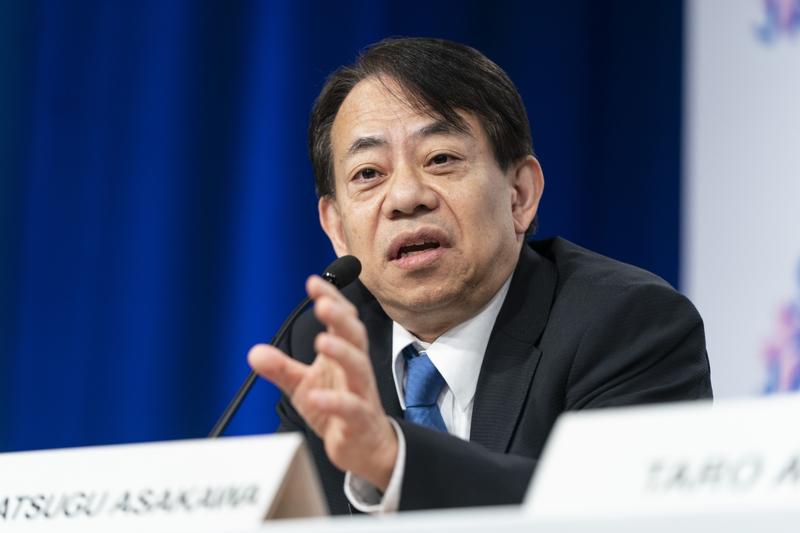
Masatsugu Asakawa, President of the Asian Development Bank (ADB). Photo: China Daily
The reforms also further secure ADB's AAA credit rating by introducing a recovery plan, which helps prevent capital erosion during periods of financial stress. ADB's Capital Adequacy Framework will be reviewed every three years.
“These significant reforms will substantially expand ADB’s capacity to support essential development efforts across Asia and the Pacific, including greater concessional financing for our vulnerable members,” said ADB President Masatsugu Asakawa.
“Our decision today is part of ADB’s response to calls for multilateral development banks to do more with their resources and faster,” he said, adding that these resources will help the region manage complex overlapping crises, address gender inequality, and meet basic needs in the face of the existential challenge of climate change.
“This additional lending capacity will be further expanded and boosted through renewed efforts to mobilize domestic and private capital, as well as to maximize the impact of our work,” the ADB head said.
Expand available resources.
Mobilizing private capital will play a key role in efforts to increase the "billion" to "trillion," by expanding private sector participation in the development agenda.
Actions upstream will help improve macroeconomic policies and create a favorable institutional environment for private sector investment, fostering an increase in domestic and foreign investment.
Midstream advisory support will help create investment project portfolios and prepare viable projects for funding, potentially attracting private sector investment.
Downstream financing will be structured to attract private capital into development projects, including mitigating risks for the private sector.
In summary, facilitating upstream and mobilizing midstream and downstream capital will leverage ADB's balance sheet, helping to amplify available resources for regional development.
Furthermore, economies must also mobilize greater tax revenues, modernize tax administrations through digitalization, and cooperate to ensure a fair and efficient international tax system. Mobilizing domestic resources is crucial in efforts to address debt sustainability and achieve the Sustainable Development Goals.
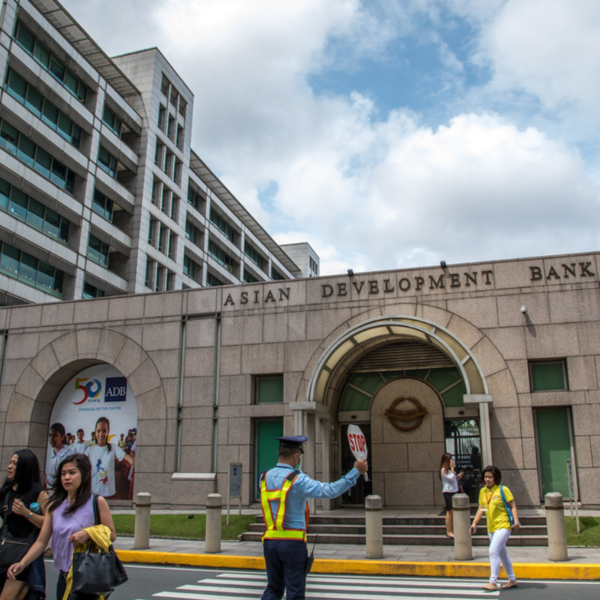
The Asian Development Bank (ADB) headquarters in Mandaluyong City, Metro Manila, Philippines. Photo: Flickr
This updated Capital Adequacy Framework is the latest in a series of initiatives by the ADB to enhance the bank's lending capacity.
In May, the ADB established the Asia and Pacific Climate Innovation Financing Fund (IF-CAP), allowing donors to secure a portion of the existing government financing portfolio on the ADB's balance sheet, thereby freeing up funding for new climate projects.
ADB also signs government-channel financing risk-exchange agreements with other multilateral development banks to reduce portfolio concentration risk and encourage the participation of multilateral development banks in the International Education Financing Fund.
ADB is committed to achieving a prosperous, equitable, resilient, and sustainable Asia and the Pacific region, while maintaining its efforts to eradicate extreme poverty. Established in 1966, ADB is owned by 68 members, including 49 members from the region .
Source




![[Photo] Capturing the moment the tide recedes at Yen Binh Son rapids - a million-year-old scenic spot in Quang Ngai.](https://vphoto.vietnam.vn/thumb/1200x675/vietnam/resource/IMAGE/2026/05/19/1779175463885_yen9-1199-jpg.webp)
![[Photo] National Assembly Chairman Tran Thanh Man attends the groundbreaking ceremony for the National Highway 1A spatial axis project.](https://vphoto.vietnam.vn/thumb/1200x675/vietnam/resource/IMAGE/2026/05/19/1779161360398_ndo_br_bnd-1412-jpg.webp)

































































![[Photo] General Secretary and President To Lam receives Indian Defense Minister Rajnath Singh](https://vphoto.vietnam.vn/thumb/402x226/vietnam/resource/IMAGE/2026/05/19/1779184046302_anh-man-hinh-2026-05-19-luc-16-46-58.png)

































Comment (0)