

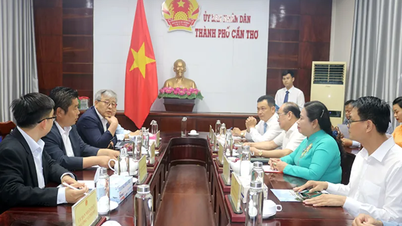
DNVN – To share and discuss technical solutions to support the development of smart city models, a workshop titled "Technological Orientation for the Mekong Delta to Adapt to Climate Change and the Need for Smart City Governance" was held in Can Tho City on October 24th.
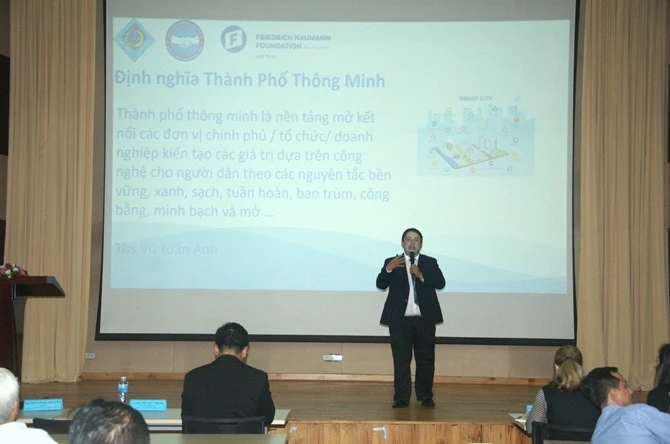
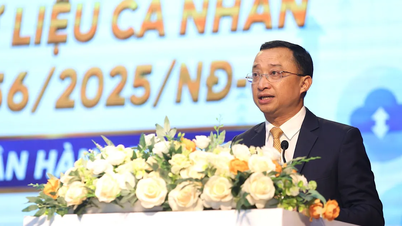
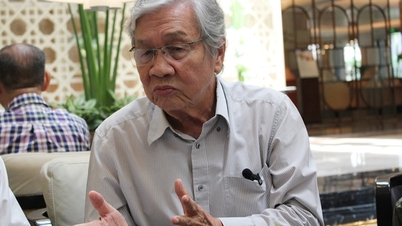
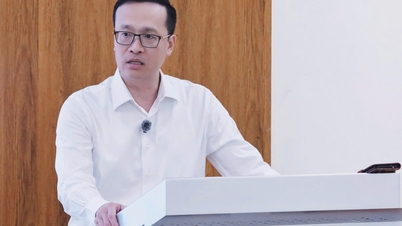
Mr. Vu Anh Tuan - GIZ Digital Transformation Expert ( Ministry of Planning and Investment ).
The workshop, organized by the Can Tho City Union of Friendship Organizations in collaboration with Can Tho University, the Vietnam-Germany Friendship Association, and the Friedrich Naunman Foundation (FNF/Germany), aimed to provide a comprehensive overview of the technical aspects of smart city construction and management. This, in turn, would create breakthrough development for the city in the digital age.
The workshop is a component of the FNF's grant for activities promoting smart cities and responding to climate change in Can Tho City in 2024.
In her opening remarks at the workshop, Ms. Le Thuy Ngoc Lan, Vice President of the Can Tho City Union of Friendship Organizations, stated that the development of smart cities is a common trend in countries around the world as well as in Vietnam. On August 1, 2018, the Prime Minister issued Decision 950/QD-TTg approving the Project on Sustainable Smart City Development in Vietnam for the period 2018-2025, with a vision to 2030.
In the orientation of Can Tho city's development into a smart city, the Politburo issued Resolution 59-NQ/TW on building and developing Can Tho city until 2030, with a vision to 2045. The National Assembly also issued Resolution 45 on piloting some specific mechanisms and policies for the development of Can Tho city. "This is an important prerequisite for Can Tho city to develop into a smart city and successfully implement digital transformation," Ms. Lan emphasized.
Regarding the development of smart cities, Mr. Vu Tuan Anh – GIZ Digital Transformation Expert (Ministry of Planning and Investment) – stated that a smart city is an open platform connecting government agencies/organizations/businesses to create value based on technology for citizens according to sustainable, green, clean, circular, inclusive, equitable, and transparent principles.
According to Mr. Vu Tuan Anh, the development of smart cities needs to be based on important pillars, namely: smart citizens, smart homes, smart government, smart infrastructure, and green, clean, and sustainable energy.
In her presentation on "Smart Transportation - Reducing Private Vehicles to Improve Air Quality," Associate Professor Dr. Nguyen Vo Chau Ngan from Can Tho University stated that the negative side of urbanization is environmental pollution, including emissions from motorcycles and scooters (collectively referred to as motorbikes).
According to a survey of 100 motorbike users in the central districts of Can Tho city, nearly 40% intend to switch from gasoline to electric motorbikes, and 62% want to use public transportation instead of private vehicles to minimize environmental pollution, travel safely, and save costs.
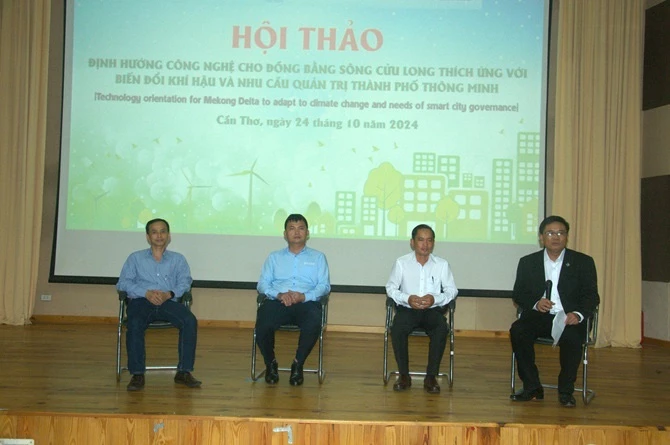
Speakers and scientists shared and discussed technical solutions to support the smart city model.
To minimize environmental pollution caused by motorbikes and encourage people to use public transportation, Mr. Ngan suggested that standards and regulations should be issued to facilitate the use of green transportation, and public transportation planning should be combined with the modernization of infrastructure such as parking lots, pedestrian walkways, and bus stops.
Simultaneously, reduce the use of private vehicles and encourage the use of public transportation. In addition, provide financial support or tax and fee reductions for people switching from gasoline-powered vehicles to electric motorcycles, and offer preferential rates on parking and toll fees for electric motorcycles. Intensify public awareness campaigns to change habits regarding the use of gasoline-powered motorcycles and encourage the switch to green transportation to reduce environmental pollution.
Regarding urban transportation issues, Associate Professor Dr. Nguyen Chi Ngon from Can Tho University stated that there are currently about 100,000 students studying at universities in Can Tho, therefore, planning and developing the public transportation system plays a crucial role. To meet the transportation needs of students, it is necessary to study the construction of 4 electric bus routes with a total length of over 60 km to connect student accommodation areas with universities in a reasonable manner, ensuring that it can transport more than 82% of the city's student population.
"If this can be achieved, electric buses will reduce approximately 663 tons of CO2 emissions annually compared to diesel buses, thereby bringing significant benefits to air quality and public health," Associate Professor Dr. Ngon informed.
Hoa Minh
Source: https://doanhnghiepvn.vn/cong-nghe/can-tho-ban-giai-phap-xay-dung-thanh-pho-thong-minh/20241025074305487
![[Photo] General Secretary and President To Lam presides over a meeting with the Central Organizing Committee.](https://vphoto.vietnam.vn/thumb/1200x675/vietnam/resource/IMAGE/2026/06/03/1780482764658_a1-bnd-4741-3342-jpg.webp)

![[Photo] First session of the 14th Congress of the Vietnam Trade Union](https://vphoto.vietnam.vn/thumb/1200x675/vietnam/resource/IMAGE/2026/06/03/1780465947883_ndo_br_img-3852-jpg.webp)
![[Photo] Secretary of the National Assembly Party Committee, Chairman of the National Assembly presides over the meeting of the Standing Committee and Executive Committee of the National Assembly Party Committee.](https://vphoto.vietnam.vn/thumb/1200x675/vietnam/resource/IMAGE/2026/06/03/1780480353201_ndo_br_bnd-2585-jpg.webp)





































![[Video] Sunset at Lap An Lagoon – Where the sun sets over the fishing nets](https://vphoto.vietnam.vn/thumb/1200x675/vietnam/resource/IMAGE/2026/05/31/1780192137701_beach-landscape-sea-water-nature-grass-745871-pxhere-com.jpeg)

























Comment (0)