

Deputy Prime Minister Le Minh Khai signed document No. 724/TTg-ĐMDN on August 4th, responding to a question from National Assembly representative Dinh Ngoc Minh regarding logistics issues.
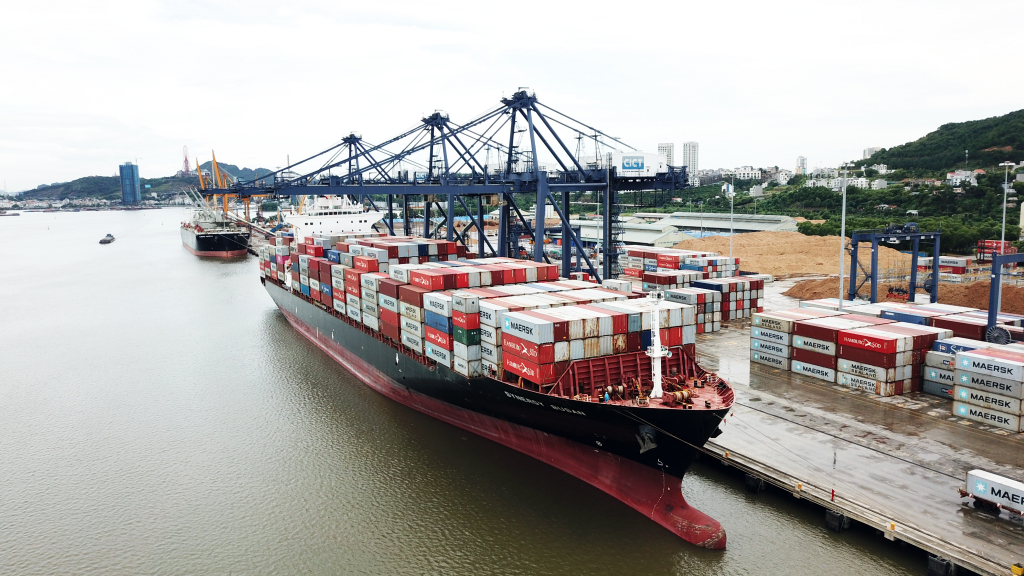
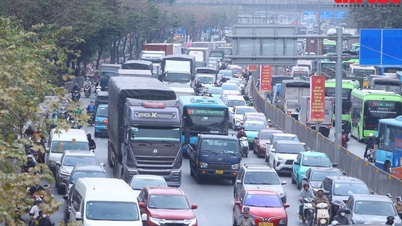
Logistics costs in Vietnam are much higher than in many other countries in the region.
Representative Minh suggested that the Government should implement solutions to reduce logistics costs for businesses, including reducing transportation costs, administrative procedure costs, and informal costs.
According to Mr. Minh, Vietnam's current costs are too high (transportation costs are high - accounting for about 60%), double the world average, EU average, and US average. The cost of transporting one container of goods from North to South Vietnam is about $2,000, while transporting one container from Vietnam to the US costs only $1,000.
Based on the experience of developed countries, freight and passenger railways are built to generate profit (freight is profitable, passenger transport is unprofitable). To reduce logistics costs for businesses, combine passenger transport with the construction of important infrastructure, Mr. Minh proposed that the Government report to the National Assembly soon to implement two railway sections (Lach Huyen - Yen Vien - Lao Cai and Vung Tau - Dong Nai) under the public investment model.
In response to this proposal, Deputy Prime Minister Le Minh Khai stated that Vietnam's logistics costs currently stand at the equivalent of 16.8-17% of GDP, which is still quite high compared to the global average (currently around 10.6%).
These costs have essentially approached the target set by the Government in Decision No. 200/QD-TTg of 2017 by the Prime Minister on approving the Action Plan to enhance the competitiveness and development of Vietnam's logistics services until 2025, with the goal of reducing logistics costs by the equivalent of 16-20% of GDP.
The Deputy Prime Minister also stated that, in the coming period, the Government will continue to direct the Ministry of Transport to coordinate with the Ministry of Industry and Trade and other ministries, sectors, and localities to focus on developing modern and synchronous transport infrastructure, investing in the development of logistics centers and inland ports to promote multimodal transport.
Regarding the information that "the cost of transporting one container of goods from North to South Vietnam is approximately $2,000, while transporting it to the US costs only $1,000," according to current survey data, the cost of transporting one 20-foot container from North to South Vietnam ($2,000) corresponds to the cost of transporting by road.
However, depending on the goods being transported and the shipper's requirements regarding time and transportation conditions, businesses can choose other modes of transport such as rail or sea, with costs equivalent to only 50-70% of road transport (depending on loading and unloading conditions).
For example, current sea freight rates from Hai Phong to Ho Chi Minh City range from approximately 9.2 to 9.5 million VND per 20-foot container and around 12 million VND per 40-foot container. Conversely, from Ho Chi Minh City to Hai Phong, the rates are approximately 6 to 8 million VND per 20-foot container and 9 to 10 million VND per 40-foot container.
For international shipping, freight rates depend on seasonality and shipping conditions. Currently, the freight cost for a 40-foot container to the US is approximately $2,000 - $2,500. However, during the Covid-19 pandemic, this rate could reach $20,000. Comparing transportation costs between different routes and modes of transport is very difficult and cannot be accurately converted to a uniform standard.
Construction to begin on two railway lines before 2030.
Currently, the Bien Hoa - Vung Tau railway line is undergoing a pre-feasibility study. The project is approximately 128 km long, double-track, with a gauge of 1,435 mm, for passenger and freight transport, and a total investment of approximately 6.2 billion USD.
The Lao Cai - Hanoi - Hai Phong railway line, with its detailed planning largely completed, will be approximately 380 km long, double-track, with a gauge of 1,435 mm, for passenger and freight transport, and a total investment of around 10-11 billion USD. Both projects are expected to complete their pre-feasibility study reports before 2025.
Deputy Prime Minister Le Minh Khai agreed with delegate Dinh Ngoc Minh's opinion on the need to quickly implement these two railway projects. Due to the relatively large total investment for the two railway lines, the Prime Minister has issued the National List of projects calling for foreign investment in the period 2021 - 2025 to mobilize investment resources.
In addition, the two seaport areas of Lach Huyen and Cai Mep - Thi Vai have been and are being invested in and connected by road (expressways, national highways) and inland waterways. The volume of goods passing through Cai Mep - Thi Vai port reaches over 80%, meeting the transportation needs of the two seaports at reasonable costs.
In the long term, according to the Deputy Prime Minister, reducing the market share of road transport connecting to seaports is one of the important solutions contributing to reducing logistics costs. In particular, the two railway lines connecting seaports – Lao Cai - Hanoi - Hai Phong (connecting the Lach Huyen port area) and Bien Hoa - Vung Tau (connecting the Cai Mep - Thi Vai port area) – need to be invested in soon and construction should be started before 2030.
Source link


![[Photo] Conference announcing the Politburo's Decision on organizational and personnel matters](https://vphoto.vietnam.vn/thumb/1200x675/vietnam/resource/IMAGE/2026/04/01/1775017881825_bnd-2410-1472-jpg.webp)
![[Photo] Conference on the transfer and reception of Party organizations and Party members between the Party Committee of the Government and the Party Committees of the Central Party Agencies](https://vphoto.vietnam.vn/thumb/1200x675/vietnam/resource/IMAGE/2026/04/01/1775036784472_ndo_br_bnd-2620-jpg.webp)



![[Photo] General Secretary To Lam attends the Conference summarizing the work of the election of deputies to the 16th National Assembly](https://vphoto.vietnam.vn/thumb/402x226/vietnam/resource/IMAGE/2026/03/31/1774952471746_ndo_br_bnd-2315-6970-jpg.webp)















































![[Photo] Prime Minister Pham Minh Chinh receives the Ambassador of the Russian Federation to Vietnam](https://vphoto.vietnam.vn/thumb/402x226/vietnam/resource/IMAGE/2026/04/01/1775046774818_anh-man-hinh-2026-04-01-luc-19-32-33.png)


















Comment (0)