

Seventy-two years after the "glorious victory that shook the world," he still retains the indomitable spirit of a soldier of Uncle Ho's army. This year, he is 77 years old as a Party member.
Footprints of the Dien Bien Phu Ordnance Soldiers
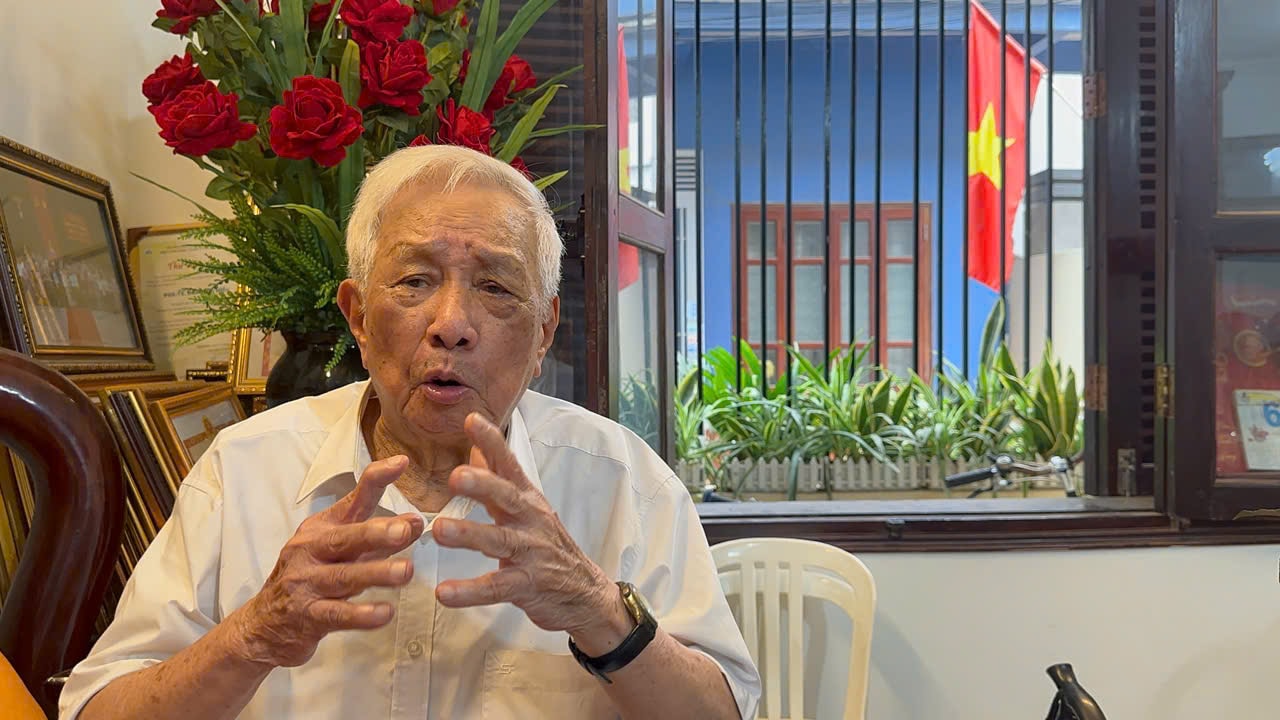
During the days when the whole country was celebrating the 72nd anniversary of the historic Dien Bien Phu Victory (May 7, 1954 - May 7, 2026), one of the greatest victories of the Vietnamese army and people, I visited Colonel Bui Gia Tue, a Dien Bien Phu veteran who is now 96 years old. His wife, Mrs. Bach Thi Hoang Oanh, warmly welcomed us into their cozy little house on Chua Lang Street. “These days, he’s very emotional again,” she whispered, her eyes affectionately fixed on her 96-year-old husband.
What surprised and delighted me was that his health seemed better than before. Compared to when I interviewed him about his memories of the takeover of the capital two years ago, veteran Bui Gia Tue could hear more clearly and his mind was sharper.
Amidst the fragrant aroma of green tea, the former soldier of the 308th Division relives the full memories of "56 days and nights of digging tunnels and sleeping in bunkers." Born and raised in the heart of Hanoi , patriotism burned brightly in the veins of this young man from the Old Quarter. He recalls: "On December 19, 1946, when President Ho Chi Minh issued the Call for National Resistance, I immediately ran to meet the neighborhood self-defense team leader to volunteer for reconnaissance and liaison duties." Those were the first steps on a path of service to the Fatherland that lasted more than four decades.
His connection with the military deepened two years later. The soldier of the Ho Chi Minh Army slowly recounted: "In 1948, during a visit to my brother, a doctor in the 308th Division, I volunteered to join the army. August 28, 1949, the founding day of the 308th Division, was also the day I was admitted to the Party." At the age of twenty, donning the enduring green uniform and following the revolutionary path of President Ho Chi Minh was a decision he always affirmed was "the most correct one in his life."
In 1954, in the prime of his youth, Colonel Bui Gia Tue joined the Dien Bien Phu campaign as a platoon leader and ordnance assistant of the 308th Division. "Our unit's mission at that time was to directly transport ammunition and supplies to the campaign's artillery."
Throughout the campaign, he couldn't remember how many transport trips he made, how many tons of ammunition he supplied to ensure firepower for the front lines. However, there was one moment that soldier would never forget: when General Vo Nguyen Giap made the decision to change the combat strategy from "quick attack, quick victory" to "steady attack, steady advance." For him, this was a brilliant decision, demonstrating the boundless love of the Commander-in-Chief for his soldiers, helping to preserve forces to achieve ultimate victory. That platoon leader had once been kindly visited and encouraged by General Vo Nguyen Giap right at the artillery position. Those words of encouragement became a great motivation for him and his comrades to overcome the rain of bombs and bullets.
On May 7, 1954, 72 years later, his voice still choked with emotion: "When we heard the news of the Dien Bien Phu campaign's victory, that the enemy had completely surrendered, all of us were overjoyed; the joy was indescribable." He paused, his voice filled with emotion: "To have contributed to the Dien Bien Phu victory, to have witnessed that glorious moment of triumph, that was already a great honor and happiness for me."
Shortly afterward, Mr. Tue and several comrades who knew French were assigned the task of guarding French prisoners of war after the victory. Then he recounted a little-known detail, his voice still tinged with humor: "The soldiers didn't have meat to eat, but the prisoners had it every day. The prisoners thanked the soldiers; they never expected Vietnam to be so kind!" That was the humane policy of our army, treating prisoners of war well despite hardship and shortages.
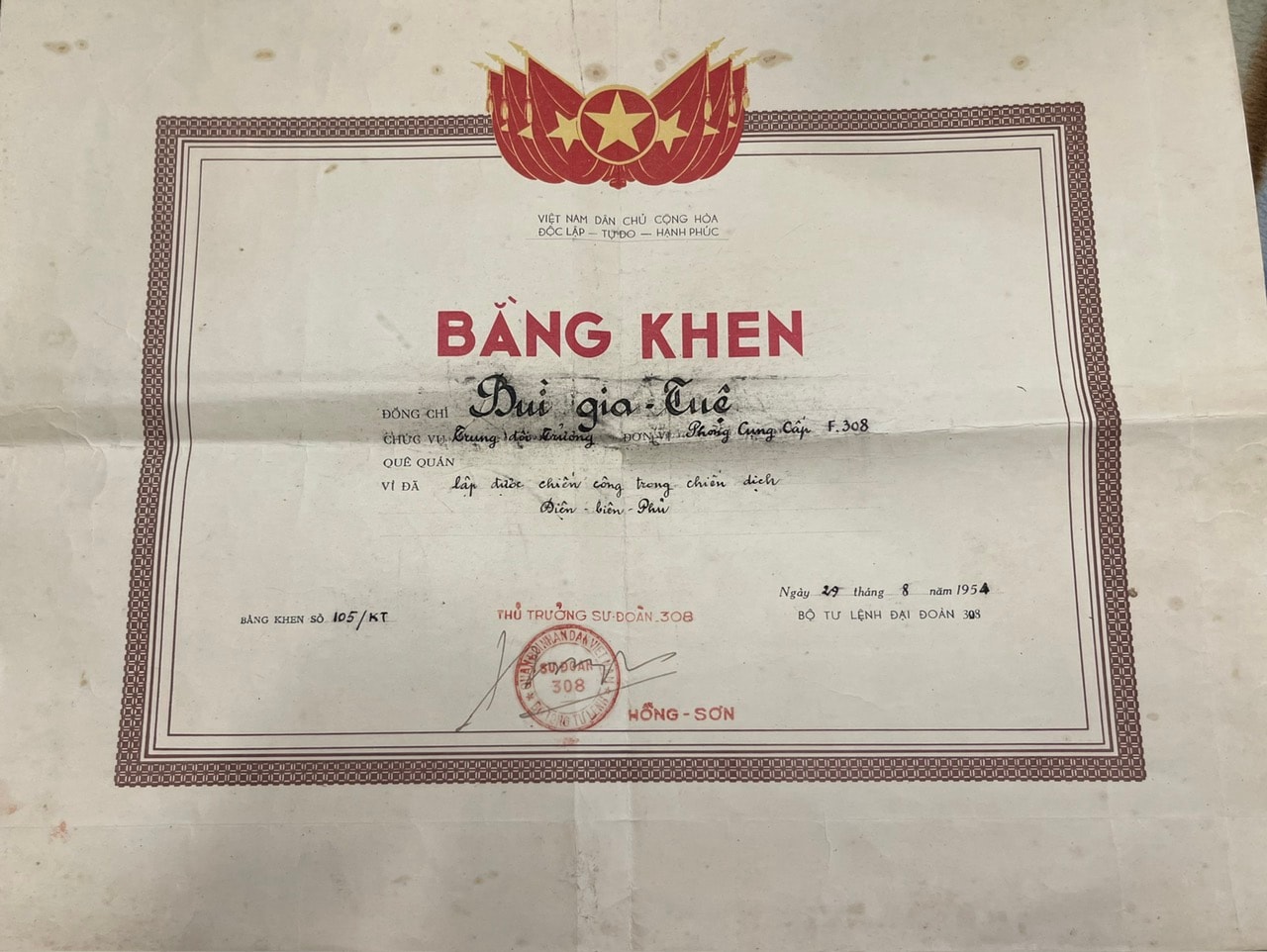
With the victory in the Dien Bien Phu campaign, the Geneva Accords were signed, ending nearly a century of French colonial invasion and domination of our country. Platoon leader Bui Gia Tue was honored with a Certificate of Commendation from the 308th Division for his achievements. While serving on the Dien Bien Phu front, he was wounded and is currently a 4/4 disabled veteran.
After the victory at Dien Bien Phu and the takeover of the capital, Colonel Bui Gia Tue's military career continued with silent but dangerous missions. From 1962 to 1965, he served as Head of the Planning Department at Factory Z1. From 1965, he transferred to become Deputy Director of Factory Z119, specializing in the production of weapons, radar, and missiles for the Air Defense and Air Force during the war against the US. Later, upon joining the General Department of Defense Industry, he was in charge of all Z units nationwide until his retirement with the rank of Colonel.
Over 40 years in the military, never once celebrating Tet (Lunar New Year) at home.
Behind the soldier who fought in two wars of resistance lies a love story spanning over 60 years with Mrs. Bach Thi Hoang Oanh, his wife, comrade, and "great support system" who stood by his side for more than six decades. They met through a friend's introduction. The simplicity and sincerity of the soldier of the Ho Chi Minh Army won the heart of the young teacher from Hanoi. They tied the knot in a wedding steeped in wartime traditions.
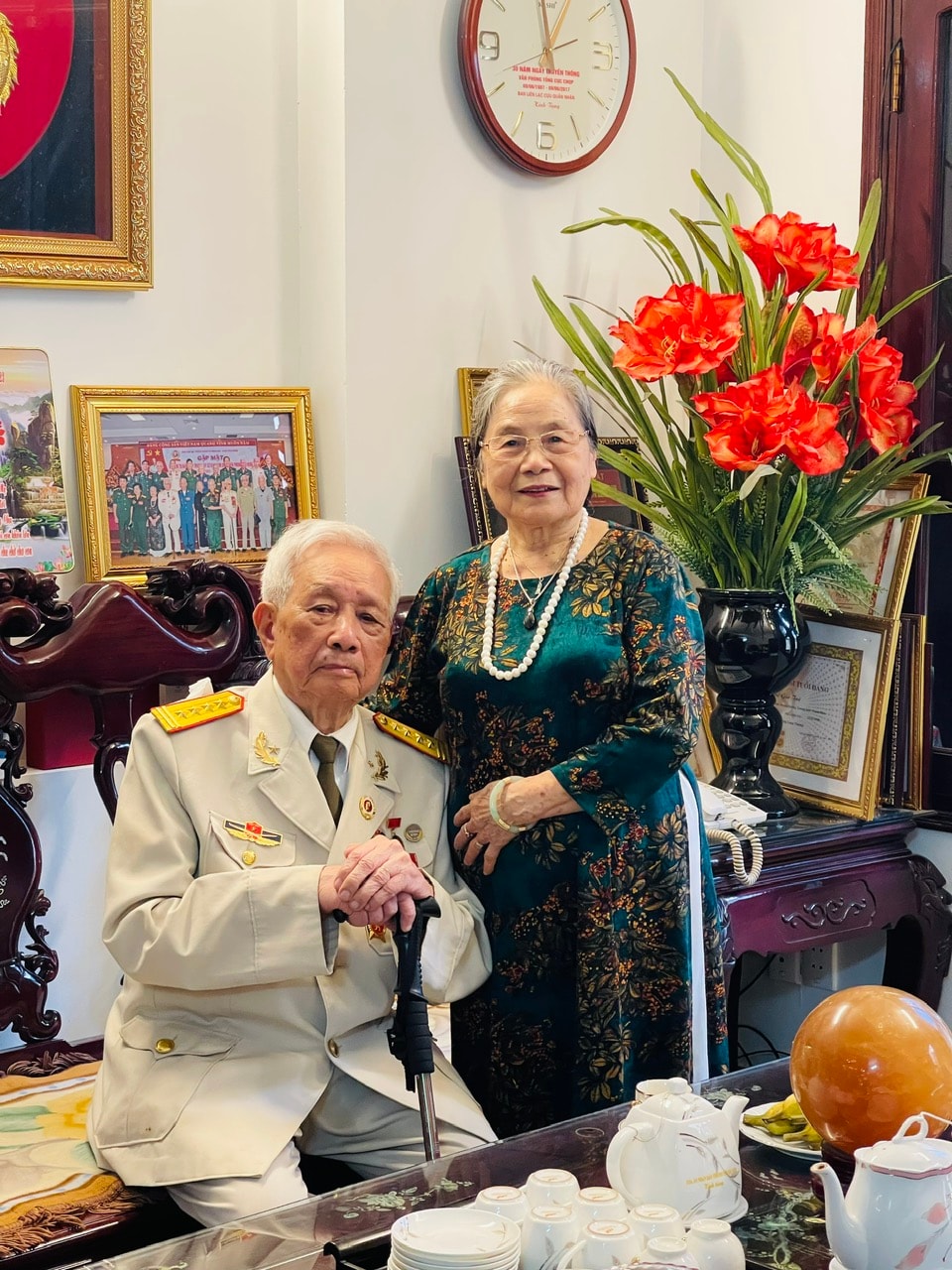
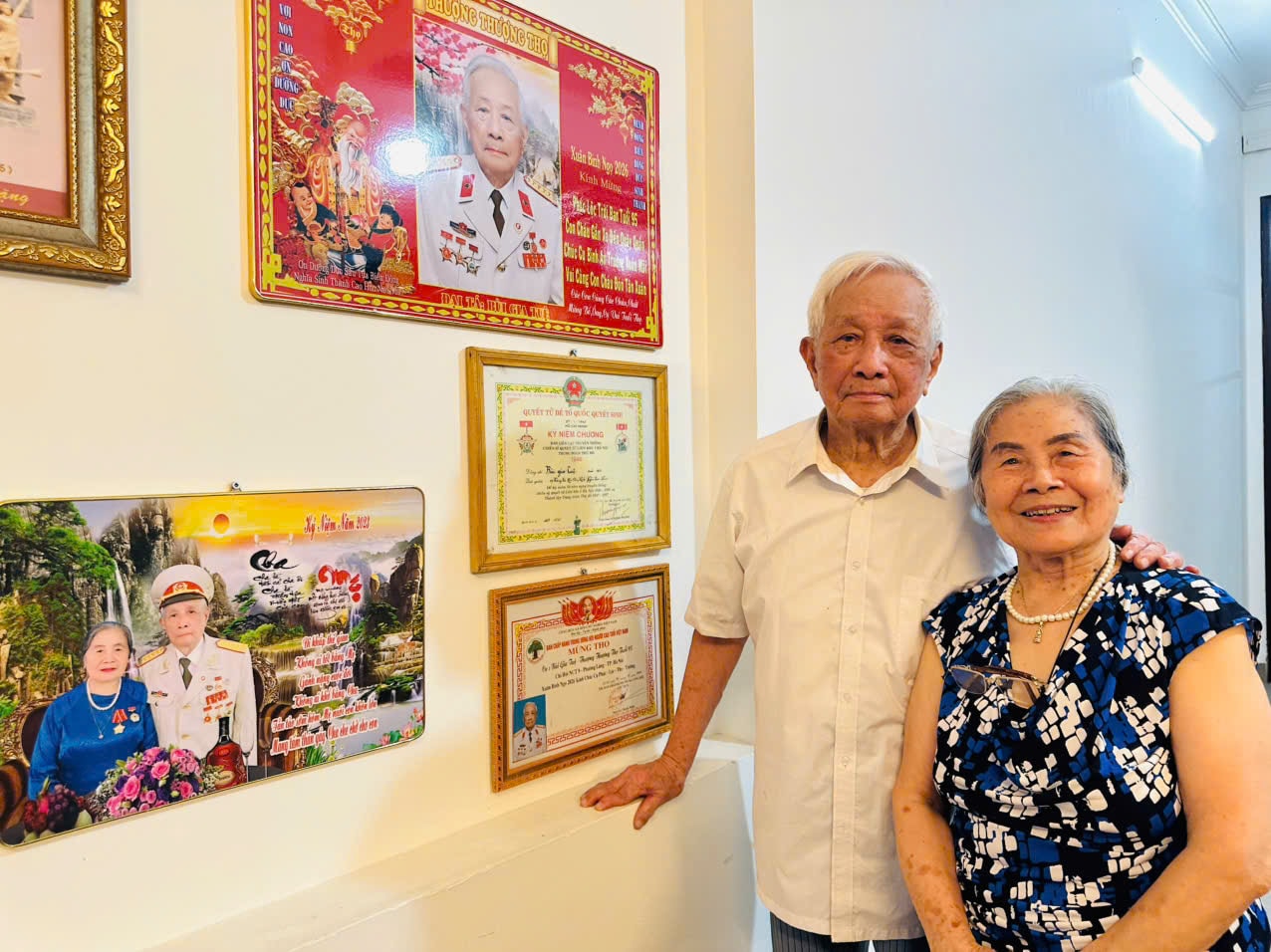
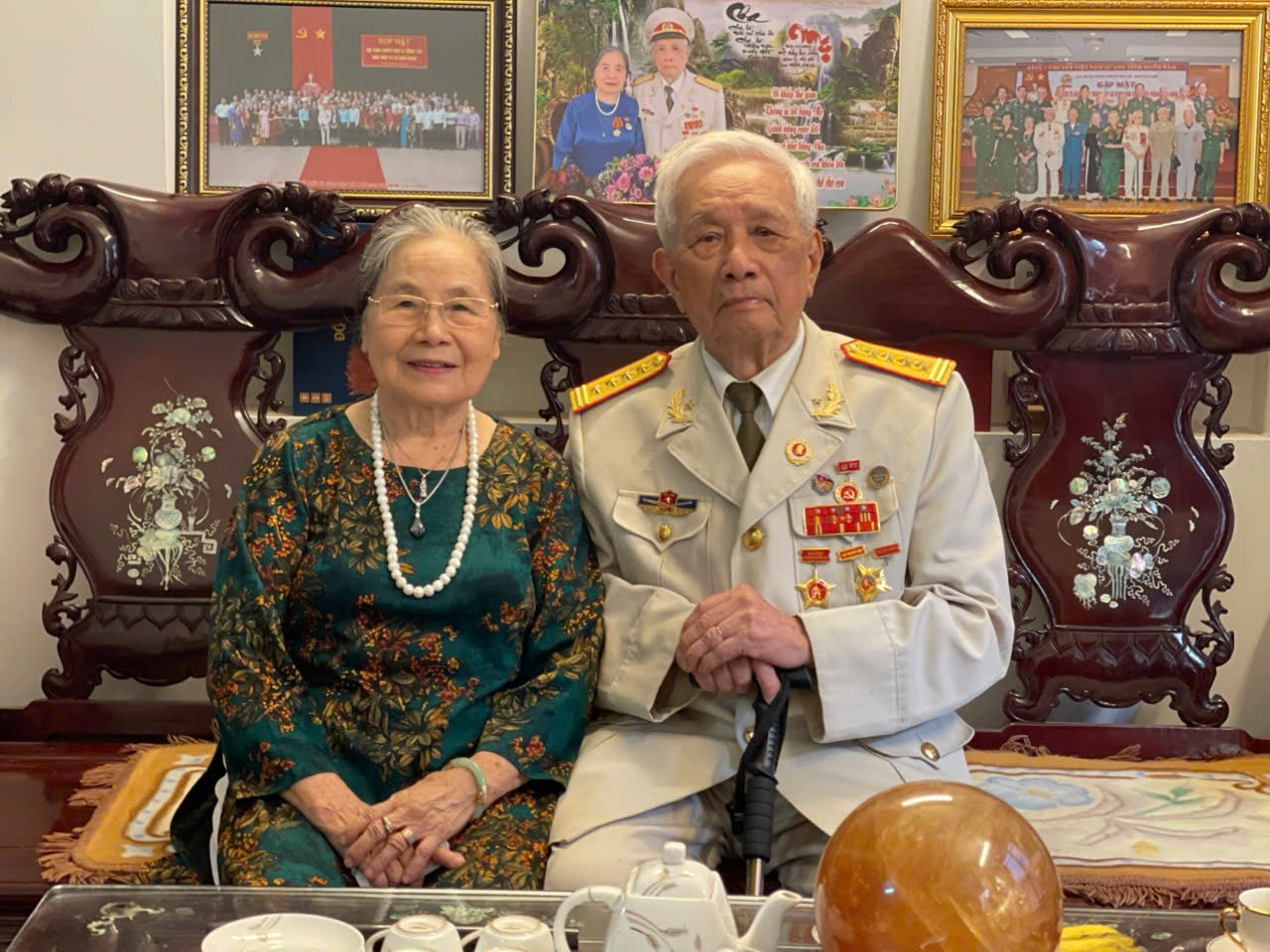
Mrs. Oanh recalled fondly, "The wedding was very simple. There was no electricity, so we had to light four kerosene lamps in the four corners, and we had to turn off the lights immediately when planes flew overhead. Right after the wedding, there was a war alert. We got married the day before, and the next day he left for his mission." That was in 1966, when the US imperialist war of destruction in the North began to escalate. "We've been married for exactly 60 years now," Mr. Tue added, his wife. Mrs. Oanh sat beside him, looking at her husband with affection.
For over 40 years in the military, before retiring, Colonel Bui Gia Tue never celebrated Tet (Lunar New Year) at home. "Every year on the 30th night of the lunar month, he would go on duty, inspecting artillery shells and missiles. He narrowly escaped death so many times because he was always on dangerous missions," Mrs. Oanh shared emotionally. The patience and hard work of this Hanoi woman became a solid foundation for the Colonel to confidently serve the country. Now, in his twilight years, she remains his inseparable companion, taking him for monthly check-ups at Military Hospital 108 and participating with him in traditional gatherings.
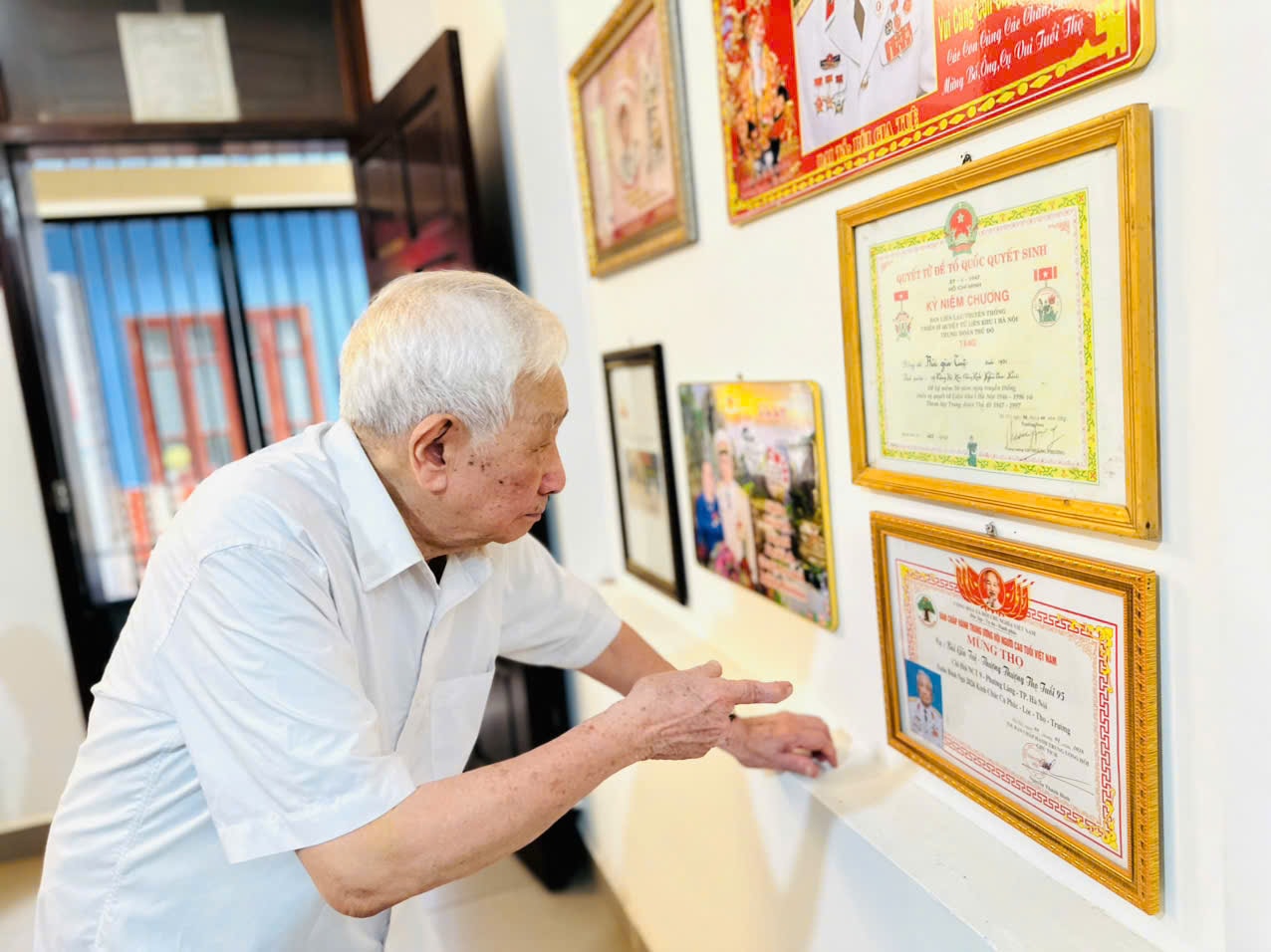
Despite bearing the scars of war and having lost one hearing due to artillery fire at Dien Bien Phu, at the age of 96, he still attentively follows the pulse of the times through newspapers and television. Then, both he and his wife excitedly recounted the recent March 15th election day, when they were chosen by Lang Ward to be among the first citizens to cast their ballots, fulfilling their civic duty with the same unwavering patriotism as in their twenties.
Having lived and fought for nearly a century, his greatest happiness and pride was being a soldier of Uncle Ho, fighting under the command of General Vo Nguyen Giap. This year, Mr. Bui Gia Tue is at a very old age, but in his heart, he always proudly carries within him love for his country, love for the Party, and love for the beloved President Ho Chi Minh.
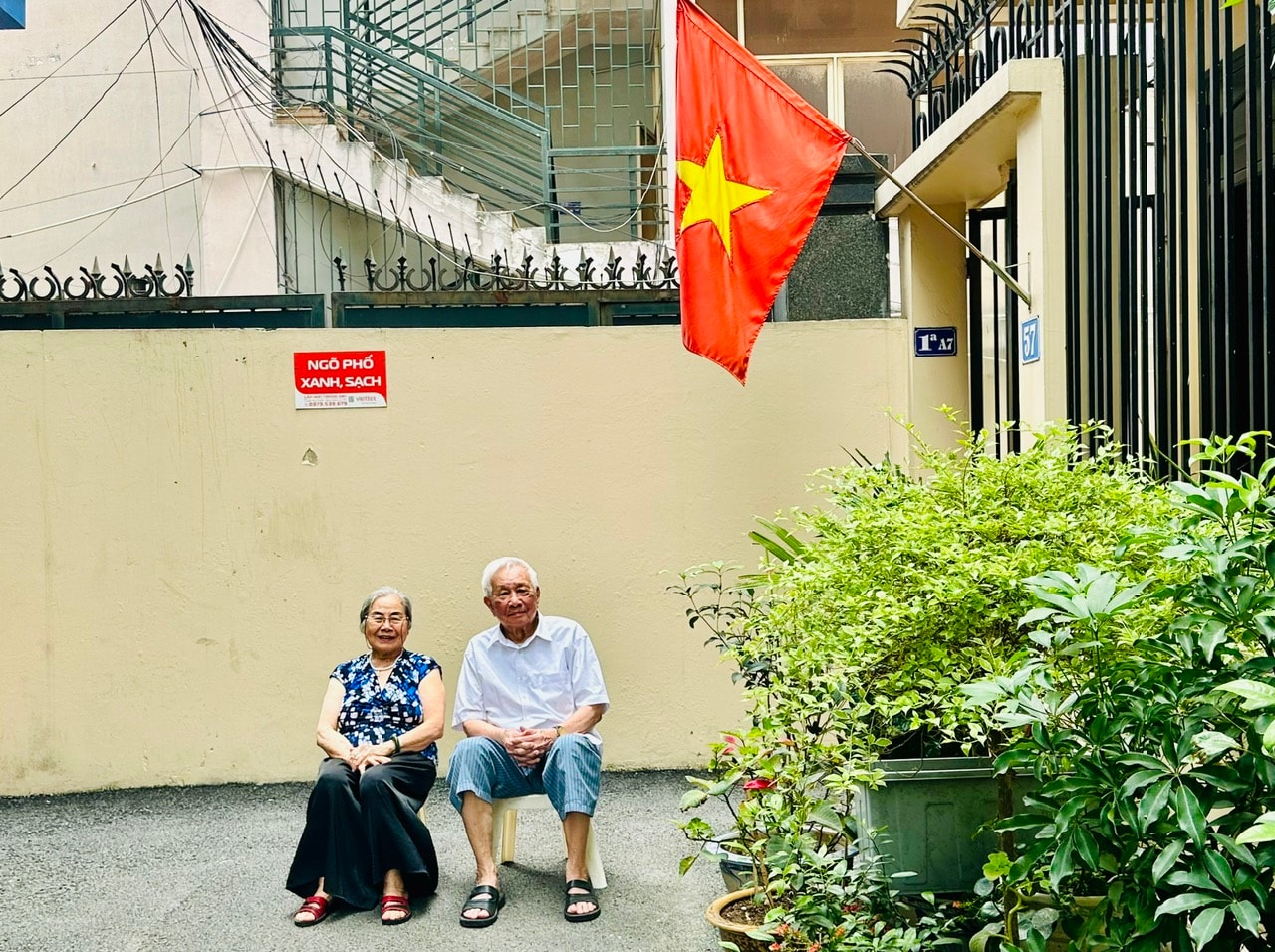
"I consider myself much luckier than many of my comrades. I only hope that my children and grandchildren, the younger generations, will continue this spirit of dedication to build a prosperous and beautiful country," he said, his voice trembling slightly. He hopes that today's young generation will continue the spirit of the "Dien Bien Phu soldiers," cherish the values of independence and freedom, live with ideals and aspirations to build a strong and prosperous nation.
The life of Colonel Bui Gia Tue is not only a vivid chapter in the history of the nation's two great resistance wars, but also a lesson in loyalty, self-sacrifice, and love for humanity. This soldier of Dien Bien Phu will forever be a shining symbol, an example for future generations to emulate and strive for.
Source: https://hanoimoi.vn/chien-si-dien-bien-tron-mot-doi-phung-su-to-quoc-748702.html

![[Image] Pleasant weather helps students enter the 10th grade entrance exam with confidence.](https://vphoto.vietnam.vn/thumb/1200x675/vietnam/resource/IMAGE/2026/05/29/1780034401612_ngay-1-thi-lop-10-minh-duy-8-5009-jpg.webp)
![[Photo] Ba Lang An Lighthouse - the "eye of the sea" amidst the "rock museum" of Quang Ngai province.](https://vphoto.vietnam.vn/thumb/1200x675/vietnam/resource/IMAGE/2026/05/29/1780038698840_anh-man-hinh-2026-05-29-luc-14-10-42.png)



































































Comment (0)