


Operating backup wells
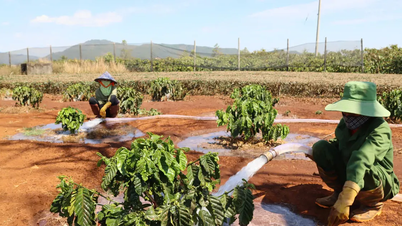
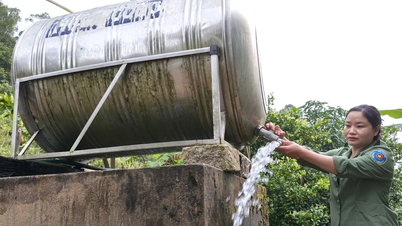
In recent days, people in Dong Thap have been facing a shortage of fresh water. To promptly supply water to the people, Mr. Pham Thanh Tam, Deputy Director of Dong Thap Water Supply Company Limited, said that the unit has operated 16 backup wells. This water source is regulated and pumped into freshwater reservoirs and channeled to stations and plants to increase pressure in downstream areas and regions at high risk of water shortage. In addition, the unit has also coordinated with the People's Committee of Tan Hoa commune to install more than a dozen public water intake points in coastal areas and outside the dike (where water pipes have not yet reached) to ensure water for daily use for the people.
“There are no water pipes here, so people have to use stored rainwater or water from rivers and canals for daily life and cooking. However, the stored water has run out while saltwater intrusion has spread further inland. The local authorities have installed public water taps, and the people are very happy. Otherwise, people would have to buy water at a high price, and even then, it wouldn't always be available,” said Ms. Nguyen Thi Lan from Tan Hoa commune, excitedly.
According to forecasts from meteorological and hydrological agencies, saltwater intrusion in Dong Thap province may last until the end of May. In light of this situation, Mr. Vo Trung Dong, Vice Chairman of the People's Committee of Tan Hoa commune, said that the local authorities are actively encouraging residents to use water sparingly and avoid waste.
Diverse solutions
In Ca Mau , over the past few days, the lives of hundreds of households in three remote communes (Nguyen Phich, U Minh, and Bien Bach) have been disrupted due to a shortage of clean water. Ms. Vo Thi Tho (Thanh Tung hamlet, Bien Bach commune, Ca Mau province) said that although her family lives in a water piped area, the water flow is very weak because it's far from the water treatment plant. “During the day, the water doesn't flow at all, and at night it's intermittent. Because there's so little water, my family has to be very frugal, mainly using it for drinking and cooking,” Ms. Tho said.
According to Mr. Le Van Day, Vice Chairman of the People's Committee of Bien Bach commune, the entire commune currently has about 120 households lacking water or unable to independently secure a water supply for daily use. Since the beginning of March 2026, the locality has coordinated with the neighboring commune ( An Giang province) to connect a supply pipeline. The pipeline connection has only solved the problem for about 60 households; the rest have to buy water from boats that exchange water, at a price ranging from about 40,000 VND/ m³ ...
Mr. Lu Quang Ngoi, Chairman of the People's Committee of Ca Mau province, requested the Department of Agriculture and Environment to urgently review and report in detail on the situation of water shortage for domestic use; clearly stating the causes and proposing solutions for the future.
In Can Tho City, Mr. Ngo Thai Chan, Director of the Department of Agriculture and Environment of Can Tho City, said that to ensure clean water for residents during the 2026 dry season, the city has invested in 37 free clean water supply points, concentrated in coastal areas. These water supply points are equipped with storage tanks with a capacity of over 10,000 liters and an automatic pumping system that operates continuously, ensuring sufficient water for residents to collect at any time.
In An Giang province, the province has proactively and effectively operated the sluice gate system throughout the province and coordinated with the Southern Irrigation Exploitation Company Limited to operate the Cai Lon, Cai Be, and Xeo Ro sluice gates, and with the An Giang Irrigation Exploitation Company Limited to operate the sluice gate system to prevent saltwater intrusion and maintain freshwater levels appropriately according to the actual production requirements of each area at different times.
Ho Chi Minh City is at risk of localized water shortages.
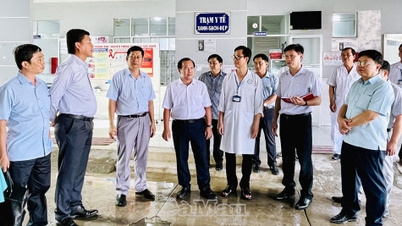
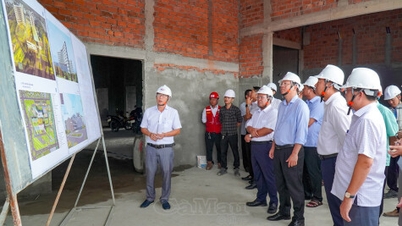
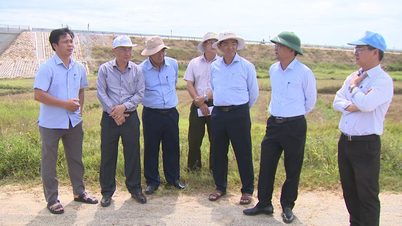
On April 8th and 9th, leaders from the Ho Chi Minh City Department of Agriculture and Environment, along with the Ho Chi Minh City Irrigation Sub-Department, conducted on-site inspections regarding saltwater intrusion response and water storage in Binh Loi and Hung Long communes, Ho Chi Minh City.
Informing the working group, Mr. Ha Duc An, Deputy Head of the Economic Department of Binh Loi commune, said that the biggest difficulty currently remains the lack of synchronized irrigation infrastructure, with many canals being silted up, limiting water storage capacity, while funding for maintenance and dredging is limited. In Hung Long commune, Mr. Ha Tan Loc, Vice Chairman of the People's Committee of Hung Long commune, reported that in the first quarter of 2026, the locality repaired 14 sluice gates to improve salinity control and water regulation. The locality is continuously monitoring the operation of the sluice gates to ensure they are functioning appropriately, both preventing salinity intrusion and utilizing freshwater resources to support the people.
Mr. Nguyen Xuan Hoang, Deputy Director of the Department of Agriculture and Environment of Ho Chi Minh City, said that according to the assessment of the Ho Chi Minh City People's Committee, there is a risk of localized water shortages in April 2026, while saltwater intrusion in downstream areas is increasing. The city has requested departments, agencies, and localities to implement response measures. The city's agricultural sector is developing production plans suitable to water resources, coordinating the operation of large reservoirs such as Dau Tieng and Tri An to supplement water, push back saltwater intrusion, and maintain freshwater for downstream areas.
DUC TRUNG
Source: https://www.sggp.org.vn/chu-dong-nguon-nuoc-sinh-hoat-post847458.html

![[Photo] General Secretary and President To Lam presides over a meeting with the Central Organizing Committee.](https://vphoto.vietnam.vn/thumb/1200x675/vietnam/resource/IMAGE/2026/06/03/1780482764658_a1-bnd-4741-3342-jpg.webp)

![[Photo] First session of the 14th Congress of the Vietnam Trade Union](https://vphoto.vietnam.vn/thumb/1200x675/vietnam/resource/IMAGE/2026/06/03/1780465947883_ndo_br_img-3852-jpg.webp)
![[Photo] Secretary of the National Assembly Party Committee, Chairman of the National Assembly presides over the meeting of the Standing Committee and Executive Committee of the National Assembly Party Committee.](https://vphoto.vietnam.vn/thumb/1200x675/vietnam/resource/IMAGE/2026/06/03/1780480353201_ndo_br_bnd-2585-jpg.webp)












































![[Video] Sunset at Lap An Lagoon – Where the sun sets over the fishing nets](https://vphoto.vietnam.vn/thumb/1200x675/vietnam/resource/IMAGE/2026/05/31/1780192137701_beach-landscape-sea-water-nature-grass-745871-pxhere-com.jpeg)




























Comment (0)