

 |
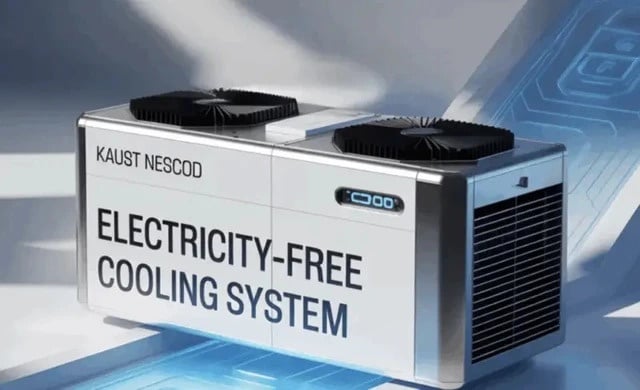
The NESCOD cooling system consumes no electricity. Photo: KAUST . |
Researchers at King Abdullah University of Science and Technology (KAUST) in Saudi Arabia have introduced NESCOD, a new passive cooling technology. This system was developed to address the growing need for cooling solutions that don't rely on energy-consuming air conditioning.
Mechanistically, NESCOD generates cold air through a natural physical reaction, rather than using compressors and electricity like traditional air conditioners. The system exploits the principle of heat transfer from a hot area to a cold area in thermodynamics to operate.
This system collects and stores solar energy for use in cooling. This eliminates some of the electricity costs associated with cooling and provides a solution to mitigate the environmental impact of traditional air conditioning.
Researchers also stated that this system could help reduce reliance on diesel-powered refrigeration systems, thereby optimizing radiant heat transfer and making it applicable in remote or disaster-prone areas.
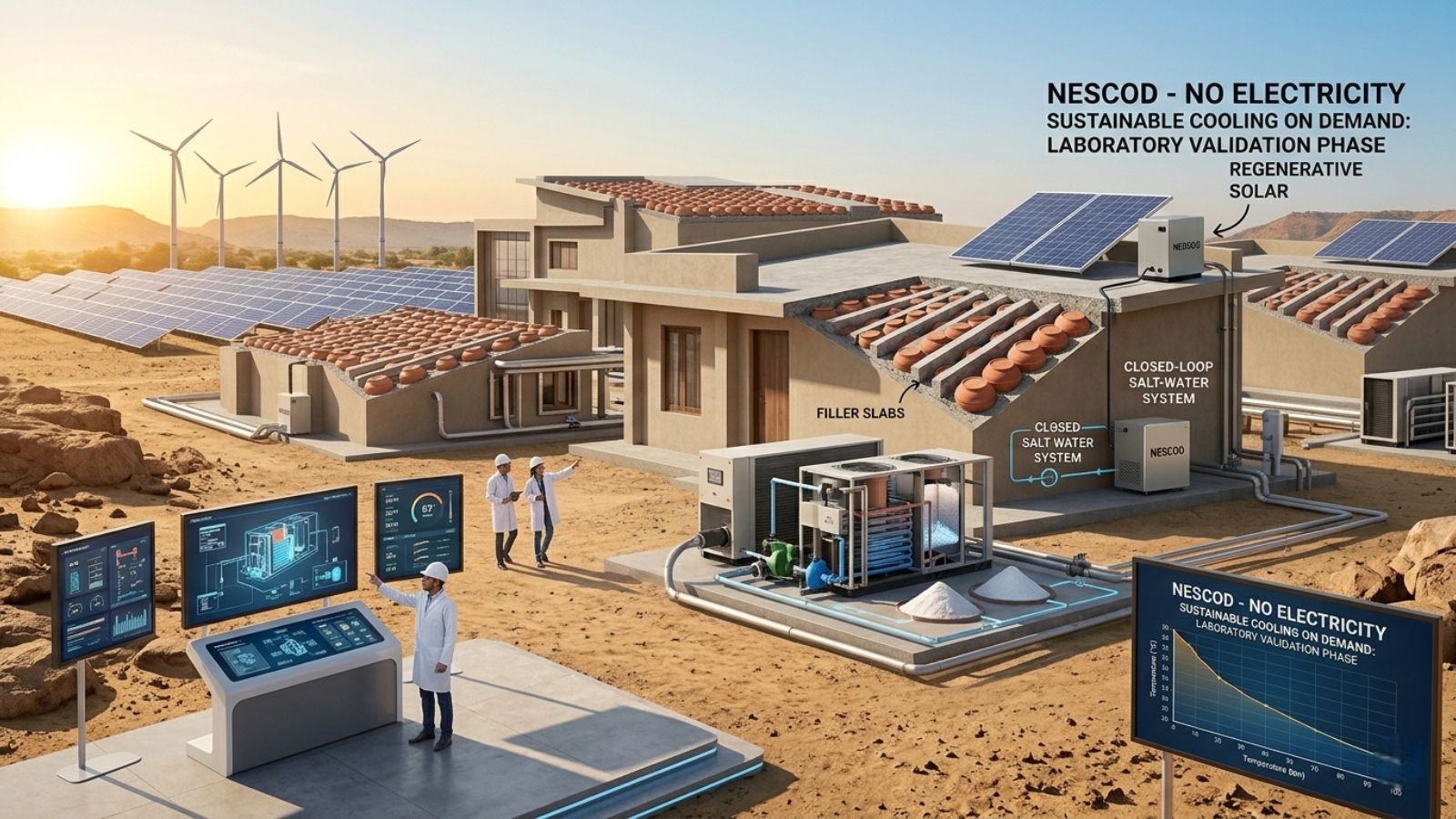 |
The simulated operating mechanism of NESCOD. Image: PuneNow/X. |
The NESCOD system operates on a two-stage thermodynamic cycle, consisting of cooling by dissolution and regeneration of the solute using solar energy. In the cooling/dissolution cycle, a specific salt, ammonium nitrate, is dissolved in water.
The process involves absorbing heat from the surrounding environment to break the ionic bonds of the salt, thereby rapidly reducing the temperature of the liquid. According to research published by the Royal Society of Chemistry, laboratory tests showed that the system can achieve a cooling capacity of up to 191 W per square meter under standard conditions.
Researchers have developed a 3D solar energy recovery system to create a sustainable and repeatable system. The system works by using sunlight to convert water in a salt solution into steam.
As the water evaporates, the ammonium nitrate recrystallizes, starting a new cooling cycle. This process allows the cooling effect to be stored and used whenever needed, as the dissolution and regeneration processes occur separately. This makes the system highly efficient for off-grid applications under extreme heat conditions.
The study also indicated that NESCOD can maintain its cooling efficiency after multiple usage cycles. When exposed to standard levels of solar radiation, the system can continuously evaporate approximately 2.2 kg of water/m²/hour, helping to maintain temperatures between 5-15 degrees Celsius.
In addition, the system can recover the generated steam, allowing for the reuse of water with impurity levels below 1 ppm. This feature is particularly useful in arid regions where water conservation is considered essential.
Furthermore, its economic efficiency makes the technology a viable option for large-scale deployment. Previously, ammonium nitrate proved to be effective and inexpensive, becoming a sustainable chemical energy carrier and has been produced on a large scale.
Source: https://znews.vn/cong-nghe-may-lanh-khong-ton-tien-dien-post1654541.html
![[Photo] General Secretary and President To Lam presides over the meeting to approve the draft report on the results of the second inspection by the Politburo of the Standing Committee of the Hanoi City Party Committee.](https://vphoto.vietnam.vn/thumb/1200x675/vietnam/resource/IMAGE/2026/05/26/1779789811432_a2-bnd-4430-9620-jpg.webp)


























































































Comment (0)