

DNVN - Real estate legal expert Pham Thanh Tuan believes that the proposal in the draft Personal Income Tax Law (amended) by the Ministry of Finance mainly aims to prevent real estate speculation. The proposal replaces the current regulation with a uniform tax rate of 2% on the transfer price.
According to real estate legal expert Pham Thanh Tuan, like all other proposals related to real estate, the intention to tax personal income from real estate transfers based on the length of ownership immediately sparked controversy.
Opponents worry that once the tax is imposed, it will somehow find its way into rental and sale prices, only harming those who do not own or do not yet own a home. Supporters hope that this solution will curb speculation, return supply to those in need, and thus bring down housing prices.
The current approach to real estate taxation requires careful consideration, given the specific issues facing Vietnam's housing market.
Countries typically apply real estate taxes in several main forms: progressive taxes proportional to the number of properties; taxes applied to properties not in use; and higher taxes applied to those who hold properties for short periods.

Taxing real estate remains a challenging task.
Regarding progressive taxation based on the number of properties, countries that apply this approach have a higher tax rate for those who own more properties than those who own fewer. The UK increases the tax by 3% for second homes. Singapore applies a 20% tax on the second property, 30% on the third, and so on.
Regarding taxes applied to the act of not using real estate, Canada imposes a 1% tax on vacant homes, while the UK levies an additional tax on homes that have been vacant for at least one year…
Applying higher taxes to short-term real estate holders is relatively common. For example, Singapore levies a 100% tax on the difference between the purchase and sale price of land in the first year, and 50% after two years. Taiwan applies a 45% tax rate to those who resell real estate within the first two years, 35% for 2-5 years, and 20% for 5-10 years. South Korea also applies a 70% tax to those who sell a house in the first year.
In Vietnam, a resolution from the Central Committee mandates research into "regulating higher taxes for those who use large areas of land, own multiple houses, speculate on land, are slow to utilize land, or leave land fallow." Thus, in the future, higher taxes will be applied to three groups: "using large areas of land and owning multiple houses" (based on quantity), "land speculation" (based on the duration of ownership), and "slow to utilize land or leave land fallow" (determining that the land is not put into use) – similar to regulations in many countries today.
The Ministry of Finance's proposed amendments to the Personal Income Tax Law primarily aim to prevent speculation, replacing the current regulation which applies a uniform 2% tax rate on the transfer price, regardless of the holding period. The Ministry of Finance expects that, if included in the legislative agenda, the National Assembly will provide feedback by the end of 2025 and consider passing the draft during the mid-2026 session.
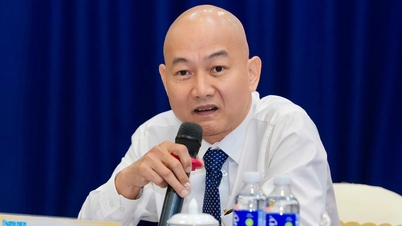
"Although not yet detailed, I believe this solution is more reasonable than applying a progressive tax to those who own multiple properties. A higher tax rate for short-term ownership, in theory, could help curb speculation and reduce the practice of 'flipping' real estate for quick profits," Mr. Tuan shared.
According to Mr. Tuan, speculators typically use financial leverage for short periods. Maintaining ownership of real estate for extended periods puts significant financial pressure on them. High taxes increase costs and reduce the attractiveness of real estate speculation. Liquidity in buy-and-sell transactions is therefore reduced.
However, for this tax tool to be effective, it needs to be accompanied by at least the following conditions: a complete national database on land prices; and guaranteed information technology infrastructure.
Completing the national database on land prices is also a requirement set forth in the 2024 Land Law. If the issue of "two prices" in real estate transactions and cash payments is not resolved, taxation will remain difficult and fairness will be hard to guarantee.
Furthermore, ensuring a complete information technology infrastructure for registering land and real estate transactions is essential for tax authorities to obtain accurate information on the duration of real estate ownership.
"When these basic conditions are met, then the tax tool to restrict real estate speculation will truly be 'correct' and 'effective,' targeting the right market regulation goals and the right speculators," Mr. Tuan emphasized.
Ha Anh
Source: https://doanhnghiepvn.vn/kinh-te/bat-dong-san/day-lui-dau-co-bat-dong-san/20241202070342120
![[Photo] General Secretary and President To Lam receives Amazon's Senior Vice President David Zapolsky](https://vphoto.vietnam.vn/thumb/1200x675/vietnam/resource/IMAGE/2026/05/22/1779466547770_a1-bnd-3513-6601-jpg.webp)





















































































Comment (0)