

Transform political science classes into intimate dialogues.
Present at the auditorium of the 377th Division as the 2026 Political Education and Public Speaking Competition entered its final round, we clearly felt the difference in the delivery style of the young officers.
Stepping onto the podium, Major Tran Van Tien, Assistant Officer of the Political Department, didn't immediately start his electronic lecture but instead posed a relatable scenario: "Suppose one day you read negative information about your unit on social media, what would you do?"
 |
| Organizing holiday activities for new recruits at the 377th Division, Air Defense - Air Force Command. |
At the back of the hall, Lieutenant Chu Van Luat, a non-commissioned officer, stood up and replied, still looking confused: "Reporting, I... I'll probably feel confused." The atmosphere in the classroom became somber for a moment. Major Tran Van Tien nodded and gently shared: "Confusion is possible. But first, we must verify it, because the source of the information may not be accurate."
Through this approach, the content on identifying and combating harmful and toxic information on the internet is naturally and vividly presented. The distance between teacher and student disappears; political education lessons become frank exchanges where issues of concern to soldiers are raised, analyzed, and explained.
Observing the competition, we noticed that many lectures were meticulously prepared and closely aligned with the practical realities of the unit. Many young officers flexibly incorporated videos of soldiers' training and daily life into their lectures; created hypothetical situations for learners to handle; or shared stories from their own comrades.
Lieutenant Colonel Truong Cong Phap, Head of Political Affairs of the 377th Division, said: “What we care about is not only whether the instructors deliver the correct and complete content, but more importantly, whether their delivery resonates with the thoughts and feelings of the soldiers, especially the new recruits. The competition is also an opportunity to make a realistic assessment, and from there, continue to train and improve the quality of the political education staff.”
Untangling the emotional knots of new recruits through sharing and understanding.
We visited the New Recruit Training Battalion, 377th Division, where behind every lesson and training session lie the thoughts and feelings of young soldiers leaving their families for the first time to enter the military environment.
New recruit Ma Van Hoai Long, Platoon 1, Company 2, a Nung ethnic minority from Song Ray commune, Dong Nai city, had many anxieties when he enlisted. Long thought the military environment was dry and restrictive, so he was shy and had little interaction with his comrades.
Understanding Long's mindset, Senior Lieutenant Mua A Thanh, Political Officer of Company 2, met with him many times to help him better understand the military environment, the camaraderie among comrades, and the qualities of a soldier of Uncle Ho's army. Not only did he encourage him with words, but he also worked closely with Long, assigning his comrades to help him integrate quickly.
 |
| Platoon officers engage in conversation with and understand the mindset of new recruits at the 377th Division, Air Defense and Air Force Command. |
According to Lieutenant Colonel Tran Quang Thanh, Political Officer of the New Recruit Training Battalion, most new recruits go through a period of bewilderment and psychological turmoil when transitioning from the family environment to the military. Therefore, to do a good job of ideological work, officers must first understand the soldiers.
"From the moment we receive new recruits, the unit thoroughly understands each soldier's family circumstances and psychological characteristics in order to implement appropriate management and education measures. Most importantly, we maintain closeness, listen, and share," said Lieutenant Colonel Tran Quang Thanh.
Along with maintaining strict discipline and daily/weekly routines, the unit also effectively promotes the "three-person team" and "pairs working together" activities; maintains democratic dialogue, meets with and encourages new recruits, and implements ideological work models such as: "5 proactive, 4 flexible, 3 timely"; "Soldiers' family Zalo group"; "Messages from the home front"; and "One good and meaningful story each week". From political training sessions to addressing the concerns of new recruits, a common thread in the political and ideological education work of the 377th Division is always focused on the soldiers, closely adhering to reality and addressing specific issues.
With these practical approaches, the soldiers' spiritual lives have become increasingly open; their awareness and sense of responsibility have been enhanced; and many ideological issues among soldiers have been identified and resolved early on. The unit's annual political education results consistently meet 100% of the requirements, with over 85% achieving good or excellent grades; ideological stability has been maintained, and internal unity has become increasingly strong.
Source: https://www.qdnd.vn/quoc-phong-an-ninh/xay-dung-quan-doi/de-gio-hoc-chinh-tri-gan-hon-voi-chien-si-tre-1038903
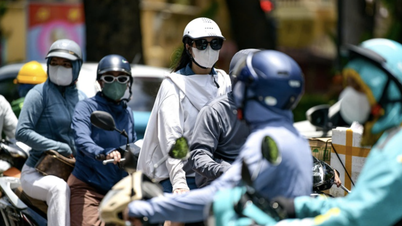
![[Image] Hanoi's urban life under the challenge of a "scorching hot" environment](https://vphoto.vietnam.vn/thumb/1200x675/vietnam/resource/IMAGE/2026/05/25/1779706979265_nang-nong-t5-2026-minh-duy-7-4636-jpg.webp)


![[Image] Close-up view of the interchange connecting the two expressways and Long Thanh Airport.](https://vphoto.vietnam.vn/thumb/1200x675/vietnam/resource/IMAGE/2026/05/25/1779703378210_ndo_br_z7863716673926-224453a31600126cce10622af6290afd-4549-jpg.webp)
































































Comment (0)