

On March 26, Deputy Prime Minister Tran Hong Ha chaired the second meeting of the Steering Committee for the construction and implementation of the investment plan for the high-speed railway on the North-South axis and other important national railway projects.
According to a report by the Ministry of Transport , the high-speed railway line, with a design speed of 350 km/h, will transport passengers and goods as needed; while the existing railway line will be converted to serve freight transport.
Recently, the Ministry of Transport, in coordination with the General Statistics Office ( Ministry of Planning and Investment ), assessed the impact of the North-South High-Speed Railway Project on the economy, showing that the project could contribute approximately 1 percentage point to GDP growth each year during the period 2025-2037.
The Ministry of Transport and related agencies have also reviewed, updated, and finalized plans for mobilizing capital, assessing the impact of public debt; human resource development projects; and orientations for the development of the railway industry…
Besides carrying out renovations and upgrades to effectively utilize existing railway lines, the Railway Project Management Board is also preparing for investment in projects that meet the criteria of nationally important projects: the Lao Cai – Hanoi – Hai Phong line located on the East-West economic corridor; the Ngoc Hoi (Thanh Tri, Hanoi) – Thach Loi (Dong Anh, Hanoi) line connecting railway lines to the south and north; the Ho Chi Minh City – Can Tho line connecting Ho Chi Minh City with the provinces of the Southwestern region; the Thu Thiem – Long Thanh line connecting Ho Chi Minh City with Long Thanh Airport; and the Bien Hoa – Vung Tau line connecting the provinces of the Southeastern region with Ho Chi Minh City and the Cai Mep – Thi Vai seaport area.
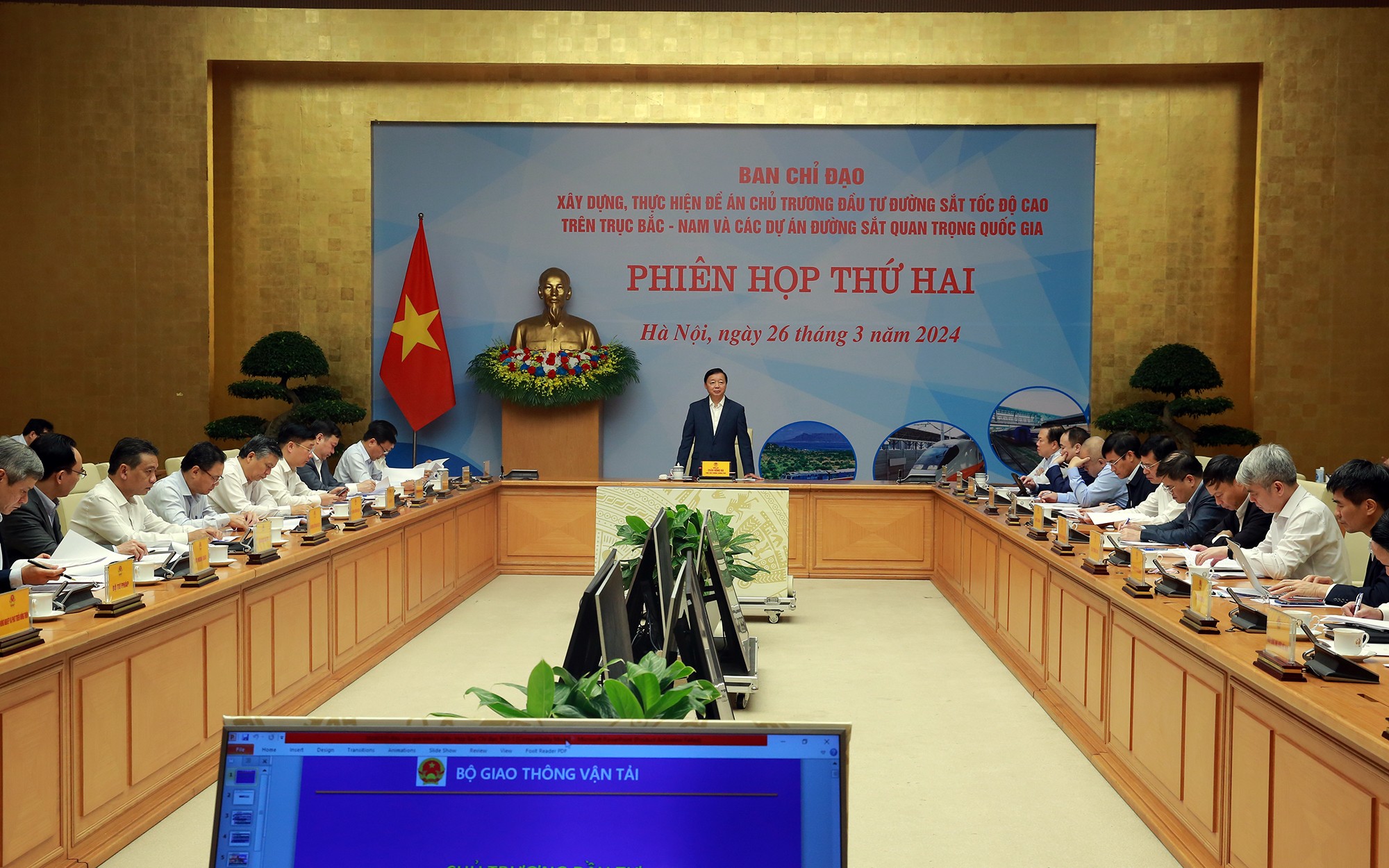
The second meeting of the Steering Committee for the construction and implementation of the high-speed railway investment project on the North-South axis (Photo: VGP).
Regarding difficulties and obstacles, Deputy Minister of Transport Nguyen Danh Huy stated that national key railway projects are large-scale, have complex technical standards, and pass through many localities, so they require careful and thorough consideration. Investment preparation takes a long time and requires close coordination among ministries, sectors, and localities.
Railway projects offer significant economic benefits, but their financial efficiency is not high, so the state budget needs to play a leading role and prioritize the allocation of resources for investment.
The domestic railway industry has not yet been able to produce railway vehicles, equipment, components, and spare parts in general.
The workforce lacks access to advanced management and technical skills; there is a shortage of railway experts.
According to Professor Dr. La Ngoc Khue, former Deputy Minister of Transport, in addition to passenger transport, the high-speed railway line must increase its market share in long-distance freight transport in order to reduce logistics costs; and "it must definitely be interconnected with international railway lines".
"Although inland waterway and sea transport have cost advantages, they are time-consuming and require multiple loading and unloading operations. Therefore, this presents a great opportunity for the railway industry to increase its market share in long-distance freight transport and enhance the competitiveness of the economy," Professor La Ngoc Khue analyzed.
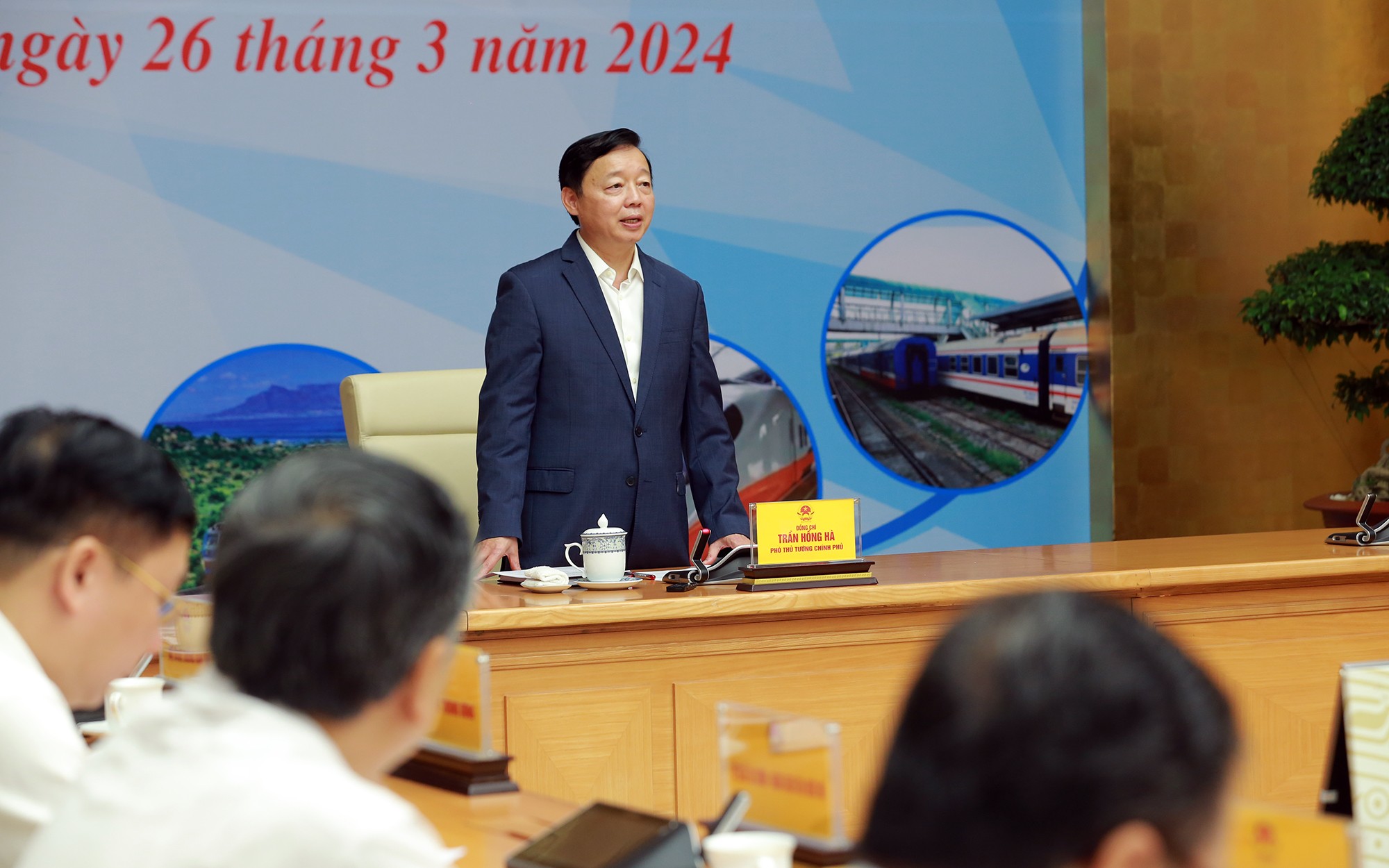
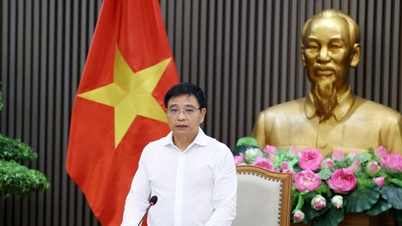
Deputy Prime Minister Tran Hong Ha concludes the meeting (Photo: VGP).
Agreeing with this opinion, Dr. Le Xuan Nghia argued that in the future, carbon taxation will significantly increase the cost of road, water, and air transport, while this will be an advantage for long-distance rail transport.
Mr. Vuong Dinh Khanh, former Deputy General Director of Vietnam Railways Corporation, suggested carefully considering a plan to dedicate the entire existing railway line solely to freight train services; investing in the railway industry, especially the manufacturing of locomotives and carriages, in parallel with the implementation of the high-speed railway project.
Meanwhile, Dr. Nguyen Van Phuc, former Deputy Chairman of the National Assembly's Economic Committee, expressed, "Our technology and techniques are still dependent on external sources, so what we can proactively do is create mechanisms and policies to mobilize resources and achieve breakthroughs in our approach."
Taking note of the opinions of experts and scientists, the Deputy Prime Minister emphasized that an industrialized and modernized nation needs to develop high-speed rail to reduce logistics costs and enhance the competitiveness of the economy, in the current trend of green transformation.
The Ministry of Transport needs to consider, explain, and clarify the opinions raised at the meeting, and finalize the investment plan for high-speed railway lines to ensure uniformity and consistency in standards and regulations from design, infrastructure, vehicles, information systems, and operation…
"We must preserve the iconic central train stations in major cities while ensuring safe corridors by combining them with elevated and underground lines," the Deputy Prime Minister noted.
The Deputy Prime Minister also requested the Ministry of Transport to clarify the economic efficiency, technology, engineering, and operational experience of high-speed rail combining passenger and freight transport worldwide; the plan for mobilizing capital and phasing investments; the model for organizing a synchronized and unified management and operation apparatus; and the plan for receiving and transferring technology to master and develop the domestic railway industry .
Source




![[Photo] General Secretary and President To Lam presides over a meeting on preparations for the review of one year of operation of the three-tiered government system.](https://vphoto.vietnam.vn/thumb/1200x675/vietnam/resource/IMAGE/2026/06/02/1780391821195_a1-bnd-4595-9717-jpg.webp)




























































Comment (0)