

The Ho Chi Minh City Center for the Fourth Industrial Revolution (HCMC C4IR) has just organized a consultation session to collect opinions from representatives of business groups and associations to serve the development of breakthrough policy proposals in the fields of science and technology , innovation and digital transformation. This is an important preparation step for the completion of the draft policy content to be submitted to the Ho Chi Minh City People's Council in May 2025.
At the consultation session, many business associations pointed out barriers that are hindering research and technology application activities as well as proposed practical policy solutions.
CREATING LAUNCHPAD FOR INNOVATIVE BUSINESSES
Mr. Vu Van Dao, Head of the Southern Representative Office of the Vietnam Association of Mechanical Enterprises (VAMI), said that although the current legal system and policies are not lacking, the implementation is still rigid and not suitable for the speed of modern technological development.
According to Mr. Dao, many science and technology enterprises often encounter difficulties in obtaining permits and working with management agencies due to outdated management thinking and technical standards based on old technology.
"The state of avoiding responsibility in the management system has caused many new technology products to not be allowed to be tested and to be "stuck in the output". At the same time, some overly detailed construction standards have limited creativity in design and production," said Mr. Dao.
Based on that reality, VAMI recommends amending and updating laws and technical standards to suit new technologies. At the same time, promoting the application of flexible management mechanisms, based on a safe framework but allowing businesses to proactively innovate.
From another perspective, Ms. Truong Ly Hoang Phi, Vice President of the Ho Chi Minh City Young Entrepreneurs Association (YBA), proposed that there should be a policy to prioritize support for private enterprises, especially technology startups and technology transfer enterprises.
"Expanding private innovation centers and technology incubators will create a favorable environment for startup ideas to be nurtured and developed," Ms. Phi emphasized.
Ms. Phi also said that Ho Chi Minh City needs to take advantage of international cooperation agreements to mobilize capital and resources for the innovation ecosystem; at the same time, establish an effective coordination mechanism between the state, research institutes, universities and businesses to commercialize research results.
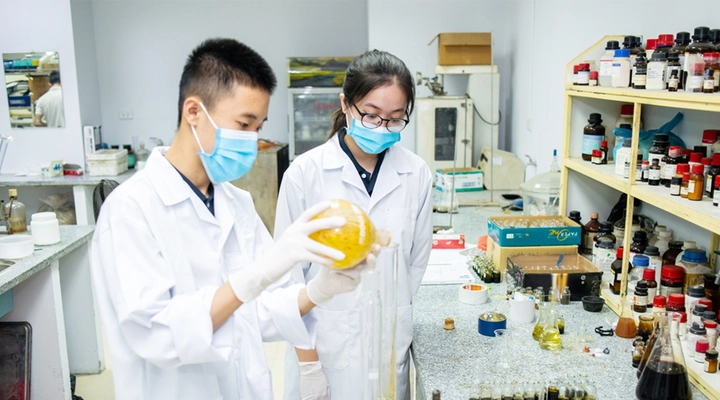
Illustration photo
In addition, organizing networking activities and training state officials on innovative thinking, inspired by the Singapore model, is also necessary to create a governance platform suitable for the spirit of innovation.
In addition, experts and representatives of businesses and associations also emphasized the need to implement breakthrough policies in the sandbox field and develop high-quality human resources to serve innovation and digital transformation.
Accordingly, delegates proposed that it is necessary to expand the concept and scope of sandbox application, not only stopping at testing technologies such as blockchain, fintech, etc., but also need to apply to human resource organization models, operating methods and especially the attraction and use of experts and highly qualified personnel in the field of innovation.
According to businesses, currently, the recruitment and use of international experts in Vietnam still faces many barriers, from administrative procedures, entry permits, contract signing, to insufficiently competitive remuneration. These limitations are reducing the attractiveness of the innovation environment in Ho Chi Minh City, especially in the context of increasingly fierce competition to attract brainpower in the region and globally.
On that basis, businesses and associations recommended building a specific mechanism for human resources in the field of science, technology and innovation, including preferential policies on personal income tax, simplifying entry procedures, residence and contract signing for domestic and foreign experts...
OPERATING ON THE "FOUR TOGETHER" PRINCIPLE
Concluding the consultation session, Mr. Le Truong Duy, Director of HCMC C4IR, said that HCMC C4IR will play a leading role and act as a bridge between policy agencies and the business community, receiving practical opinions from representatives of business groups and associations. The Center is committed to continuing to accompany businesses, research institutes, associations and government agencies in forming an open, sustainable and highly adaptable innovation ecosystem, contributing to the development of the knowledge economy of Ho Chi Minh City and the whole country.
According to Mr. Le Truong Duy, HCMC C4IR will prioritize implementing innovative initiatives in core, leading areas such as artificial intelligence (AI), semiconductor technology, 5G network applications in industry and agriculture , digital transformation in healthcare, building an international technology exchange and developing a centralized research center. In particular, the Center is developing a chatbot tool to support operations for City leaders. These initiatives will be deployed on a pilot basis through the sandbox mechanism, stipulated in Resolution 98 of the National Assembly.
In addition, HCMC C4IR and the Drafting Committee will propose three key policy groups.
First, public-private and public-public partnership policies. In particular, clarifying regulations on intellectual property rights from research results (such as patents), ensuring clear division of responsibilities and benefits between parties.
Second, policies to attract investment in high technology, including specific incentives on land, taxes, and credit to create favorable conditions to attract domestic and foreign high-tech enterprises.
Third, policies to attract and develop experts. Including supplementing remuneration mechanisms, specialized training programs and science and technology awards to build a culture of honoring knowledge.
Along with that, the Center is building a proposal to establish a Science and Technology Investment Fund with a scale of 200-300 billion VND, following the matching fund model (60% social, 40% state budget). The fund will be used to train 20-30 talents in core fields such as AI, microchips, medical technology..., serving the goal of mastering technology within the next 10-15 years.
"Operating under a multi-stakeholder cooperation model, HCMC C4IR adheres to the "four together" principle. That is, jointly researching new policies and technologies, jointly recommending practical solutions to the government, jointly implementing pilot projects, and jointly enjoying values in the innovation ecosystem," Mr. Le Truong Duy emphasized.
The Ho Chi Minh City Center for the Fourth Industrial Revolution (HCMC C4IR) is positioned as a strategic hub in connecting Vietnam with the global network of science, technology and innovation, especially the World Economic Forum (WEF) and the system of 24 C4IR Centers around the world.
Source: https://mst.gov.vn/doanh-nghiep-hien-ke-giup-tphcm-khai-phong-tiem-nang-khoa-hoc-cong-nghe-va-doi-moi-sang-tao-197251118145839692.htm




![[Photo] The Standing Committee of the Organizing Subcommittee serving the 14th National Party Congress meets on information and propaganda work for the Congress.](https://vphoto.vietnam.vn/thumb/1200x675/vietnam/resource/IMAGE/2025/11/19/1763531906775_tieu-ban-phuc-vu-dh-19-11-9302-614-jpg.webp)














![[Photo] General Secretary To Lam receives Slovakian Deputy Prime Minister and Minister of Defense Robert Kalinak](https://vphoto.vietnam.vn/thumb/1200x675/vietnam/resource/IMAGE/2025/11/18/1763467091441_a1-bnd-8261-6981-jpg.webp)
![[Photo] Prime Minister Pham Minh Chinh and his wife meet the Vietnamese community in Algeria](https://vphoto.vietnam.vn/thumb/1200x675/vietnam/resource/IMAGE/2025/11/19/1763510299099_1763510015166-jpg.webp)


















































Comment (0)