

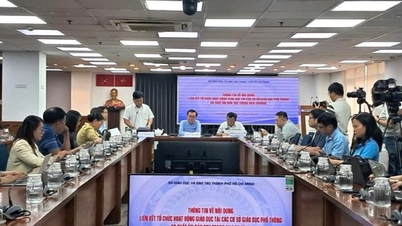
On November 22nd, the Ho Chi Minh City Department of Education and Training organized a scientific conference on the topic "Big Data and Artificial Intelligence in Education : From Challenges to Breakthroughs".
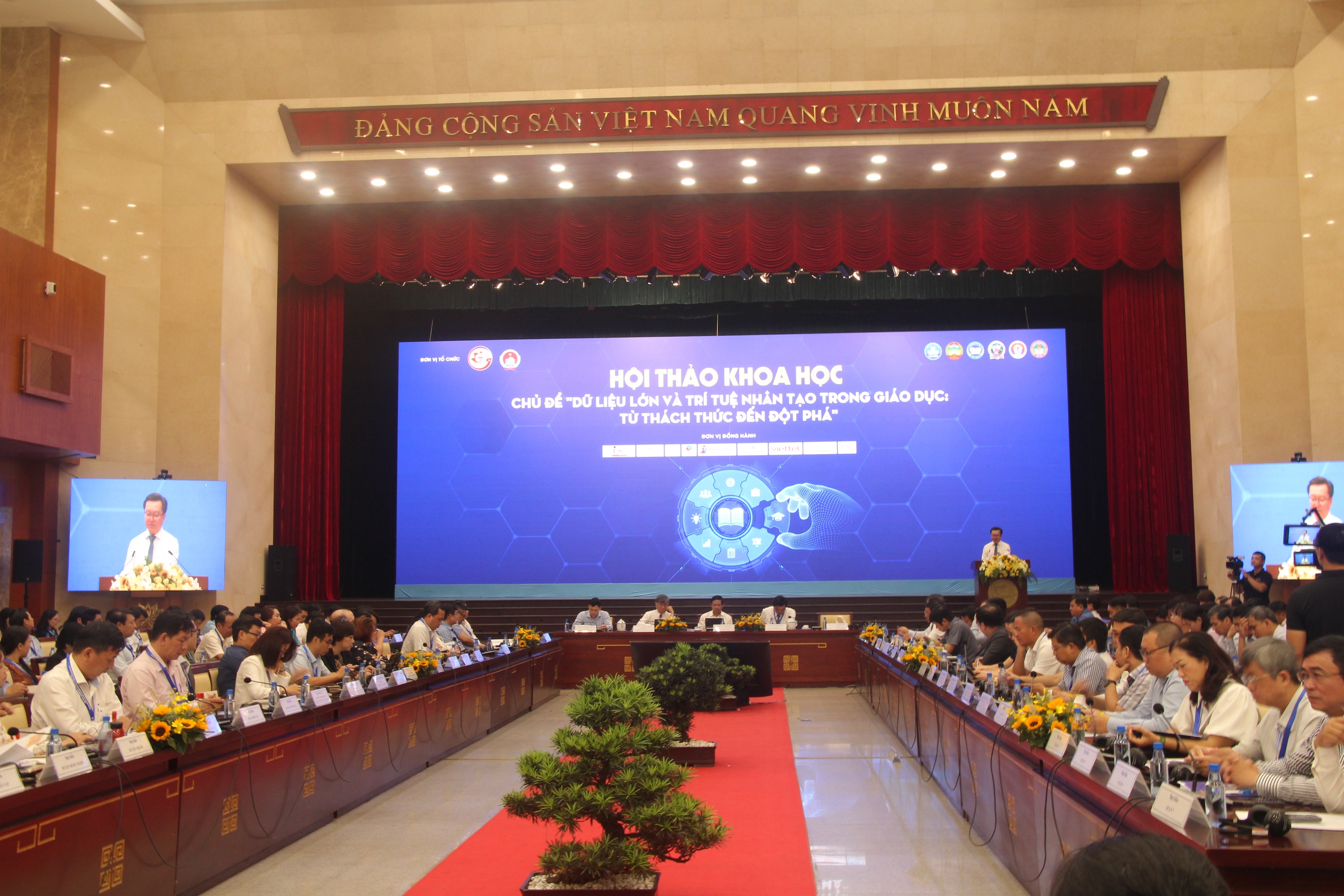
A view of the workshop on artificial intelligence in education.
According to the participants at the workshop, education is currently one of the sectors most affected but also one that benefits greatly from digital transformation in general, and artificial intelligence (AI) in particular.
The current application of AI extends beyond teaching and learning to include human resource development and the promotion of research to create new technologies, products, and applications in this field. To maximize these positive aspects, the efforts of high schools alone are insufficient; the collaboration of the entire education sector is needed, including universities, the Department of Education and Training of Thu Duc City and its 21 districts, along with the support and coordination of various departments and agencies.
Ho Chi Minh City is piloting two models for applying artificial intelligence to education.
Dr. Nguyen Van Hieu, Director of the Ho Chi Minh City Department of Education and Training, stated that the education sector is actively promoting the application of information technology, including AI, in teaching management and student assessment. Furthermore, one of the nine key tasks of the 2024 AI research and development program approved by the Ho Chi Minh City People's Committee is the implementation of the AI human resource training project. The Ho Chi Minh City People's Committee also requested the Department of Education and Training to continue implementing projects and research on teaching AI to high school students, promoting technology transfer, and training teachers in AI and robotics.
Based on the assigned tasks, the leaders of the Department of Education and Training stated that they have "commissioned" Saigon University to develop a scientific research project on teaching AI to high school students. According to the project's content, AI teaching will begin in grade 3, aiming to expand it to all students across all grade levels.
To concretize the plans for deploying big data and AI applications in education, Mr. Ho Tan Minh, Chief of the Office of the Department of Education and Training, said that the education sector currently has four groups of big data: student data, teacher data, school data, and online learning data. If these data sources are facilitated to become input data for AI, and then analyzed and calculated through a system to produce personalized predictions, suggestions, and support, it will greatly assist the education sector. Accordingly, AI can create individual learning paths for each student based on their abilities and learning progress, and integrate knowledge into educational games.
For teachers in particular, AI supports the creation of customizable lectures, assignments, and learning materials, or acts as a "virtual assistant" to answer frequently asked questions from students. This tool also serves as a useful information channel for adjusting learning content and pace based on individual student performance; analyzing data to predict learning trends, and supporting school management needs.
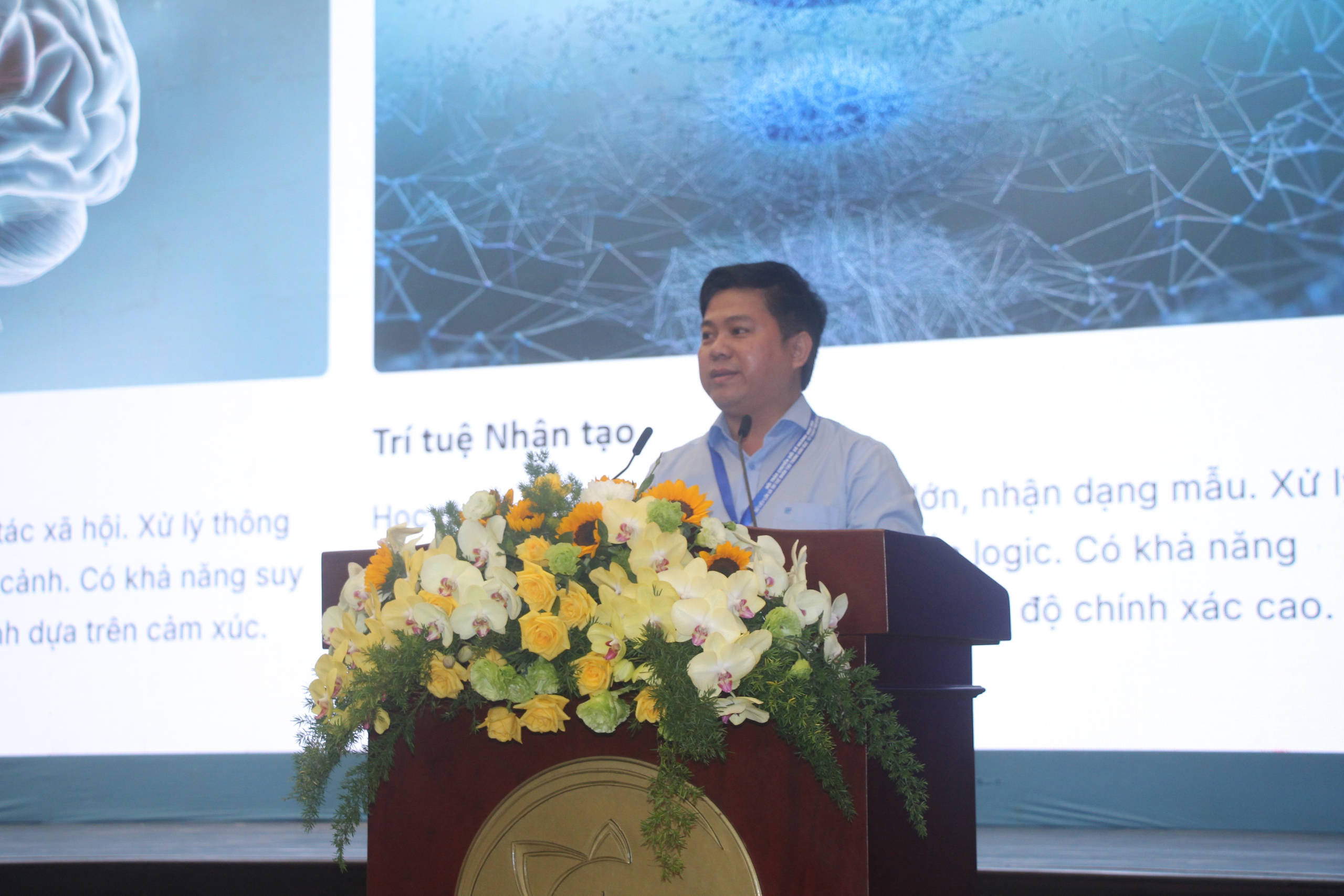
The Chief of Staff of the Ho Chi Minh City Department of Education and Training reported on the implementation of artificial intelligence applications in the education sector.
The chief of staff of this department said that in the 2024-2025 school year, Ho Chi Minh City will pilot two models of AI application in education: supporting the adjustment of learning pathways and predicting the knowledge content that students need to be reinforced. However, the education sector is facing many major challenges regarding infrastructure and human resources for implementation.
"Current technological infrastructure is not strong enough to store and process large amounts of data; data quality is low, lacking synchronization and consistency; and there is a shortage of skilled AI professionals. Therefore, to promote the application of big data and AI in the teaching process, it is necessary to invest in server systems, networks, and data analysis tools, while simultaneously building a rigorous process for collecting, processing, and managing data, and establishing training programs to attract talent to this field," the Chief of the Office of the Ho Chi Minh City Department of Education and Training stated.
The impact of artificial intelligence on education.
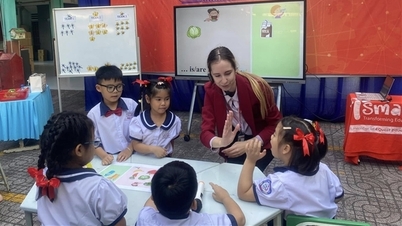
According to Ms. Nguyen Phuong Lan, General Director of EMG Education, AI plays an important and increasingly popular role in English language teaching, enhancing the learning experience by personalizing training programs and adapting them to the needs and abilities of each student. Technologies such as chatbots and smart learning applications can support teachers in organizing classes, providing instant feedback to students, and creating an interactive and flexible learning environment.
Furthermore, AI can be used to improve language skills through applications, helping learners practice pronunciation, providing feedback, and offering personalized learning path suggestions. These tools not only make knowledge more accessible to learners but also create opportunities to practice the language anytime, anywhere, making learning more effective and enjoyable, contributing to making English a second language in schools.
Dr. Nguyen Thanh Hai, from the STEM Education Research Institute at the University of Missouri (USA), suggested that if learners master AI technology, they will simultaneously design and use this tool to create learning content, thereby enhancing their digital skills and developing personal skills and qualities. For teachers, AI provides strong support in designing lesson plans; building question banks for testing and evaluating students, thus diversifying learning methods and improving teaching quality.
Dr. Hai also emphasized that during the application of AI, teachers and students will increase interaction, and teaching will be personalized to suit each student. Thus, AI will not only change perceptions but also the behavior and teaching methods of teachers. If schools wait for mechanisms and policies before implementing AI, they will become outdated. Instead, teachers need to be bold and learn from mistakes.
Challenges the education sector faces as AI develops.
Today's workshop will help the education sector understand and visualize the benefits and effects of AI. Previously, there were opinions that AI would replace humans, leading to a fear of technology. This has made it clear that AI is an effective tool serving both teachers and students; the decision of what to use and how to use it rests with the human element. AI effectively supports educational activities, from teacher preparation, reducing workload so that more time can be dedicated to teaching, assessment, educational management, or competency evaluation.
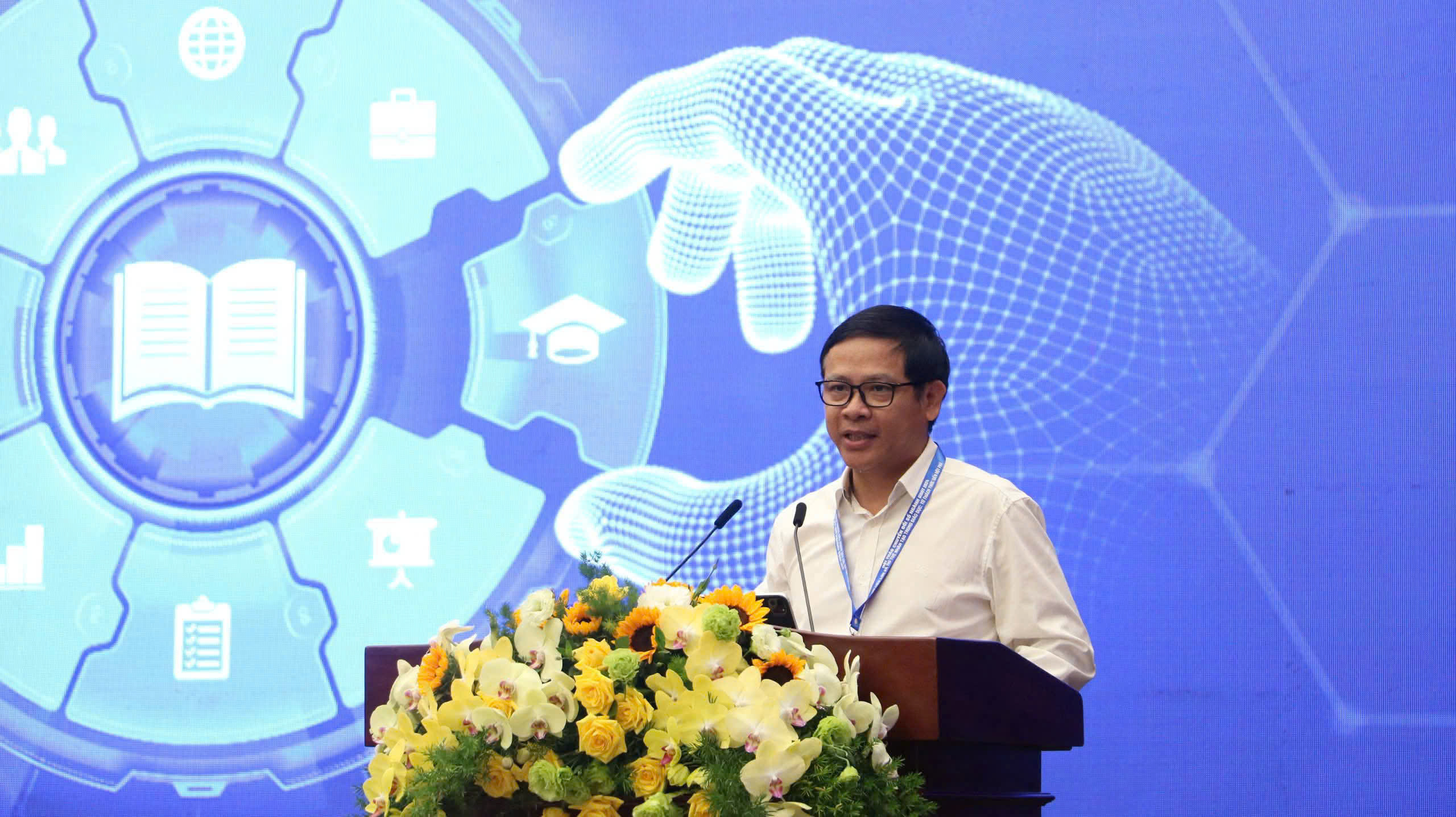
Mr. Nguyen Son Hai (Director of the Information Technology Department, Ministry of Education and Training) delivered a speech.
At the same time, AI has highlighted the challenges and problems that modern technology faces. First, there is the misuse of AI in education, especially among learners. Students easily rely on AI to solve problems and copy answers without understanding. This poses a challenge for educators in changing their methods and assessment approaches. Another issue is academic integrity; how can teachers control and evaluate students' actual learning? These are challenges the education sector faces as AI develops.
The education sector needs to take action, approaching each beneficiary group (those affected) individually. Dividing them into groups ensures appropriate attention, raising awareness, and improving knowledge. This requires collaboration between experts and businesses with the education sector.
Mr. Nguyen Son Hai (Director of the Information Technology Department, Ministry of Education and Training)
Source: https://thanhnien.vn/dung-tri-tue-nhan-tao-xay-dung-lo-trinh-hoc-tap-rieng-cho-tung-hoc-sinh-185241122153807361.htm


![[Image] Central Party Office summarizes work in 2025](/_next/image?url=https%3A%2F%2Fvphoto.vietnam.vn%2Fthumb%2F1200x675%2Fvietnam%2Fresource%2FIMAGE%2F2025%2F12%2F18%2F1766065572073_vptw-hoi-nghi-tong-ket-89-1204-jpg.webp&w=3840&q=75)






















































































Comment (0)