


The National Assembly's Economic Committee pointed out that inflationary pressure is showing signs of increasing in its report reviewing the supplementary assessment of the implementation results of the socio-economic development plan and state budget for 2023; and the situation in the first months of 2024.
“The Consumer Price Index (CPI) year-on-year has been continuously increasing since the beginning of the year, reaching 4.42% in April 2024, pushing the average inflation for the first four months of the year to 3.93%, close to the target of 4-4.5% according to Resolution No. 103/2023/QH15 of the National Assembly ,” - Chairman of the Economic Committee Vu Hong Thanh stated.
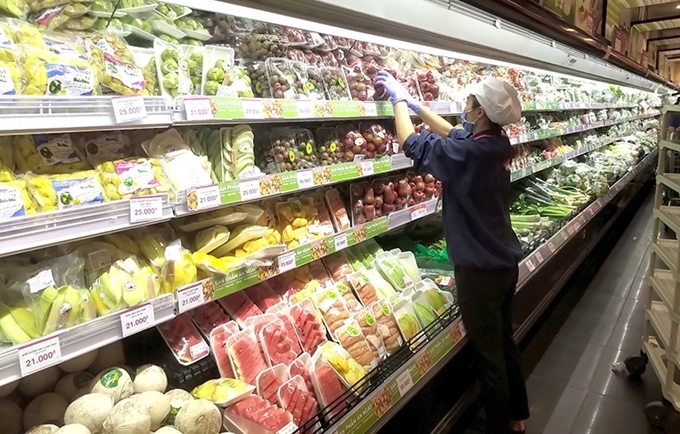 |
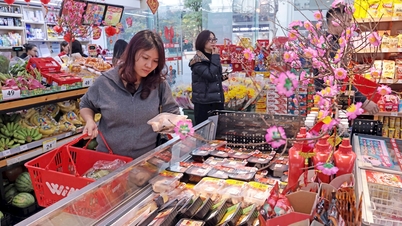
| Inflationary pressures are showing signs of increasing. (Illustrative image: MK) |
In light of the above figures, delegate Tran Hoang Ngan ( Ho Chi Minh City delegation) noted that the exchange rate has started to rise again, and inflation is higher than the average of previous years, which are warning signs regarding the macroeconomic situation and require strengthened control.
Representative Hoang Van Cuong (Hanoi City Delegation) also noted that inflationary pressure in 2024 will be significant. He analyzed that while inflationary pressure previously came from external sources, in 2024 it will come from within. Specifically, in the first quarter of 2024, the CPI was 3.77%, and the CPI in April was higher than in March. Normally, the CPI tends to increase in the first quarter due to the Lunar New Year holiday, but then begins to decrease in March and April. This year, the CPI in April is higher. This indicates a real upward trend in the CPI.
"In the first four months of the year, the CPI was 3.93%, nearly reaching the target set by the National Assembly of 4-4.5%, creating very clear pressure," Representative Hoang Van Cuong pointed out.
According to delegate Hoang Van Cuong, if price increases and inflation occur, it will lead to a series of other negative consequences for the economy. For example, when interest rates on people's savings deposits in banks are lower than the CPI, people will use that money for other purposes, investing in other areas such as gold or real estate.
Sharing the same concern, delegate Nguyen Thi Yen (from Ba Ria - Vung Tau delegation) stated that the CPI in April increased by nearly 1% compared to the previous month, and the average for the first four months of the year increased by 3.93%, indicating that controlling inflation is an urgent necessity to ensure macroeconomic stability and growth.
Representative Yen pointed out that the depreciation of the Vietnamese Dong against the US Dollar, along with the increase in prices of many essential goods and raw materials, is the main reason for the upward trend in the inflation index in recent months. In addition, exchange rate pressure has also increased significantly, affecting the goal of stabilizing the monetary market.
To control inflation, delegate Hoang Van Cuong suggested that interest rate management needs to be flexible. “Lending interest rates should be set at a reasonable level, and deposit interest rates must be above the inflation forecast, specifically 5-6% per year. Lending interest rates should not be pushed up to over 10% per year as before. If stable at around 7-8% per year, businesses with the capacity to absorb capital will still be willing to accept it, thus ensuring a balance between interest rate management and inflation,” said delegate Hoang Van Cuong.
According to Representative Nguyen Thi Yen, the government needs a policy to reasonably balance growth and inflation. “Inflation needs to be well controlled, taking into account the upcoming July wage increase which will lead to price increases for many other essential goods, so appropriate macroeconomic policies need to be implemented. At the same time, a price management plan for essential goods is needed to respond promptly to market fluctuations,” Representative Nguyen Thi Yen stated.
In response to concerns raised by National Assembly deputies during the Question and Answer Session of the 7th Session, Deputy Prime Minister Tran Hong Ha stated that Vietnam has an open economy, meaning we import a significant amount of materials and supplies, which depends on the global market. Meanwhile, we are implementing stimulus packages and wage increases. This leads to fluctuations and impacts on the macroeconomic situation, particularly in controlling inflation as permitted by the National Assembly. However, the Deputy Prime Minister affirmed: "With a harmonious balance between economic growth and inflation control, and a perfect combination of monetary and fiscal policies, it is entirely possible to regulate prices."
Presiding over a meeting of the Government Standing Committee with ministries and agencies on June 8th, Prime Minister Pham Minh Chinh requested decisive implementation of measures to stabilize market prices; ensure an abundant supply of goods and prevent shortages; strengthen transparency and supervision of price declarations and price listings according to regulations; and avoid unreasonable price increases for goods and services.
Source: https://dangcongsan.vn/xa-hoi/giai-toa-ap-luc-lam-phat-667139.html






















































































Comment (0)