Giang Thien Phu - The "Dedicated Developer" Behind Callio
VietNamNet•23/09/2023
Despite holding various leadership positions at large corporations, Giang Thien Phu considers himself simply "a dedicated developer." He created Callio, an interactive CRM platform integrated with call centers, attracting over 2,000 businesses within three years.
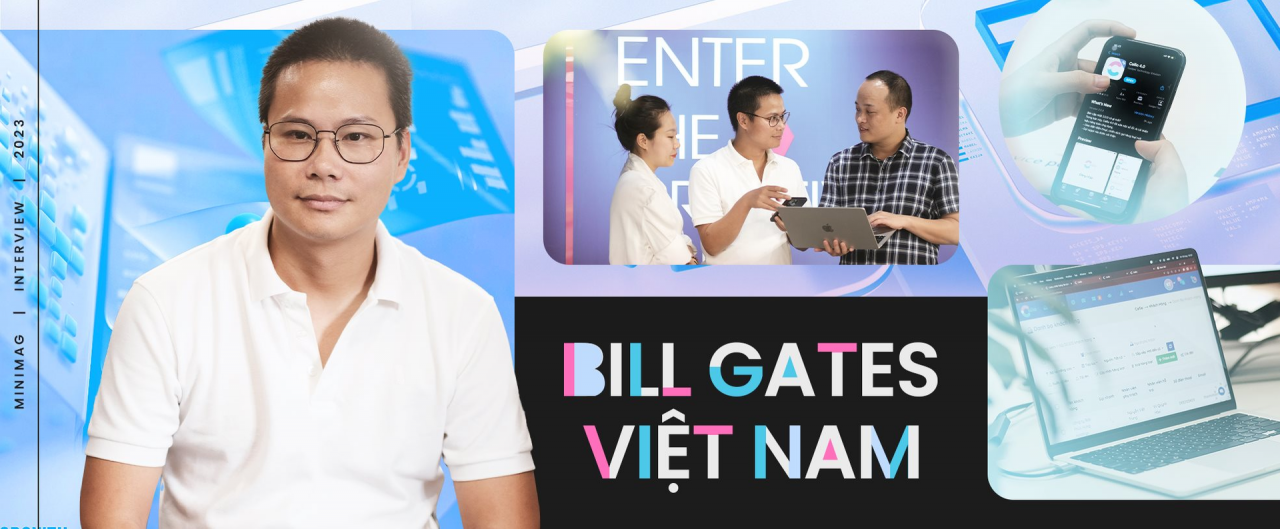
Giang Thien Phu is not shy about facing the media, as he has been sought after by the press since he was a high school student passionate about inventing machinery, from a chicken coop cleaning machine and a robot for building the Co Loa citadel to a microscope made from a webcam. As one of the 10 outstanding young people nationwide while still in 11th grade, and having started his own IT company at 19, Giang Thien Phu is called the "Vietnamese Bill Gates". Therefore, it's not surprising that his work experience is linked to big names: Chief Technology Officer for e-commerce at Peacesoft (the predecessor of NextTech Group), Technology Manager at Hotdeal.vn, and Head of Cross-Border E-commerce at the Adayroi.vn project under Vingroup .
In 2022, Giang Thien Phu appeared on Shark Tank Vietnam Season 5, where he and his teammate sought $600,000 for 10.7% of Callio, a startup he founded and served as CEO. However, he also rejected Shark Hung's offer, believing the company was not properly valued.
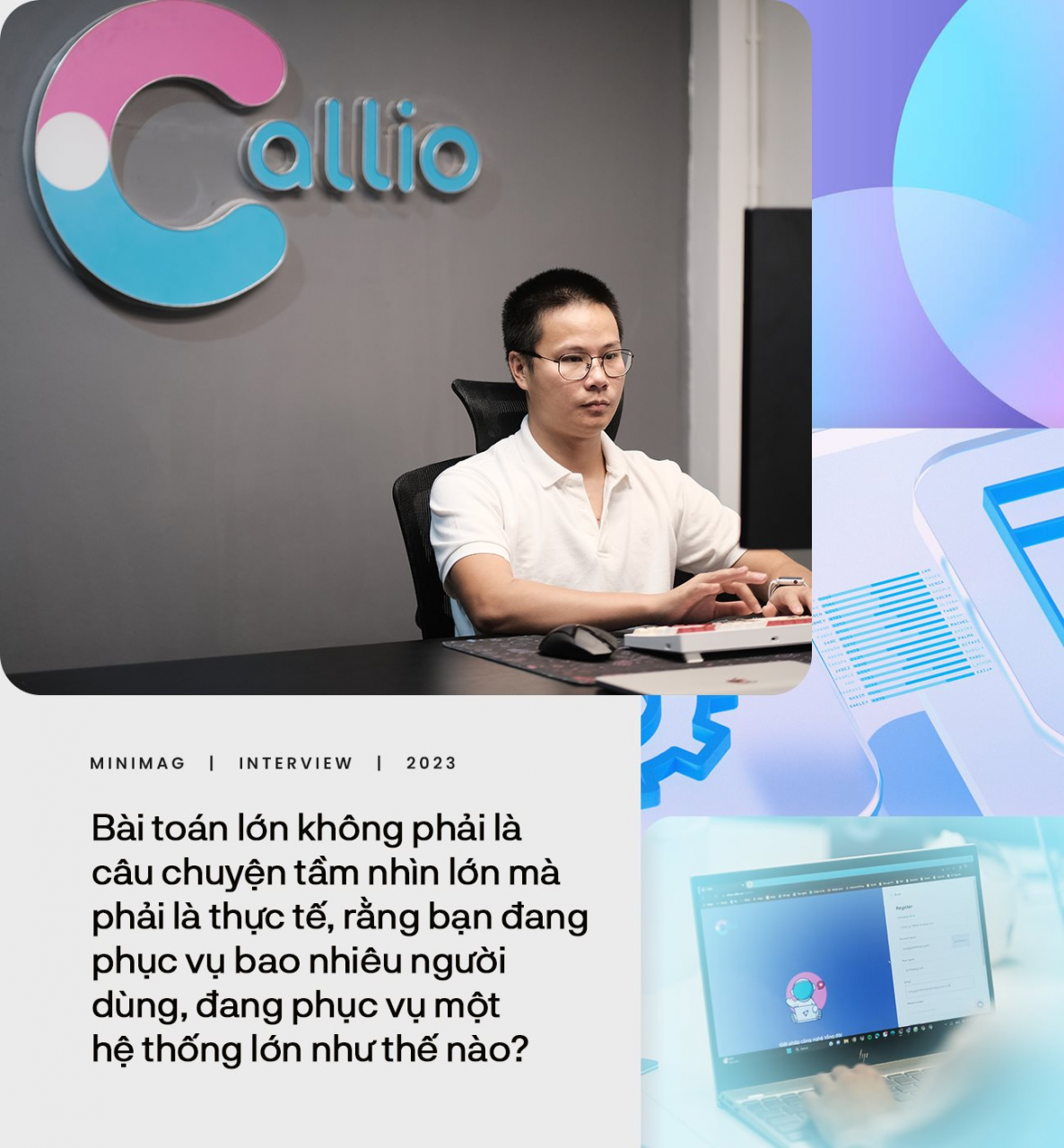
Visiting Callio's CEO office, everything is designed in a minimalist style: a set of reception chairs and a desk solely for a large computer monitor. However, there is a small corner fully equipped with tools, a coffee maker, and tea. According to Giang Thien Phu, this is where he "calms down" after receiving negative feedback or complaints from customers. Three years of building Callio has also been a journey of learning to humble himself, become more flexible, listen to customers, and improve the product.
With a long track record of manufacturing a range of machines, your school days must have been very busy?
I'm a very entrepreneurial person. In high school, when people invented or created something, they usually dreamed of becoming doctors, professors, or scientists working in research institutes. But when I had an innovation or invention, I always thought about how to bring it to market.
At 19, I started a computer assembly company. I bought the components, assembled them myself, and installed the software. I sold a few thousand computers a year, becoming financially independent. But that status didn't last long; I lost my independence because I spent too quickly and even got into debt.
In his early twenties, Giang Thien Phu was already a well-known figure in the technology industry.
So, while working as a manager in large corporations, what motivated you to start your own business with Callio?
I'm a tech person and I understand I have a knack for system optimization. For example, with Hotdeal.vn in the past, the platform could handle 60,000 orders per day, but during a super sale, the system would become overloaded or experience errors, sometimes only processing 20,000-30,000 orders, failing to reach its maximum sales target. I solve these problems, figuring out how to increase the number of users, improve the user experience, and optimize the system.
Even before that, right from the time I was working on the Chodientu.com project, witnessing the story of online business, and then online-to-offline, I myself really wanted to create a CRM (Customer Relationship Management) system, to have all customer information in one place for easy management and communication. I searched for solutions but didn't like any of them, so after I stopped working in e-commerce, I built my own CRM platform.
Furthermore, when searching for a job, I only like solving big problems. The big problems I'm referring to here aren't about vision, but about reality: how many users we're serving, how much data needs to be processed simultaneously, the minimum system response speed requirements to avoid impacting user experience, etc. Finding a place that offers both a sufficiently large problem and a suitable environment is quite difficult. And I also think that, sooner or later, I'll have to do it myself. That's why Callio was born.
CRM or call center systems are not a new field. Many large businesses and corporations have already created similar solutions. When you started, what made you believe that Callio was a model the market needed? Callio's predecessor was an outsourcing company, specializing in solving complex problems using technology for other businesses, or in current terminology, doing digital transformation for businesses. Some client groups wanted us to build a CRM platform integrated with a call center system so that we could not only store customer information but also communicate with them. Initially, the platform wasn't as perfect as it is now, but customers kept using it, providing feedback, and we kept modifying and updating it. In the call center industry, the common answer most call center service providers give to customers is, "Your internet connection is of poor quality; you need to improve your connection to use our application." That is, they use the "right or wrong" argument to shift the responsibility to the customer when the system is unstable. Initially, my staff responded similarly. However, during that time, we quietly gathered information, built a monitoring system, and optimized even the smallest details to improve daily performance, thereby creating a competitive advantage among countless similar products on the market. Then, with about 15-20 loyal customers using our integrated call center CRM platform, we decided to develop and design it well. There's a theory that startups shouldn't try to dictate everything. Instead, they should have an idea and find about 10 customers—people they can listen to and who understand them. They should refine the product until these 10 customers are satisfied before launching it widely. In reality, I did exactly that. In 2018, when around 15-17 customers were using it daily, their staff were also satisfied, and I myself felt happy, I decided to expand Callio to the market.
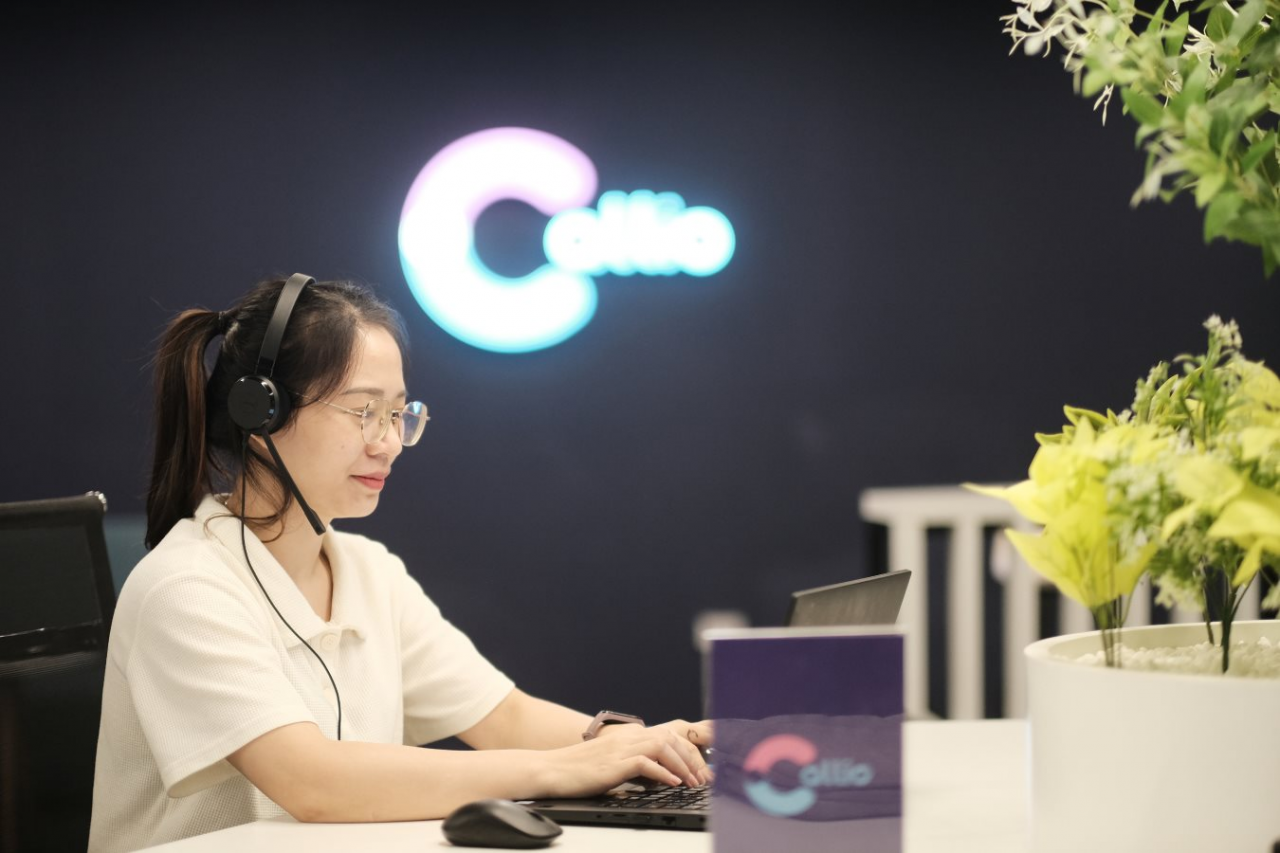
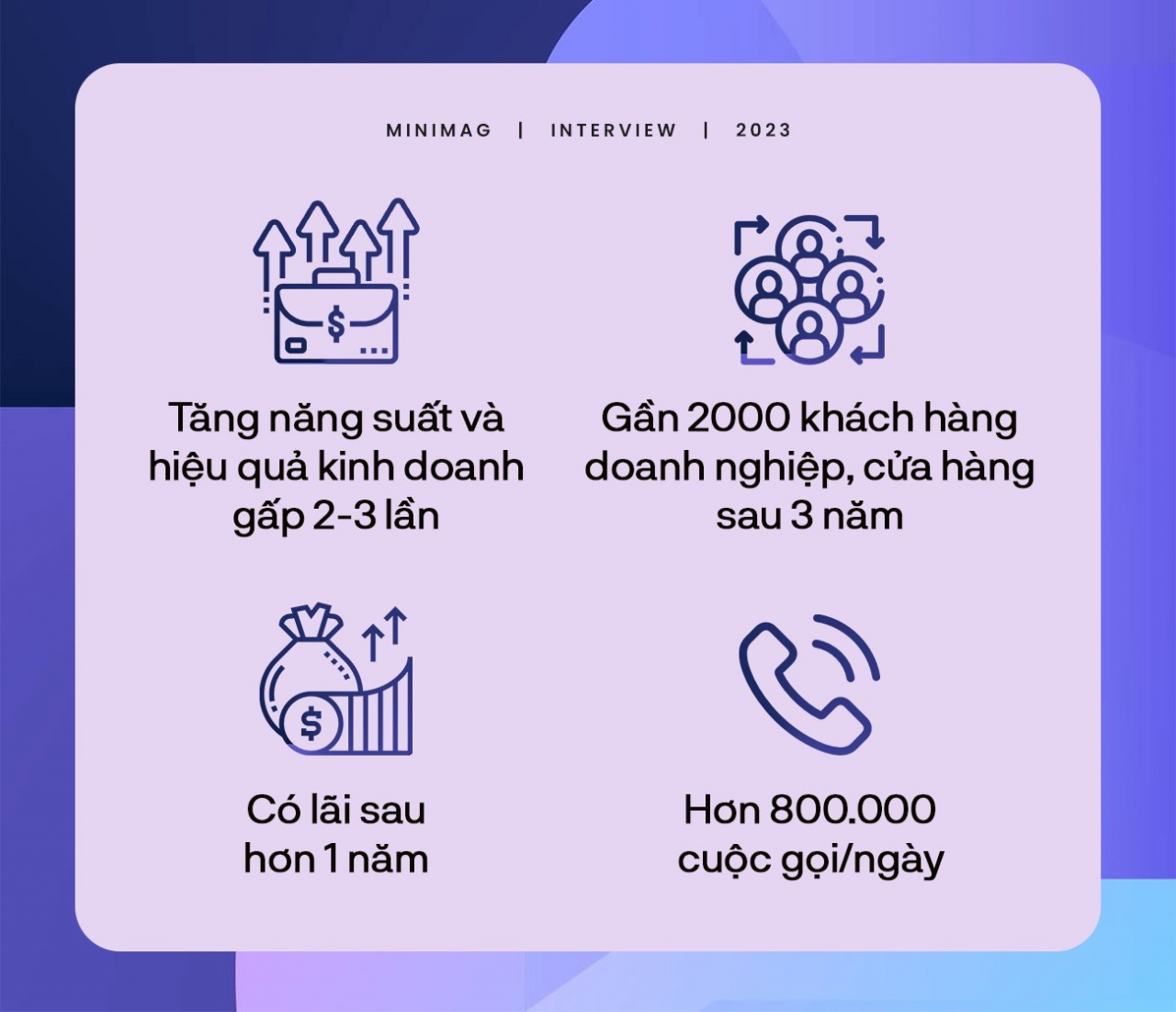
To put it simply, how is Callio different from other call center solutions on the market? The problem in the market is that not many CRM platforms have a call center feature, and conversely, most call centers don't integrate CRM, not to mention other convenient communication protocols like chat, SMS, and email. Callio's solution is an interactive CRM that helps businesses manage customer information while communicating with their customers in a clear, automated, and fast manner. With an effective business communication system, when a customer contacts you via call or any other channel, you need to know who that customer is and what they have purchased. But most traditional methods can't do that. For example, I called a network provider's call center to report an internet outage. If done correctly, the second time I call, the operator can immediately say, "Mr. Phu, you reported a network outage the other day, has it been resolved today?", instead of asking again from the beginning: "Who are you?", "Where are you using the network?", "What is your phone number?", "What is the problem?". In some cases, out of 10 calls to the network provider, the customer has to repeat the same explanation from the beginning. A customer's interaction history with a brand is scattered everywhere, and we've organized it into one place. Furthermore, a very common practice in customer service centers today is that when a customer contacts us via call or chat, employees have to copy and paste the customer's phone number into a CRM platform for storage, and then copy the number from the CRM into another tool to call or provide service. With Callio, when a customer calls, the system immediately displays the customer's history and information. Employees don't have to switch between multiple screens or perform numerous actions. This creates a better customer experience. At the same time, call center staff only need to perform the initial action of pressing the call button; after that, everything is automated, minimizing manual operations and "Ctrl-C, Ctrl-V" actions, thereby increasing productivity and efficiency two or three times. Callio also expands its integration, automatically receiving and generating new customer leads from a campaign landing page, automatically synchronizing customer information from familiar sales software on the market or Excel/G-Sheet files used by small businesses. Our system also allows for automatic lead generation, meaning that whenever a new customer is generated, an employee is immediately assigned to handle that customer.
This is what helped Callio acquire 2,000 business clients in just 3 years? If you asked 100 businesses to choose between a tool for customer experience enhancement or a tool for selling and reaching more customers, I'm pretty sure 99 would choose a tool for more effective sales. Therefore, Callio's initial hack-growth strategy was to create a truly effective sales tool for businesses. Think about it: instead of hiring more people at a monthly salary cost of around 7,000,000 - 10,000,000 VND, you only need to pay Callio 200,000 VND/month, and your employees can work with double the productivity and almost the same increase in efficiency. However, that's not our ultimate goal. In the long term, Callio wants to build a tool that provides a complete customer experience for business clients, encompassing pre-sales, during-sales, and post-sales services. After using Callio to boost sales, business customers will gradually become interested in how to nurture existing and returning customers, aiming for sustainable growth in the future.
For some B2B startups, they initially try to win over a large client to build credibility and brand name. With Callio, you're targeting SMEs? I'm a practical person. People say that initially approaching large businesses brings in a lot of money, but that's not easy; you have to convince clients yourself when you don't have much to offer. But after operating in the market for a few years, Callio has proven itself to many clients, and only then did I start approaching large businesses. In fact, many very large businesses have approached and used Callio without much sales pitch. Also, it depends on the product model. Callio's products are suitable for both SMEs and large businesses. And most importantly, I like customers to actually use my product. If I sell to a large company with a big vision, but their employees don't use it, even if it brings in a lot of revenue, to me, that's a failure. A successful product is one that is used, even if customers complain about this or that bug; I'm even happier that way. I've always focused solely on the product. When you do well, money will follow. I've never wasted time on sales figures; I only care about what's lacking in my product and how it can be improved. One business started with only 5 employees, they grew and improved with Callio, and now they've expanded to 200 employees. Currently, we also have large corporate clients. One company, part of a very large technology ecosystem, even though its parent company has a CRM solution, still uses Callio. However, I've also turned down high-value contracts to maintain our business model. This company had tested Callio for 6 months with over 300 accounts and wanted to expand to 15,000 accounts. That's a huge number. However, they wanted Callio to integrate into their infrastructure. That would mean it would no longer be a SaaS product. I'm quite stubborn, so I refused. For me, the SaaS designation is more important than $1-2 million.
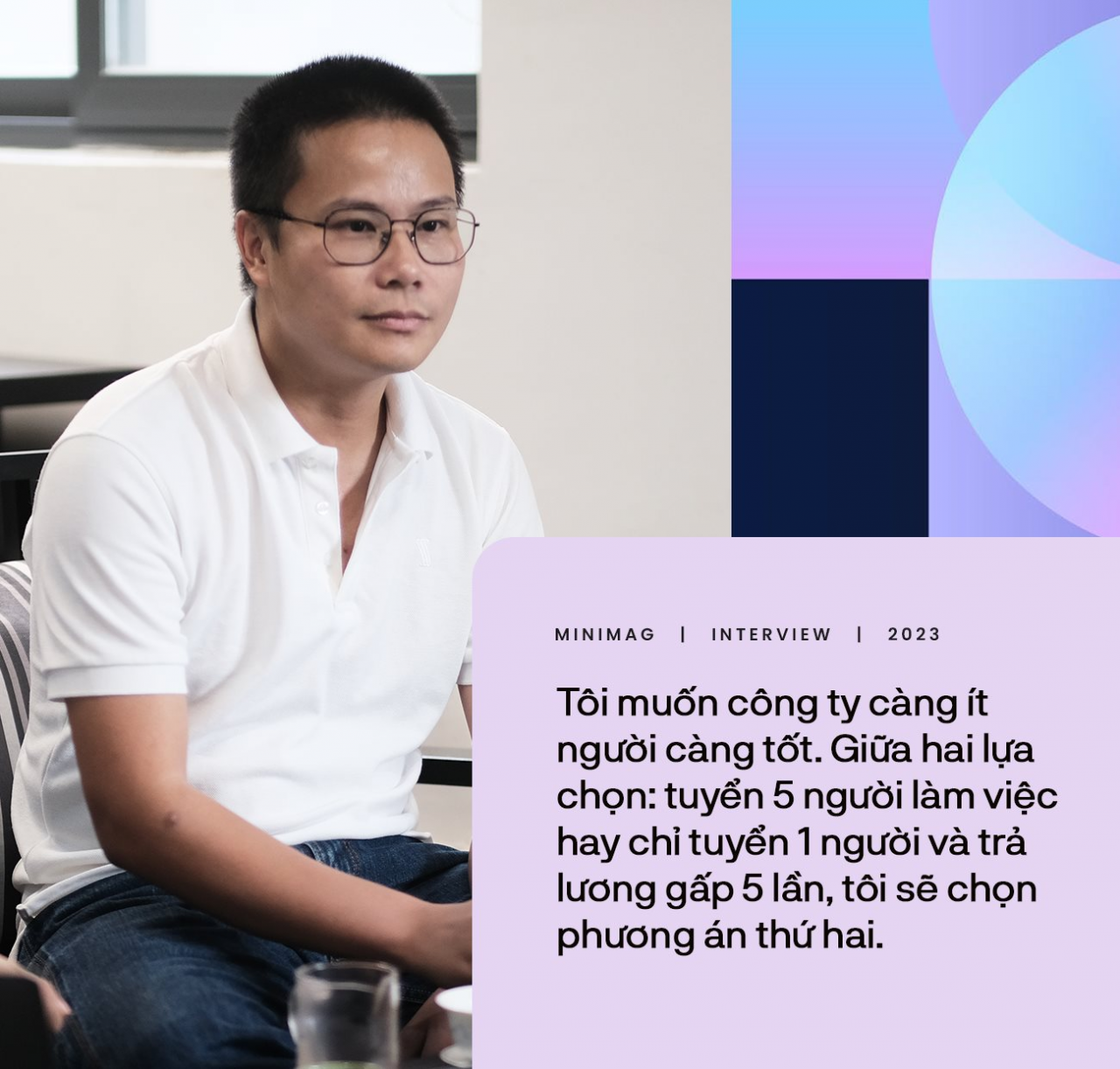
With so many clients, is Callio currently profitable? Who are Callio's main client groups, sir? Before appearing on Shark Tank, we had already been profitable for about 6 months. At that time, the cumulative profit was several billion VND. According to statistics, about 30% of our clients are in the real estate sector, in addition to beauty salons, retail stores, clinics, training centers... Even when reading job postings for real estate sales on Facebook, many businesses include Callio as a benefit for telesales agents. Callio currently serves nearly 2,000 customers with automated top-up services, yet requires very few programmers? I want the company to have as few people as possible. To achieve this, first and foremost, you must have good skills and work methods. People often think of a programmer's skill as just technical expertise, forgetting about work organization and time management skills. I don't support working excessively late into the night, staying up until 2 or 3 am. Of course, if you have goals to pursue, you might need to do that, but if you stay up until 2 or 3 am and then accomplish nothing the next day, it's pointless. Therefore, skill is related to work methods and work-life balance. Secondly, it's about tools; if you don't have good tools, you won't achieve good productivity. Thirdly, attitude and responsibility are the most important things. When people lack a positive attitude and sense of responsibility, productivity will decline. When you recruit employees who are motivated and dedicated to their work, they will improve, and the leader won't need to manage them as much. Therefore, I always consider two options: hire five people or hire just one and pay them five times the salary? I would choose the second option.
Have you tested it yet?
Okay, it's running smoothly!
So, what is the next challenge Callio wants to conquer, sir?
For its plan to conquer overseas markets, Callio is building a customer interaction tool directly within the app, tailored to the international market from the outset (From Global) instead of developing in Vietnam and then expanding to the global market (Go Global).
Another challenge I face now is how to make businesses use Callio in a more civilized way, not just focusing on sales calls, but also enhancing customer experience, handling complaints, and providing customer care. That's how those businesses can achieve sustainable growth. And when businesses grow sustainably, Callio will become even more sustainable.














![[Photo] Prime Minister Pham Minh Chinh receives the Chinese Ambassador to Vietnam](https://vphoto.vietnam.vn/thumb/1200x675/vietnam/resource/IMAGE/2026/04/05/1775397481797_ndo_br_dsc-5512-jpg.webp)



































































































Comment (0)