Creating a young workforce for traditional craft villages.
Bao Ha (Vinh Hai commune) is a traditional craft village with a history of over 720 years, once famous for many handicrafts such as bamboo weaving, sedge mat weaving, statue carving, wood carving, puppet making, etc. Through ups and downs, the village has preserved its core crafts, but the pressure of integration and the trend of labor migration have put many crafts, especially sedge mat weaving, at risk of disappearing. Small-scale production, fierce competition with industrial products, and a dwindling number of young artisans are real challenges.
In accordance with the Hai Phong City People's Committee's plan on training human resources for traditional crafts and villages in the 2023-2025 period and the Hai Phong City Cooperative Union's plan on human resource training in 2025, the Cooperative Union will organize 10 vocational training classes with 250 students in 2025, teaching skills such as sedge mat weaving, water puppetry, rattan and bamboo weaving, fish farming, and ornamental plant cultivation. These classes are considered an effective solution to spread love for and inspire the desire to preserve traditional crafts among the people, especially young people.
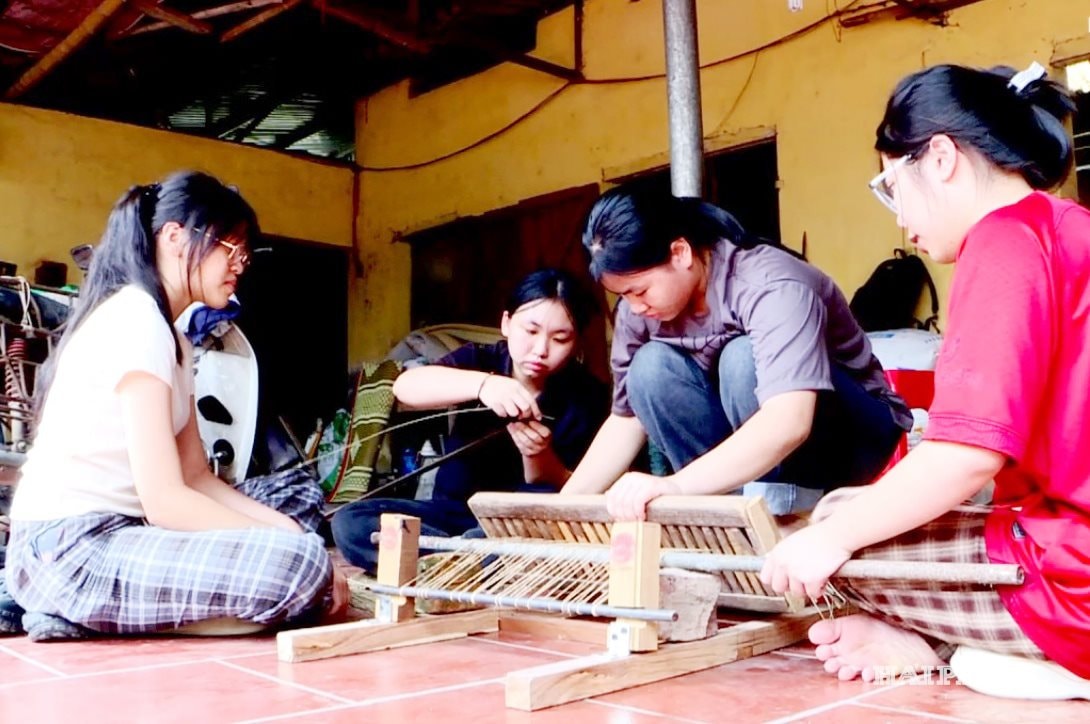
A prime example is the sedge mat weaving class organized in Bao Ha craft village in 2025. In a simple workshop, the sounds of shuttles and looms blend with stories about the craft from elderly artisans, creating an atmosphere that combines learning and inspiring passion. The class is implemented by the City Cooperative Alliance, aiming to solve the "problem" of a shortage of young workers in long-standing craft villages.
According to Mr. Nguyen Van Hieu, Permanent Deputy Secretary of the Party Committee of Vinh Hai commune, preserving and developing traditional crafts not only ensures livelihoods for the people but also contributes to preserving local cultural identity. Without a successor generation, traditional crafts will gradually fade away. Therefore, the locality pays special attention to organizing vocational training classes and connecting learners with markets for their products, so that they can confidently commit to the craft in the long term.
Participating in the sedge mat weaving class, Duong Bao Ngoc, a young student from Vinh Hai commune, shared: “Through the class, I understand more clearly the hardships and meticulousness of the craft, from selecting the sedge to each weaving stitch. I feel more proud of the traditions of my homeland.”



Not only the students, but also the artisans see the vocational training classes as an opportunity to "pass on the torch." Artisan Pham Thi Dam (Vinh Hai commune), who has dedicated her life to weaving sedge mats, shared: "We love the craft and want to preserve the tradition passed down from our ancestors. Teaching the children is not just about instructing them on techniques, but also about helping them understand how much effort goes into making a mat, so they will appreciate it and want to stay involved in the craft."
In reality, the classes are not merely ceremonial. The curriculum is well-structured, harmoniously combining theory and practice following the principle of "hands-on guidance." Students are directly guided through each stage, from raw materials to finished products, and also have the opportunity to visit and learn from the experiences of localities with thriving traditional crafts.
Linking vocational training with equipping participants with market knowledge.
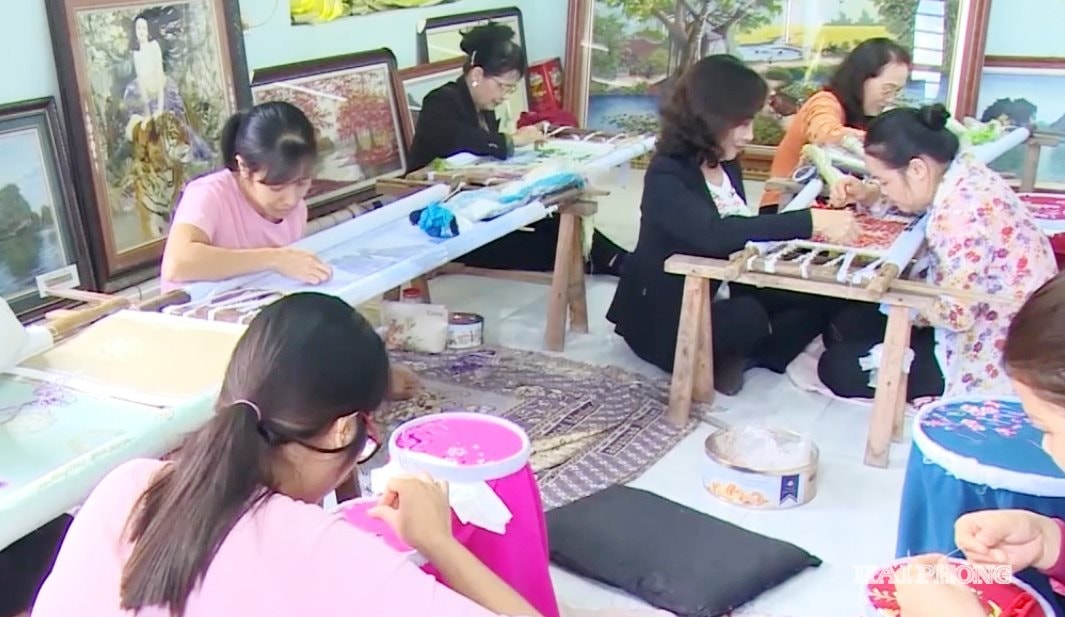
Looking from Bao Ha to other craft villages in Hai Phong, one can see a common point: wherever vocational training is prioritized, traditional crafts have the opportunity to revive. In Duong An commune, the Chau Khe gold and silver crafting village, with over 500 years of history, still bustles with the sounds of hammers and grinding. There was a time when the craft seemed to be declining, but thanks to the return of well-trained young people, the village has gradually regained its vitality.
Luong Duc Tung, born in 1991, a graduate of Hanoi University of Technology, is one such young person. Returning to his hometown to open a silver jewelry workshop, he invested in machinery, combining modern techniques with traditional craftsmanship. “If the younger generation doesn’t return, our ancestors’ craft will remain only in memory,” Tung shared. Each year, his workshop provides employment for 6-8 workers, generating revenue of 1-2 billion VND. Tung’s case is proof that traditional crafts can adapt to the market if there is a well-trained workforce.
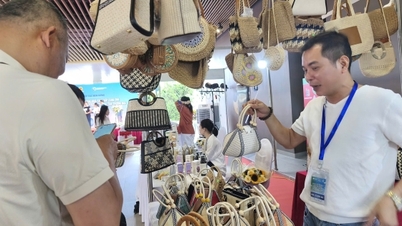
Vocational training is not just about passing on skills, but also about development orientation. Current training programs focus on linking the craft with the market, the collective economy , and the value chain. Learners are equipped with knowledge about improving designs, preserving products, and even building brands. This is a key factor in helping traditional crafts escape fragmented production and enhance their competitiveness.


According to the assessment of the City's Cooperative Union, 2025 also marks the end of the city's plan to train human resources for traditional crafts and trades for the period 2023-2025. The results of the plan are not limited to the number of classes organized and trainees trained, but more importantly, reflect a shift in awareness. Traditional crafts are no longer a "last resort" but are gradually becoming a sustainable career path for a segment of young rural workers.
In reality, preserving traditional craft villages cannot rely solely on the dedication of elderly artisans; a long-term strategy is needed. Vocational training plays a crucial role, bridging the past and the present, cultural values and the demands of the market economy. When young people are equipped with skills, have a market for their products, and a stable working environment, they will feel secure in their craft and continue the flow of tradition.
LINH HUYSource: https://baohaiphong.vn/giu-lua-lang-nghe-truyen-thong-535164.html