

Associated with childhood memories
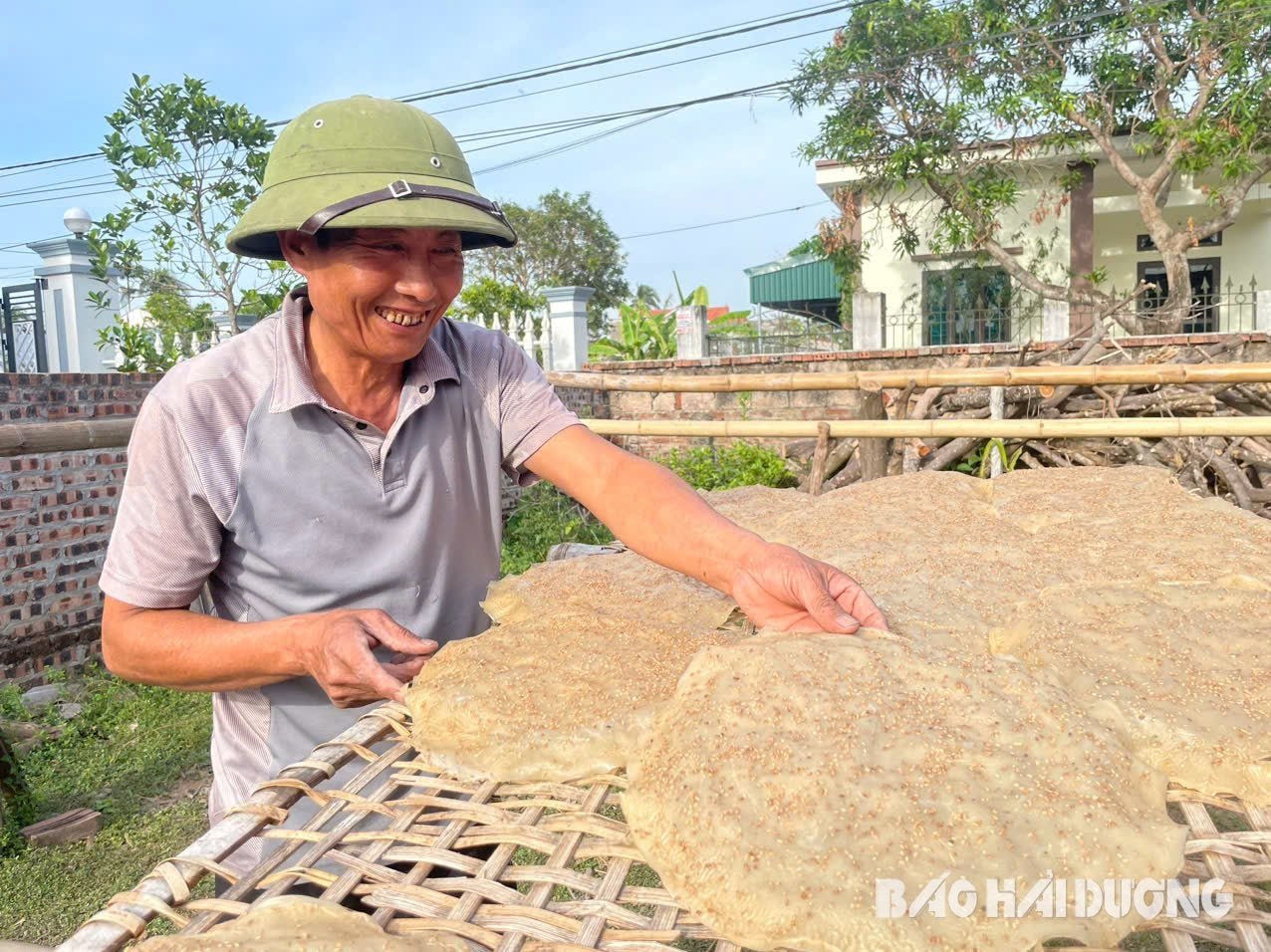
Mr. Nguyen Viet Bao's family (56 years old) is well-known for making grilled rice crackers in the village. Mr. Bao's childhood memories are of days spent grinding flour with his mother to make crackers and selling them in markets throughout the district. He continued the craft as an adult and has remained dedicated to it to this day.
According to Mr. Bao, the craft of making rice paper requires meticulous attention to detail in every step, from selecting the rice and grinding the flour to making the sheets, and it also requires a unique "secret recipe."
From 3 a.m., the kitchens of each family involved in the trade are lit up as they prepare the ingredients for making the rice cakes. The rice used must be fresh rice, preferably Q5 or Khang Dan variety, and should not be milled too thoroughly to retain its outer layer. The rice needs to be soaked in enough water until the grains are plump before being milled; if soaked for too long, the rice will turn sour.
On average, Mr. Bau's family makes 4,500-5,000 rice crackers per month. During the Mid-Autumn Festival, the amount of baked rice crackers produced doubles. Thanks to their delicious, crispy texture, Mr. Bau's family's baked rice crackers are sold in almost all stores inside and outside the district. "The greatest joy is when the crackers I made myself are praised for their deliciousness and bought by tourists as gifts," Mr. Bau shared.
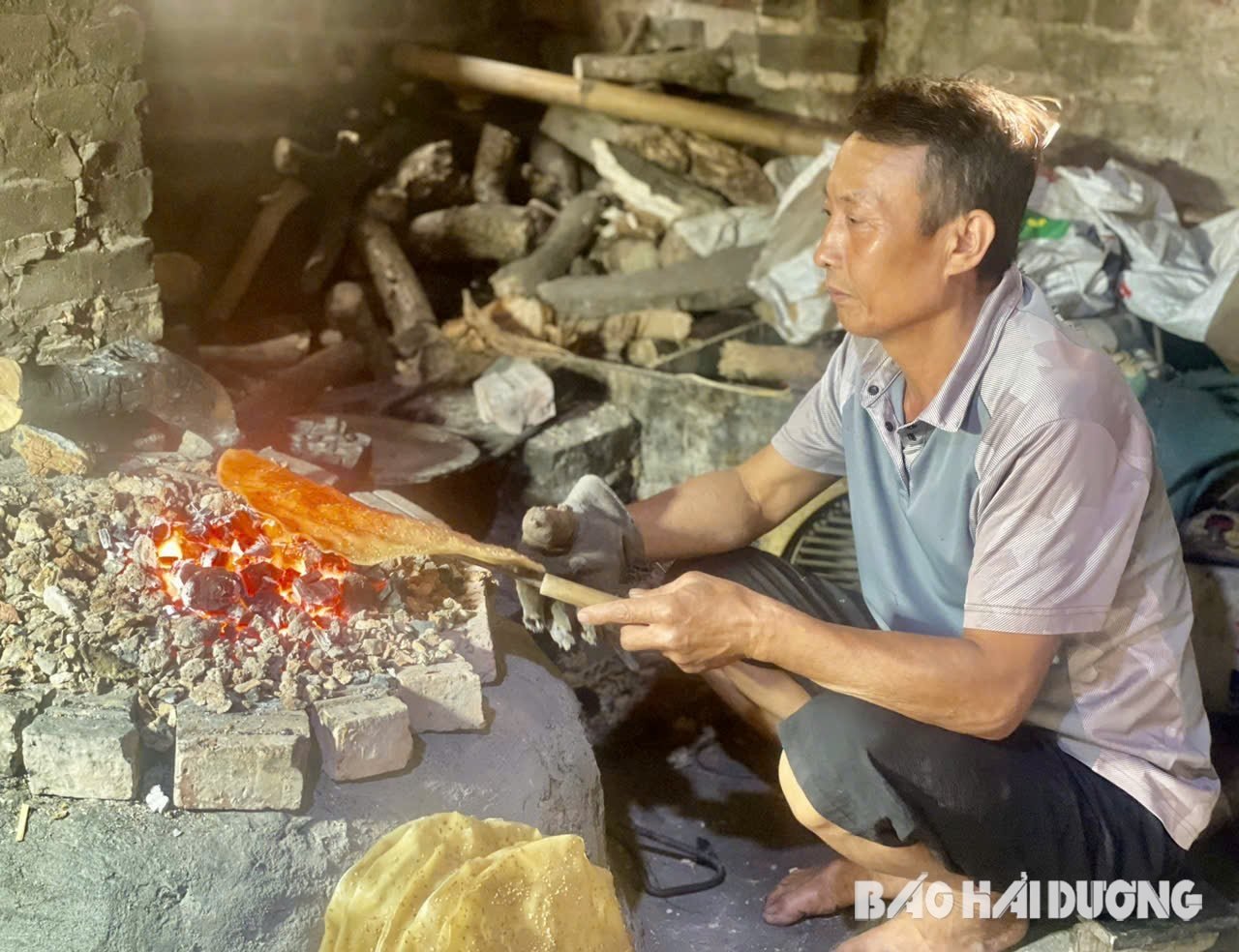
Ms. Nguyen Thi Luyen (53 years old), a resident of the "Voi" rice paper making village, said that making a successful batch of rice paper depends on the weather. The person making the rice paper must work evenly so that the sheets dry evenly under the sunlight. Stronger sunshine helps the sheets dry thoroughly. After that, the sheets are placed on the stove to bake. "Each sheet is made twice. After the first layer of batter is cooked, another thin layer of batter is applied, then sesame seeds are sprinkled on the surface of the sheet," Ms. Luyen said.
According to the elders in the village, the craft of making rice crackers has existed for an unknown period of time, but they know that the name of the village, Voi, has been associated with this craft since their inception.
The autumn breeze in the afternoon carries the fragrant scent of freshly cooked rice along with the crackling sound of rice crackers being grilled over the glowing charcoal stoves of the households in the "Vội" rice cracker-making village, making the rural scene even more vibrant.
Currently, Voi village rice crackers are not only supplied to the market within the province but are also exported to some neighboring localities such as Hanoi and Hai Phong for consumption.
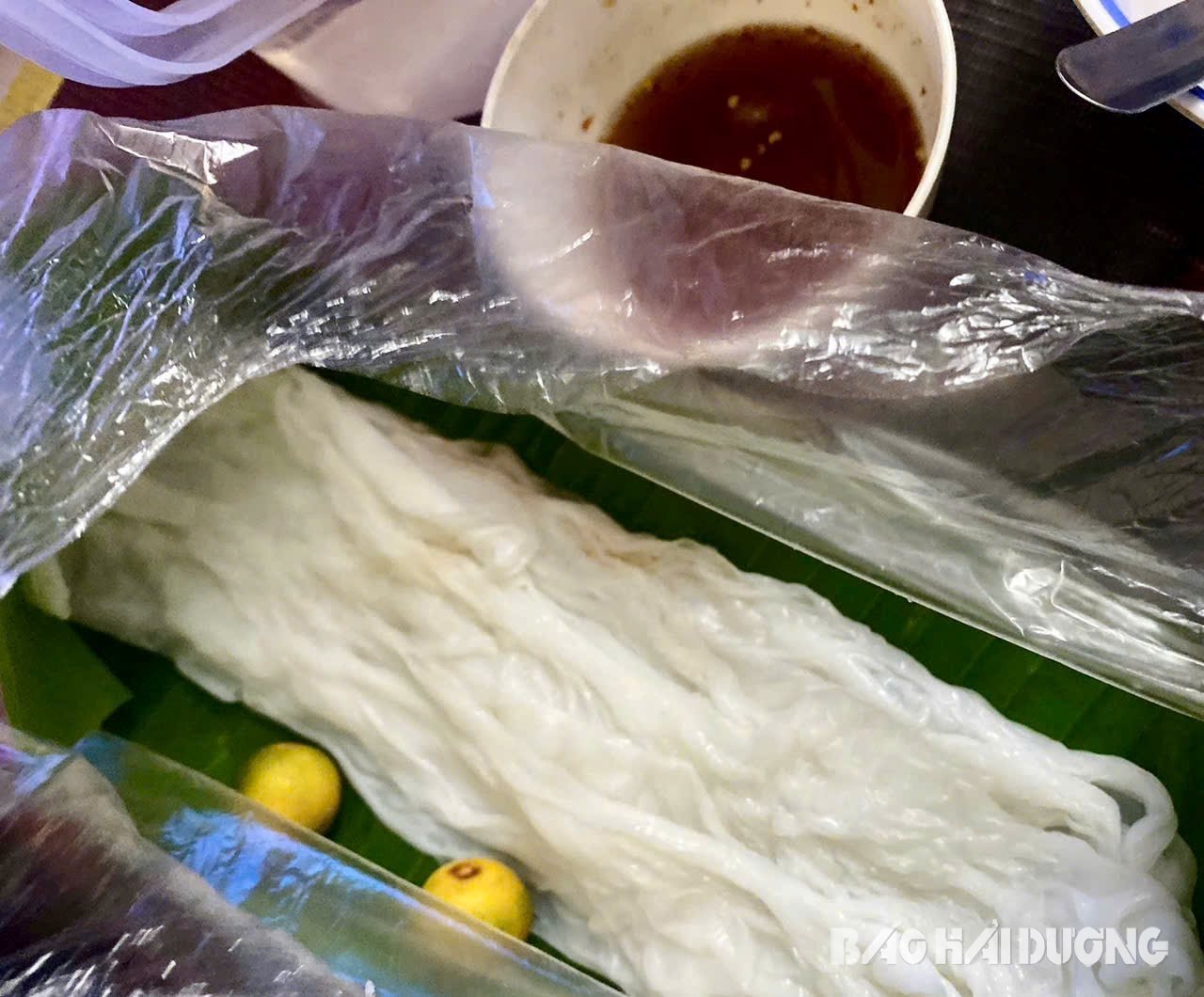
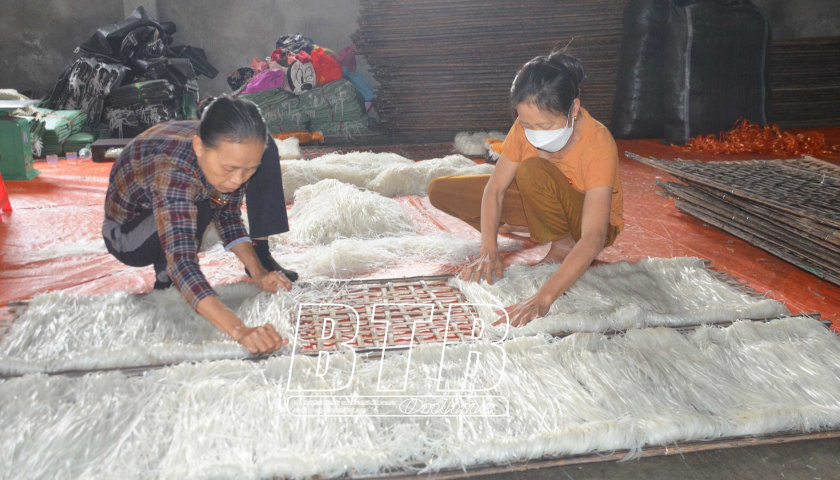
Besides grilled rice crackers, the people of Voi village are also famous for their wet rice crackers. Mr. Tran Cong Chuan's family is the only household in the commune that still preserves the traditional way of making this type of cracker. Wet rice crackers are eaten with grilled meat, herbs, and a little crab sauce, creating a delicious flavor that is very popular. Unlike grilled rice crackers, the ingredients for wet rice crackers require the selection of glutinous rice.
Risk of extinction
The traditional rice paper-making village of "Vội" once had its "golden age" when bamboo mats of rice paper were dried everywhere in the village square and in the yards of houses... Every household in the village made rice paper, and there was a constant stream of vehicles belonging to traders coming to buy it.
"Vội" rice crackers are famous far and wide for their perfectly balanced sweetness, crispness, and unique nutty and rich flavor. However, today, only 4 households in the entire Voi village still practice this craft, causing concern among those involved.
"Nowadays, few young people in Voi village are interested in handicrafts. Making cakes is hard work, and the income is not high, so many young people in the village don't want to learn the trade. If this situation continues, our traditional craft village will fade away," Mr. Bao said.
According to the People's Committee of Chi Minh commune, the number of families still practicing this craft is not large, but thanks to its quality, Voi village's grilled rice crackers still maintain their own brand in the market.
"Each rice cracker, though simple and unpretentious, contains so much love and dedication from the villagers. The people hope to pass on the craft to future generations, so that the Vội rice cracker making village can continue to be preserved and developed," said Mr. Nguyen Tuan Anh, Chairman of the People's Committee of Chi Minh commune.
Today, there are countless treats ranging from simple to luxurious, but the rice crackers from Voi village still seem to be a favorite local delicacy for many people, especially those who have moved far away. They always seek them out as a way to remember their roots and the memories of their childhood.
NGUYEN THAOSource: https://baohaiduong.vn/giu-lua-nghe-banh-da-voi-396619.html
![[Photo] Capturing the moment the tide recedes at Yen Binh Son rapids - a million-year-old scenic spot in Quang Ngai.](https://vphoto.vietnam.vn/thumb/1200x675/vietnam/resource/IMAGE/2026/05/19/1779175463885_yen9-1199-jpg.webp)
![[Photo] National Assembly Chairman Tran Thanh Man attends the groundbreaking ceremony for the National Highway 1A spatial axis project.](https://vphoto.vietnam.vn/thumb/1200x675/vietnam/resource/IMAGE/2026/05/19/1779161360398_ndo_br_bnd-1412-jpg.webp)


































![[Photo] General Secretary and President To Lam receives Indian Defense Minister Rajnath Singh](https://vphoto.vietnam.vn/thumb/402x226/vietnam/resource/IMAGE/2026/05/19/1779184046302_anh-man-hinh-2026-05-19-luc-16-46-58.png)















Comment (0)