

The Hanoi Department of Transport has just requested the City People's Committee and the Department of Planning and Investment to appraise and submit to the competent authority for approval the investment policy for a project to urgently improve infrastructure and organize traffic at several intersections and roads to minimize congestion.
According to a proposal from the Hanoi Department of Transport, the project to urgently improve infrastructure and organize traffic at several intersections and routes to reduce traffic congestion has a total estimated investment of nearly 225 billion VND, funded by the state budget, of which construction costs account for over 188 billion VND. The project is scheduled for implementation from 2024 to 2027.
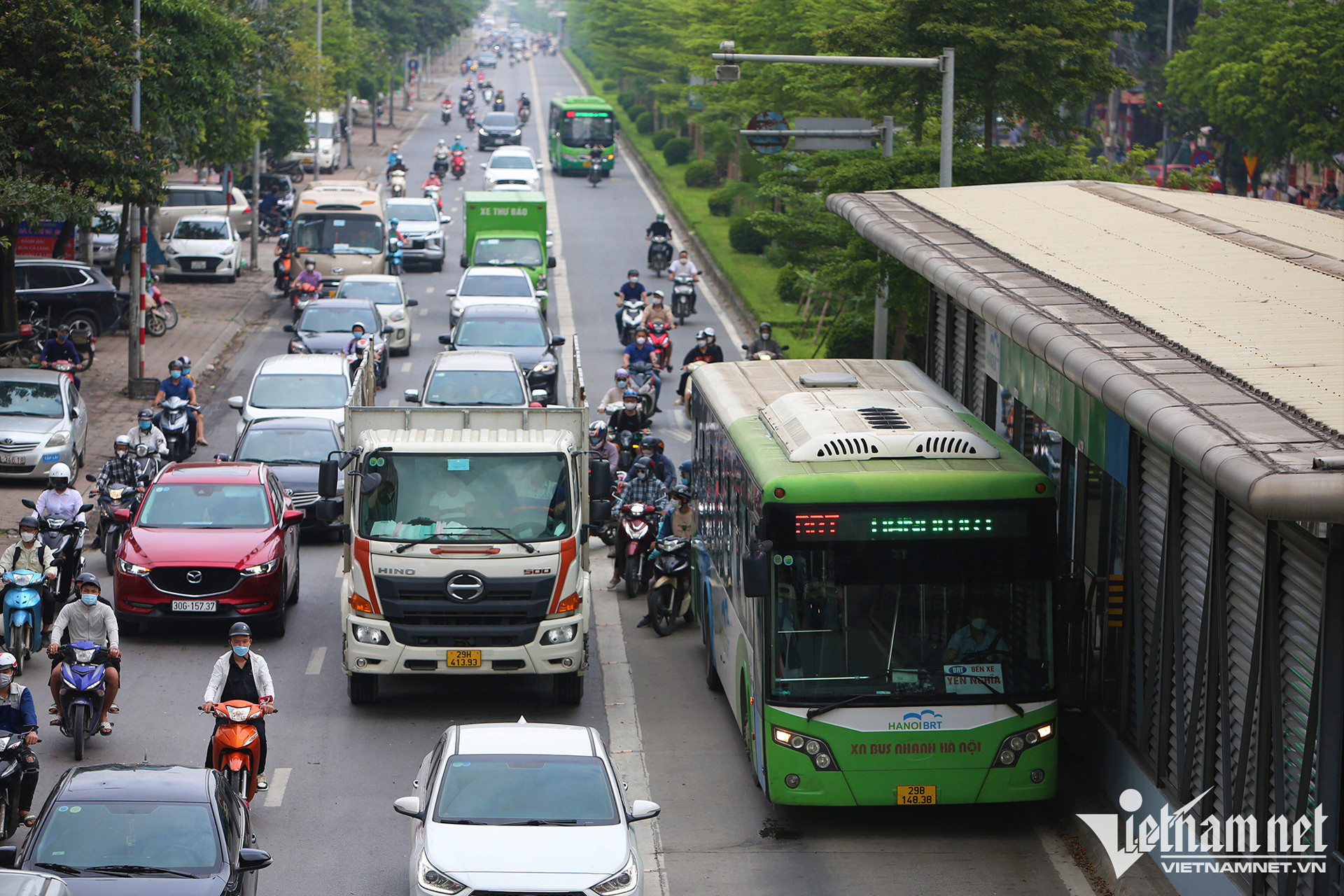
The Hanoi Department of Transport plans to narrow sidewalks and median strips at eligible locations on Giang Vo, Lang Ha, Le Van Luong, To Huu, Hoang Dao Thuy, Hoang Minh Giam, and Khuat Duy Tien streets. These are all routes with particularly high traffic density and frequent congestion during rush hour.
In particular, the Giang Vo, Lang Ha, Le Van Luong, and To Huu roads, which are part of the BRT (Bus Rapid Transit) system, are central traffic arteries that frequently experience traffic congestion.
Therefore, investing in construction projects, improving infrastructure, and urgently organizing traffic at some intersections and routes will contribute to reducing traffic congestion.
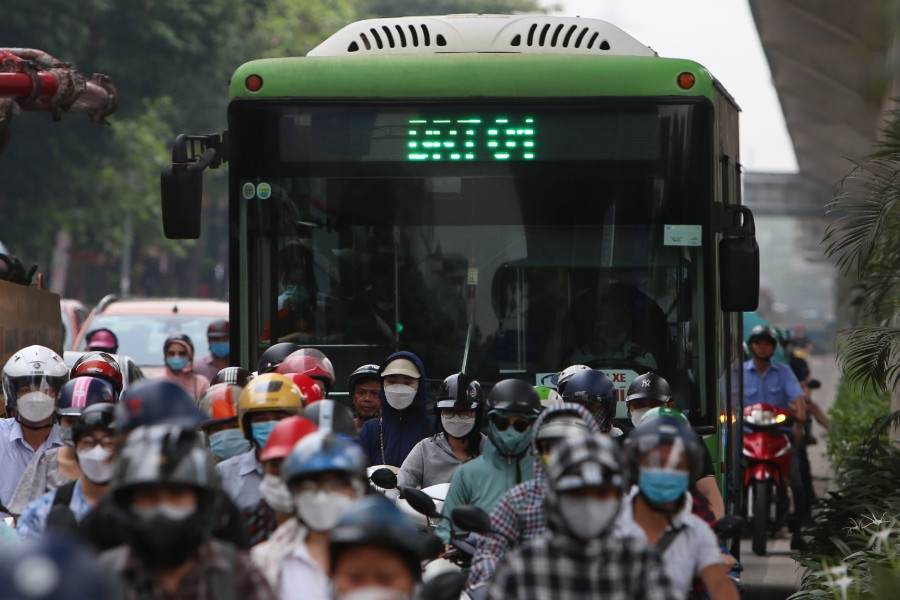
BRT (Bus Rapid Transit) buses operating on their own lanes only exacerbate traffic congestion.
Source: https://vietnamnet.vn/ha-noi-xen-via-he-dai-phan-cach-doc-tuyen-buyt-nhanh-brt-2312570.html


![[Image] Central Party Office summarizes work in 2025](/_next/image?url=https%3A%2F%2Fvphoto.vietnam.vn%2Fthumb%2F1200x675%2Fvietnam%2Fresource%2FIMAGE%2F2025%2F12%2F18%2F1766065572073_vptw-hoi-nghi-tong-ket-89-1204-jpg.webp&w=3840&q=75)


























































































Comment (0)