

A platform for "double" transformation
In the context of increasingly intertwined digital and green transformation, digital infrastructure and data are emerging as new growth drivers. Speaking at the recent workshop "Digital and Green Transformation: Driving Force for Business Development in the New Era," Mr. Vu Ngoc Tuan, Deputy Head of the Digital Technology Department (Department of Digital Transformation, Ministry of Agriculture and Environment ), stated that while the agriculture and environment sector previously relied primarily on resources and labor, it is now strongly shifting towards a technology and data-driven model.

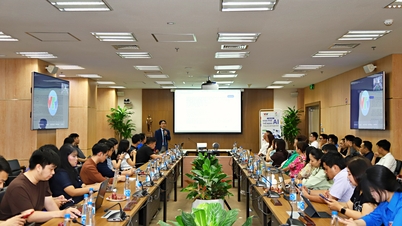
According to Mr. Vu Ngoc Tuan, technology and data are creating significant changes throughout the entire agricultural production chain. Photo: Viet Anh.
The "dual transformation" trend is therefore inevitable. Digital infrastructure, data, and technologies such as AI, IoT, blockchain, digital mirroring, and cloud computing play a foundational role, while green transformation aims to reduce emissions, develop a circular economy , and protect the ecosystem.
The core point is that data is no longer just a supporting tool but has become a "strategic asset." Thanks to data, production activities can be measured, monitored, and optimized in a greener direction, instead of relying on experience as before. At the same time, digital infrastructure helps track the entire product lifecycle, meeting increasingly stringent environmental and traceability requirements.
Data creates value, technology reshapes the production chain.
According to Mr. Tuan, for businesses, especially in processing and trading, data brings clear benefits. Applying digital technology helps reduce investment costs by 15-20%, while also saving energy and labor.
More importantly, data helps to make the entire supply chain transparent. From production to consumption, all information is digitized and easily accessible, becoming a "passport" for agricultural products to access demanding markets such as the EU or Japan.
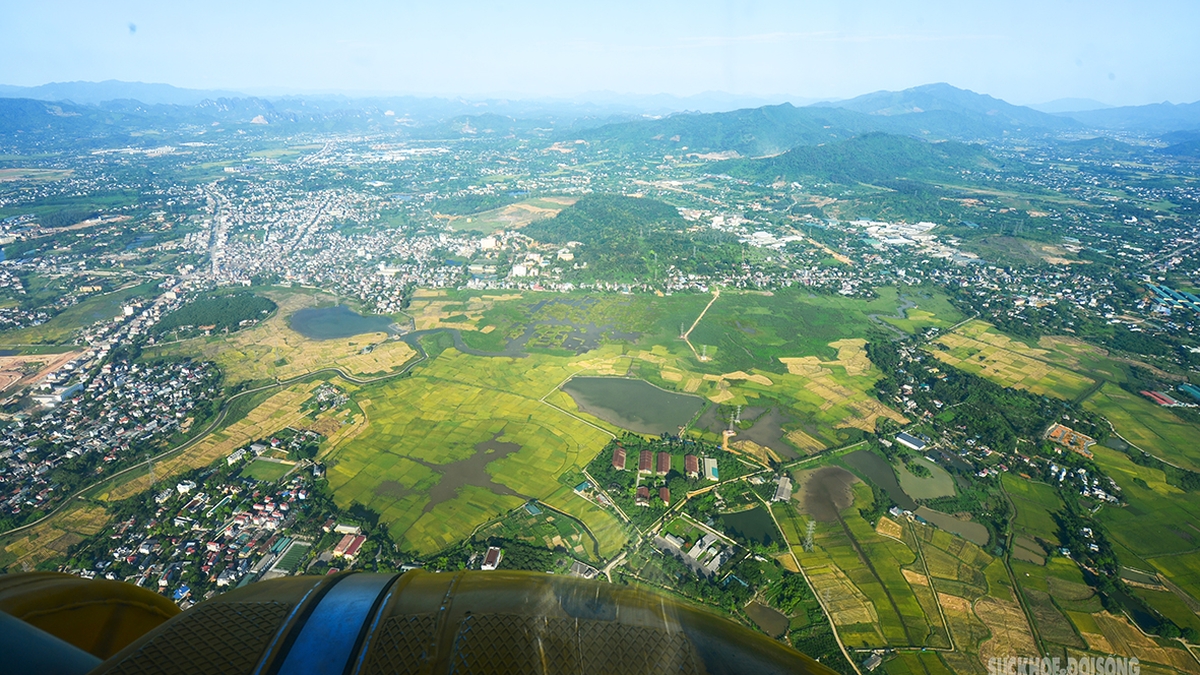
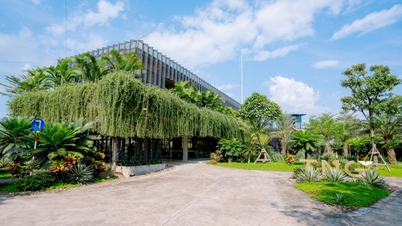
Data unlocks opportunities for access to green finance, enhances brand value, and increases competitiveness. Photo: NNMT.
In the context of increasingly stringent international standards, data is almost a mandatory requirement. Mastering data not only helps businesses maintain market share but also opens up opportunities to access green finance, enhance brand value, and increase competitiveness.
Furthermore, data plays a crucial role in connecting different stages of the value chain. When information is transparent, agriculture can be closely linked with processing, logistics, and trade, forming a sustainable production-consumption ecosystem, reducing intermediary costs, and increasing added value.
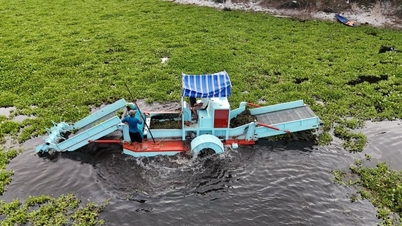
In reality, technology and data are creating significant changes throughout the entire agricultural production chain. Numerous national databases on land, fisheries, and specialized fields have been established, contributing to information transparency and improved management efficiency.
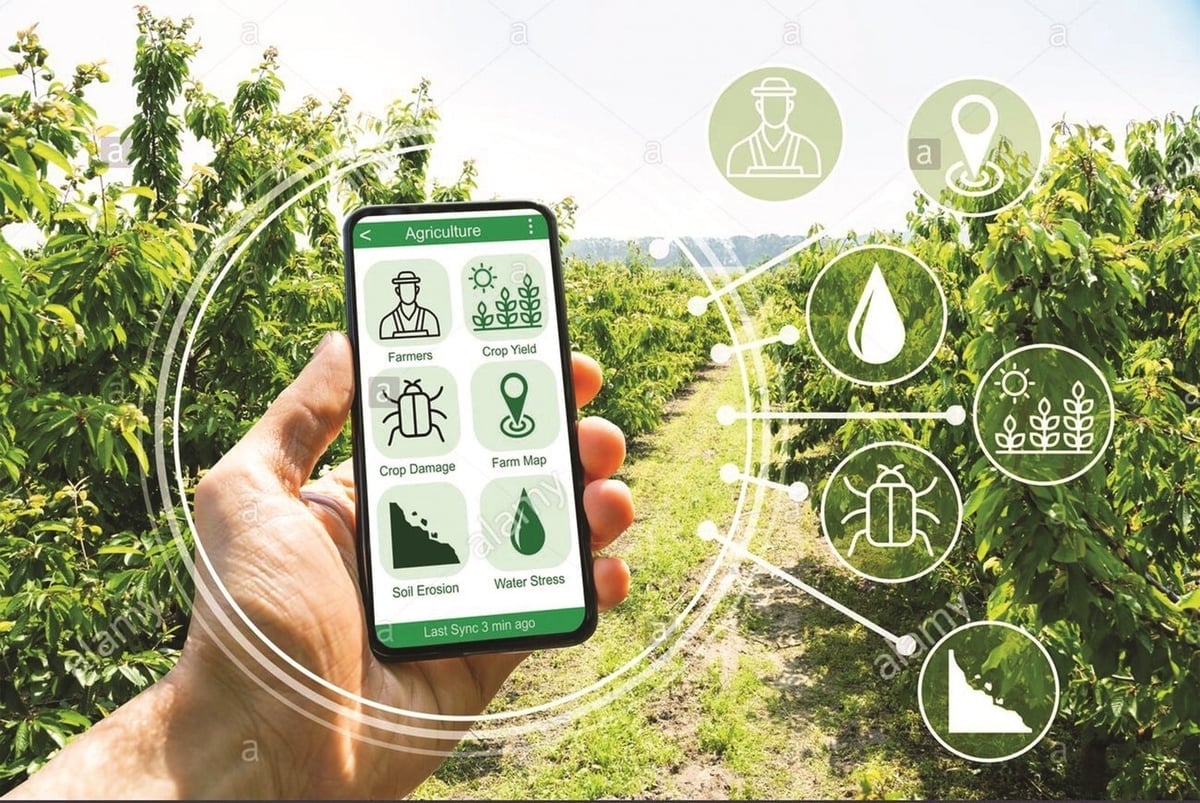
In production, IoT enables continuous monitoring of farming conditions, optimizing processes and reducing material costs by 15-25%. AI supports early disease detection, yield forecasting, and supply chain optimization. Blockchain ensures traceability, while MRV systems help measure emissions and connect to carbon markets.
Notably, digital mirroring technology enables the simulation of production and disaster scenarios, supporting more accurate decision-making. These applications are gradually reshaping the agricultural sector towards smarter, more sustainable practices that are better adapted to climate change.
Improving institutions to turn data into a competitive advantage.
Despite its enormous potential, for digital infrastructure and data to truly become a driver of growth, synchronized institutional and policy conditions are necessary.
According to Mr. Vu Ngoc Tuan, digital transformation cannot be separated from the legal framework. Without appropriate mechanisms, the implementation process will be difficult to achieve substantive results.
Currently, policies related to data, electronic transactions, and digital technology are being gradually perfected. The digital transformation strategy for agriculture and environment aims to increase the share of the digital economy to 10% by 2030 and 20% by 2035, while also moving towards resource management based on real-time data.
Furthermore, the digital architecture of the industry is being built towards a unified, interconnected system linked to the National Data Center, ensuring multi-layered information security. This is a crucial foundation for overcoming the problem of scattered and inconsistent data – one of the major obstacles today.
Beyond institutional frameworks, data standardization and human resource development are also key factors. When data is standardized and shared effectively, systems can connect, forming a complete digital ecosystem. Simultaneously, a digitally skilled workforce will determine the success of the transformation process.

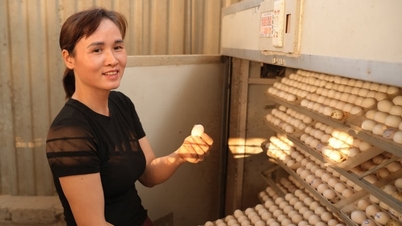
When information is transparent, agricultural products can be closely linked to processing, logistics, and trade, forming a sustainable production-consumption ecosystem, reducing intermediary costs, and increasing added value. Photo: Minh Anh.
In the long term, data will not only be a tool but will become a decisive factor in the competitiveness and position of the agriculture and environment sectors in the global supply chain. Countries and businesses that master data will have a significant advantage in accessing markets, attracting investment, and achieving sustainable development.
"In the green era, digital infrastructure and data are becoming crucial levers for the agricultural and environmental sectors to transform their growth models. From optimizing costs and increasing productivity to ensuring supply chain transparency and meeting international standards, data is reshaping the entire industry."
The question is no longer "whether or not to transform," but how quickly and effectively the transformation will take place. With the synchronized involvement of the State, businesses, and the people, digital infrastructure and data can absolutely become the foundation for the agricultural and environmental sectors to break through and develop green and sustainable in the coming period," a representative from the Department of Digital Transformation affirmed.
Source: https://nongnghiepmoitruong.vn/ha-tang-so--don-bay-cho-tang-truong-xanh-d804359.html
![[Photo] Ba Lang An Lighthouse - the "eye of the sea" amidst the "rock museum" of Quang Ngai province.](https://vphoto.vietnam.vn/thumb/1200x675/vietnam/resource/IMAGE/2026/05/29/1780038698840_anh-man-hinh-2026-05-29-luc-14-10-42.png)

![[Image] Pleasant weather helps students enter the 10th grade entrance exam with confidence.](https://vphoto.vietnam.vn/thumb/1200x675/vietnam/resource/IMAGE/2026/05/29/1780034401612_ngay-1-thi-lop-10-minh-duy-8-5009-jpg.webp)



















































































Comment (0)