For some reason, every time I set foot in Hai Lang, my heart is captivated by the beautiful, picturesque words of the Russian writer Ilya Ehrenburg about patriotism that I read in my youth: “Patriotism begins with love for the most ordinary things: love for the tree planted in front of the house, love for the small street leading to the riverbank, love for the refreshing, tangy aroma of an autumn pear or the scent of the steppe grass with a hint of strong liquor… The stream flows into the river, the river flows into the Volga, and the Volga flows into the sea. Love for home, for village, for countryside becomes love for the Fatherland…” I also noticed something unique and simple about Hai Lang compared to many other places in Quang Tri : here, rivers are evenly distributed throughout the district; each river sparkles with epic tales and is steeped in heroic legends.
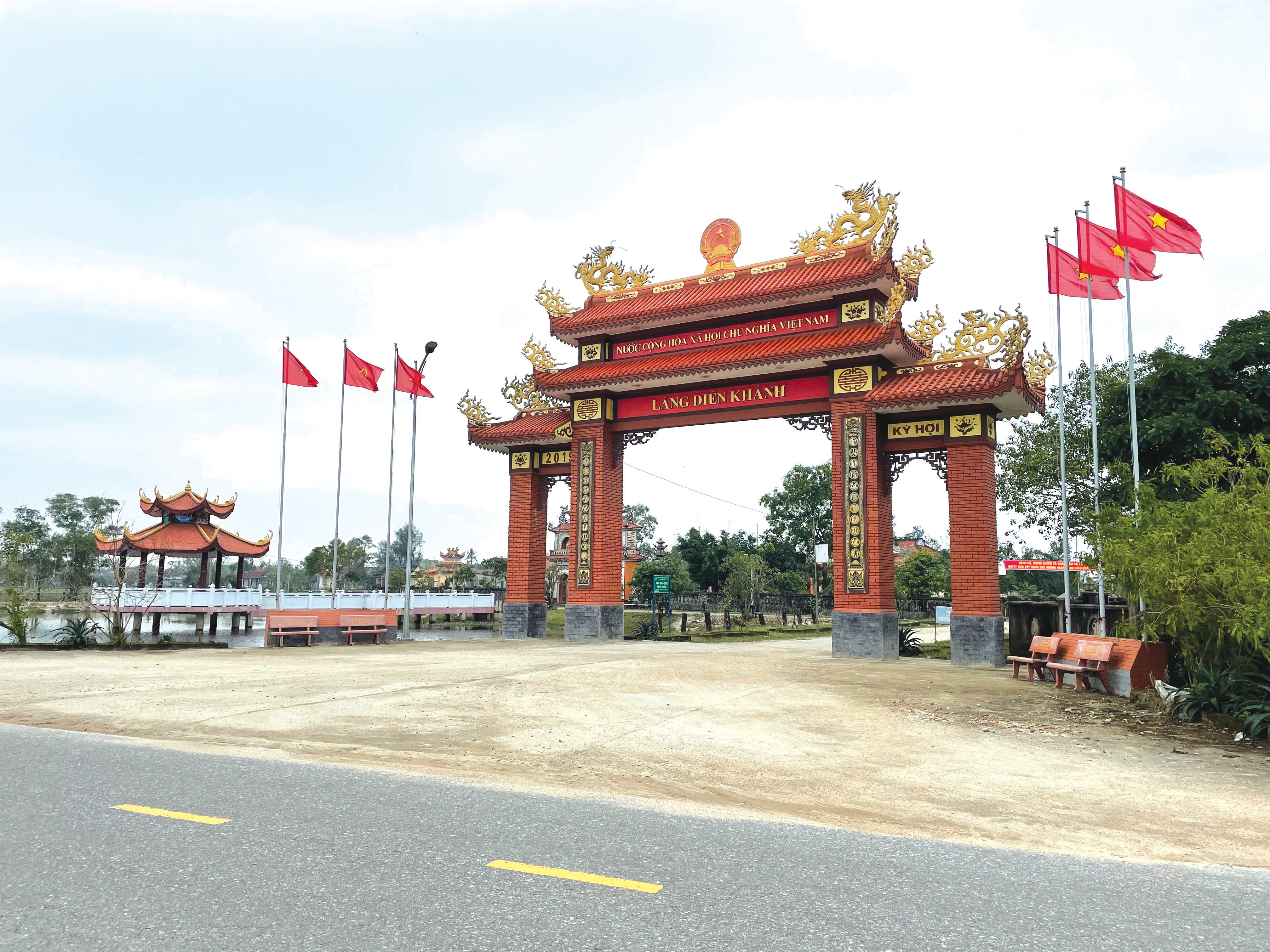
Entrance gate to Dien Khanh village - Photo: D.TT
In this short article, I would like to refer to the villages and communes by their old names to reflect the long-standing connection and harmony between the river and the countryside, the people and the land of the vast plains where egrets fly freely alongside the boundless Trường Sa, and where, during the harshest season, cactus flowers proudly bloom on the endless white sands stretching to the horizon.
In the northern region, the Thach Han River originates from the foothills of western Quang Tri province, flowing towards Hai Phuc, then down through Hai Le to Quang Tri town, where it connects with the Vinh Dinh River at the Co Thanh junction. The Vinh Dinh River, from the Co Thanh junction and Sai Market, passes through Hai Quy and merges with the Nhung River, flowing towards Hai Xuan and Hai Vinh; then at the Hoi Det junction, it merges with the O Lau River, emptying into the Tam Giang lagoon and the Thuan An estuary.
Ancient people believed that the Vinh Dinh River was closely connected to the Nhung and Thach Han rivers, but they couldn't be joined because the Thach Han River was straight, while the Nhung River was winding and meandering. During the Later Le Dynasty, the King ordered the people to dig a canal from Quy Thien (Hai Quy) to connect with Co Thanh, creating a waterway from Thuan An estuary to the Thach Han River. Because the Vinh Dinh River was winding and located in a flood-prone area, it was often filled in annually, initially in the section from Ngo Xa market, passing through Phuong Lang, Hoi Co, to Con So.
During the reign of Emperor Minh Mạng, the people were ordered to dig a straight section of the river from Ngô Xá to Phường Sở; and another section from Hội Yên intersection through Trung Đơn and Phước Điền to Hói Dét. The section of the river from Kim Giao to Diên Khánh was called Tân Vĩnh Định; the section passing through Trung Đơn and Phước Điền was called Cựu Vĩnh Định. Folklore suggests that the river was named Vĩnh Định because it was often filled in, so after completion, Emperor Minh Mạng named it Vĩnh Định River, hoping for its stability and longevity. The Emperor also erected two steles in Phường Sở to preserve the evidence and acknowledge the efforts of the people of Hải Lăng in digging and building the river.
In the southern region, the rivers all bear simple, beautiful names. The Đại Nam nhất thống chí, compiled by the National History Institute of the Nguyễn Dynasty, calls the Ô Lâu River the Lương Điền River; while the Hoàng Việt nhất thống dư địa chí by Lê Quang Định calls it the Lương Phước River, the natural hydrological boundary between the two provinces of Quảng Trị and Thừa Thiên Huế (now Huế City). The name Ô Lâu River is reminiscent of Châu Ô of Champa, which King Chế Mân used as a dowry to marry Princess Huyền Trân.



The Thác Ma River, flowing under the Mỹ Chánh bridge on National Highway 1, originates in the western hilly region and flows eastward through Hải Lăng district before joining the Ô Lâu River. The Ô Lâu River, also originating from the west, meanders through the Phong Điền hilly region, crosses National Highway 1 at Câu Nhi village, and enters Hải Lăng district where it meets the Thác Ma and Ô Giang rivers (an extension of the Vĩnh Định River from Triệu Phong into the Hải Lăng lowlands), merging before flowing into the Tam Giang lagoon.
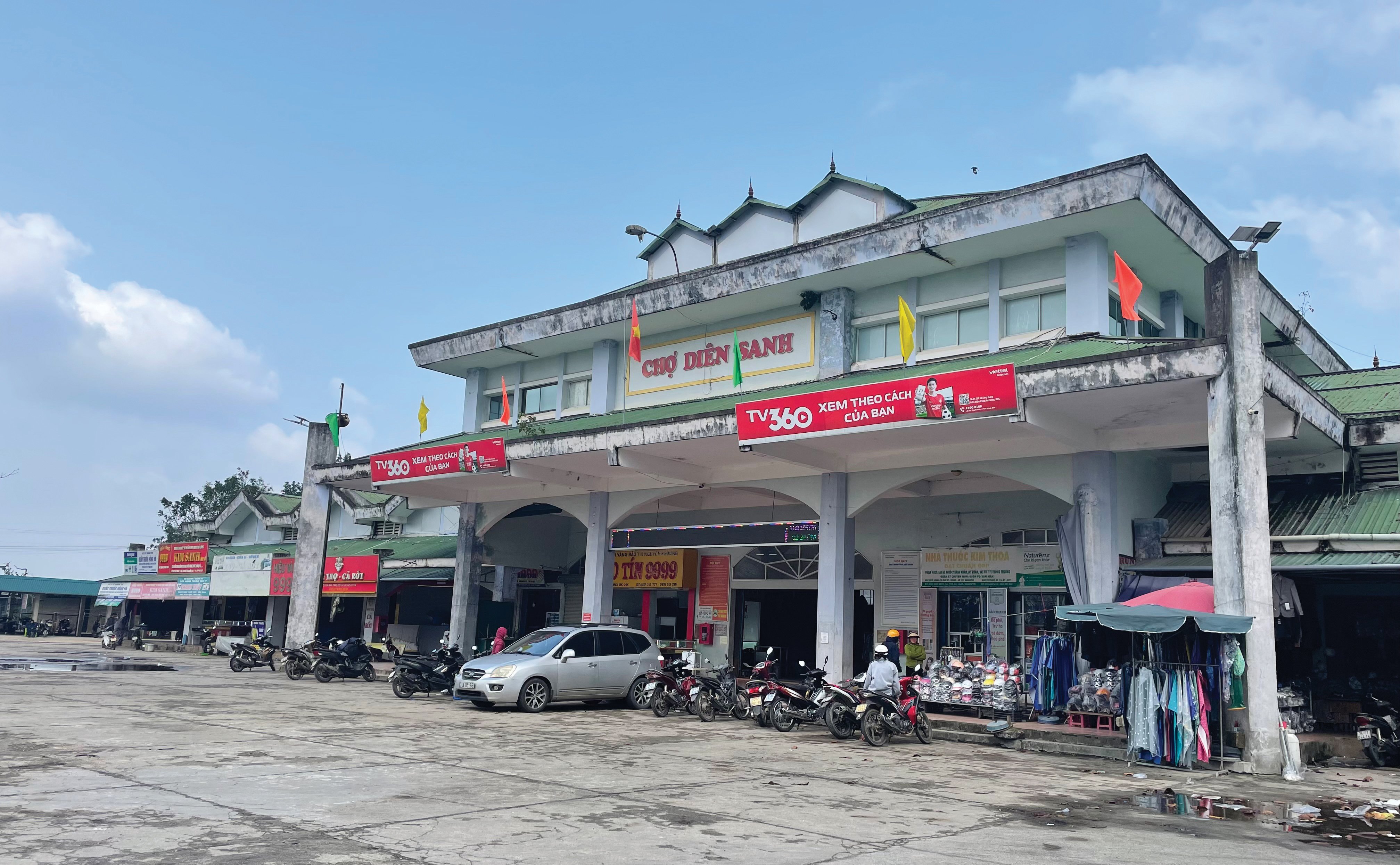
Dien Sanh Market - Photo: D.TT
The Ô Lâu River is a legendary waterway associated with a deeply melancholic folk song passed down from ancient times: "A hundred years because of a broken promise / The banyan tree at the ferry landing, another boat takes me across / The banyan tree at the ferry landing remains / The boat has long since perished..." Associated with this is the story of a young scholar from the countryside who, on his way to Hue to take the imperial examination, met a ferrywoman on the Ô Lâu River, and the two fell in love. After the examination, he returned home, promising to return soon to see her. But time passed quickly, and the young man was nowhere to be seen. Weary of waiting, the ferrywoman fell ill and died. When the young man returned, the ferrywoman from years ago was no longer there...
Even now, if anyone has the chance to take a boat down the O Lau River, that poignant story still frequently recurs in their thoughts, even though the plot seems familiar, as if they've read or heard it before. Traveling along the O Lau River, one encounters banyan trees, riverbanks where people wash clothes, their bare hands stirring the water, creating ripples in the shadows of trees, figures, and sunlight; and villages nestled along the river downstream, with their vast fields and rich cultural heritage: Luong Dien, Cau Nhi, Van Quy, An Tho, Hung Nhon, Phu Kinh...
Interestingly, since ancient times, several neighboring villages in Hai Lang district have names beginning with the word "Ke," such as Ke Dau village in Hai Truong commune, Ke Lang in Hai Son commune, Ke Van village in Hai Tan commune (formerly), and Ke Vinh village in Hai Hoa commune (formerly). Visiting Ke Dien market in Hai Tho commune (formerly), now a modern market in Dien Sanh town, evokes memories of a difficult time, as the market's name is mentioned in the folk song "Ten Eggs," which encapsulates the indomitable philosophy of the people of Hai Lang and Quang Tri: "Don't lament your difficult fate, my friend, as long as there is skin and hair, there will be sprouts and trees."
O Lau River - Photo: NVTOAN
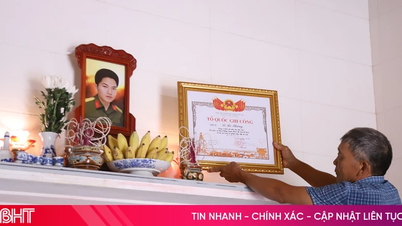
Hai Lang is also a land of outstanding people and rich history, with its villages surrounded by picturesque rivers, producing many famous historical and cultural figures such as Dang Dung, Doctor Bui Duc Tai, Nguyen Duc Hoan, Nguyen Van Hien, Nguyen Trung...; heroic martyrs like Phan Thanh Chung, Tran Thi Tam, heroes like Van Thi Xuan, Vo Thiet...; and Mother Tran Thi Mit in Hai Phu commune, a mother who endured sacrifices, dedicating her husband and six sons, her daughter-in-law and her grandson to the Fatherland; a mother whose name is recorded at the Vietnam Women's Museum in Hanoi as one of the ten most exemplary Heroic Vietnamese Mothers of the country.



Speaking of rivers is also speaking of the enduring nature of a land. During the wars of national defense, Hai Lang always took on the responsibility of being the first to advance and the last to retreat. This beloved land, once at the forefront of the fighting, used its own body as a shield, protecting a vast area in the southernmost part of the province, yet it was the last to enjoy peace and tranquility.
It wasn't until after 6 PM on March 19, 1975, that Hai Lang district was completely liberated. It is also here, during the period of reform, that Hai Lang is taking on the great responsibility of building a dynamic economic zone, playing a leading role in promoting the socio-economic development of Quang Tri province.
With unwavering determination, intelligence, creativity, and abundant inner strength, the land and people of Hai Lang are continuing to write a glorious chapter in the history of the đổi mới (renovation) era right in their own homeland...
Dan Tam
Source: https://baoquangtri.vn/hai-lang-dat-cua-nhung-dong-song-su-thi-191319.htm