

.png)
Many sleepless nights with my child.
Recently, the number of children suffering from atopic dermatitis has been on the rise. This is a common chronic dermatological condition in young children, prone to frequent relapses, and significantly affecting the health and daily lives of children and their families.
For over a year now, Ms. NTTH (Le Ich Moc ward) has become almost accustomed to sleepless nights caring for her child due to itching. Her child was diagnosed with atopic dermatitis when he was only 2 months old. “At that time, his face started to turn red, his skin became rough, and he developed round patches like coins. Initially, my family thought he just had a common skin allergy, but the condition worsened, so I took him to the Hai Phong Dermatology Center. After the examination, the doctor concluded that he had atopic dermatitis,” Ms. H. said.
It's not just Ms. H.'s family; many other parents also face considerable pressure when their children suffer from chronic atopic dermatitis. Ms. NTH (from Thanh Dong ward), who has been living with her child for over two years, said that her daughter developed dry, rough skin, red patches, and itching from the age of just over one month. Thinking it was just common heat rash, the family bought ointments and bathed her at home. However, the condition did not improve but worsened. The affected areas spread throughout the body, causing the baby to cry, refuse to breastfeed, and sleep restlessly due to the persistent itching. Only when they took their child to the Hai Duong Eye and Dermatology Hospital for examination did the family learn that the baby had atopic dermatitis and receive proper treatment guidance.
According to Dr. Hoang Thi Lan, Head of the Department of Cosmetic Surgery at Hai Duong Eye and Dermatology Hospital, atopic dermatitis is a fairly common chronic disease in young children. Approximately 10-15% of children suffer from this disease, and many cases can last for many years.
Proactive disease control from an early stage.
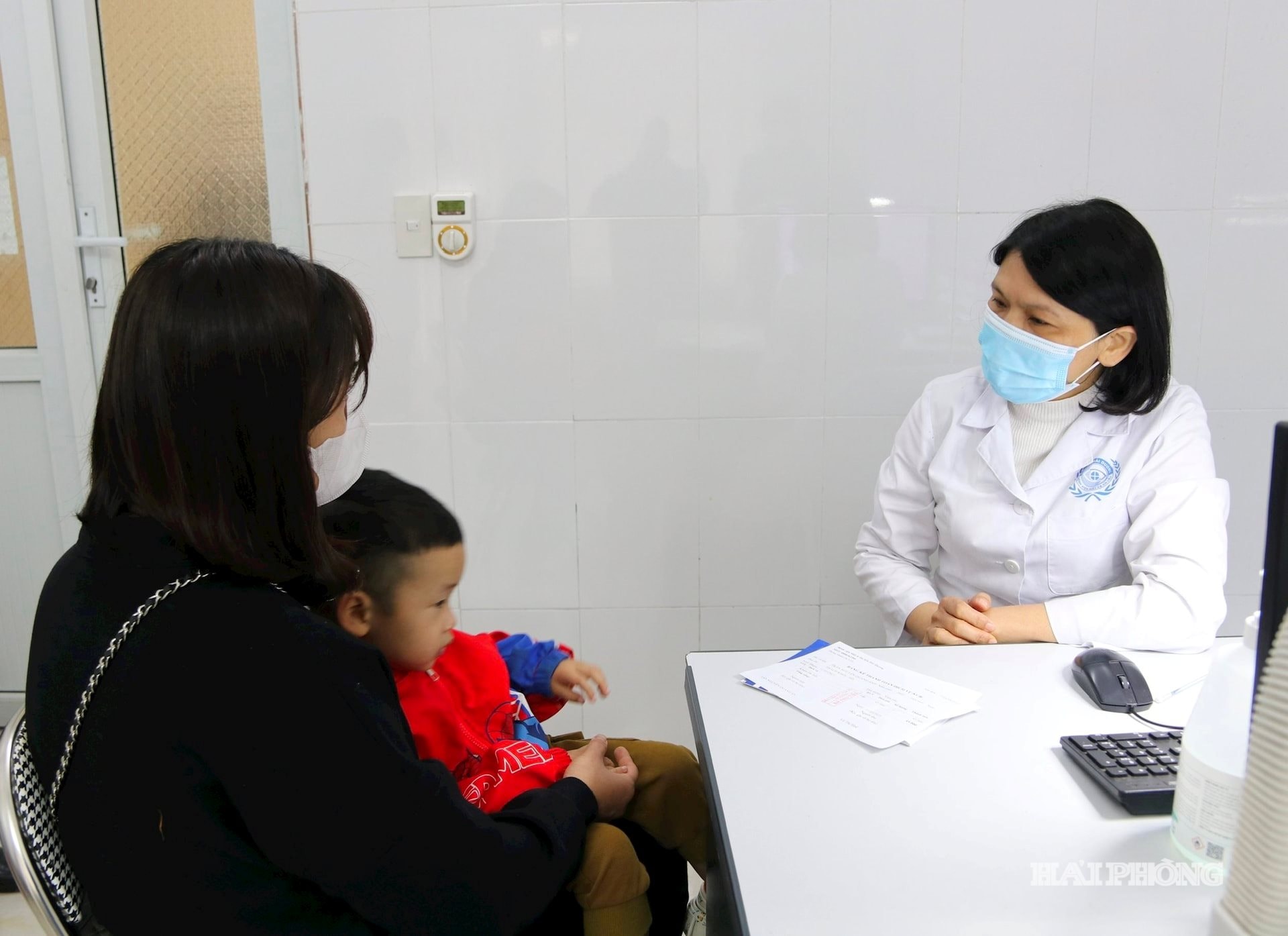
Atopic dermatitis is a chronic, recurring allergic skin condition that commonly affects young children, especially those under 2 years old. Typical symptoms include dry skin, redness, scaling, and persistent itching. In the acute phase, children may develop small blisters on a red background, which are easily broken and crusted over, often concentrated on the cheeks, chin, and face. As the disease progresses to the chronic stage, the skin may thicken, crack, and become painful, significantly impacting daily life.
According to Dr. Bui Thi Hoang Yen, Head of the Outpatient Department at the Hai Phong Dermatology Center, the exact cause of atopic dermatitis has not yet been definitively determined. However, many studies suggest the disease is related to a combination of genetic factors, immune disorders, and damage to the skin's protective barrier. In young children, the skin is still delicate, and its ability to retain water and protect itself is not yet fully developed, making it very susceptible to dryness and dehydration. When the skin's protective barrier is damaged, environmental allergens such as house dust mites, pollen, animal dander, chemicals, or bacteria can easily penetrate, causing the disease to start and recur multiple times. In addition, weather conditions also significantly affect the condition.
According to dermatologists, one of the common mistakes today is that many parents self-medicate their children with over-the-counter creams or treat the condition based on anecdotal evidence. In many cases, the overuse of corticosteroid-containing medications causes skin atrophy, dilated blood vessels, or fungal infections, prolonging the disease and making it more difficult to control. Furthermore, many families, when they see their child's symptoms improve, stop the medication on their own, neglecting regular check-ups, leading to rapid relapses. Meanwhile, atopic dermatitis is a disease that requires long-term monitoring and treatment to control flare-ups.
To minimize the risk of recurrence, doctors advise parents to maintain a clean living environment, limiting dust, mold, and irritants. Children should wear soft, absorbent clothing, avoiding rough materials that can chafe the skin. Daily moisturizing is also essential to restore the skin's protective barrier.
When children exhibit symptoms such as red, scaly skin, persistent or recurring itching, parents should take them to a dermatology specialist for proper examination and treatment. "Early detection, proper care, and adherence to treatment play a crucial role in effectively controlling atopic dermatitis, limiting complications, and improving the quality of life for young children," Dr. Yen advises.
NGOC THANHSource: https://baohaiphong.vn/han-che-bien-chung-viem-da-co-dia-keo-dai-o-tre-nho-543635.html
![[Photo] Ba Lang An Lighthouse - the "eye of the sea" amidst the "rock museum" of Quang Ngai province.](https://vphoto.vietnam.vn/thumb/1200x675/vietnam/resource/IMAGE/2026/05/29/1780038698840_anh-man-hinh-2026-05-29-luc-14-10-42.png)


![[Image] Pleasant weather helps students enter the 10th grade entrance exam with confidence.](https://vphoto.vietnam.vn/thumb/1200x675/vietnam/resource/IMAGE/2026/05/29/1780034401612_ngay-1-thi-lop-10-minh-duy-8-5009-jpg.webp)
















































































































Comment (0)