

With Kpop gaining global popularity, copycat versions easily reach the mass audience, and many Vietnamese singers have been embroiled in controversy and suffered reputational damage due to allegations of plagiarism from Korean stars.
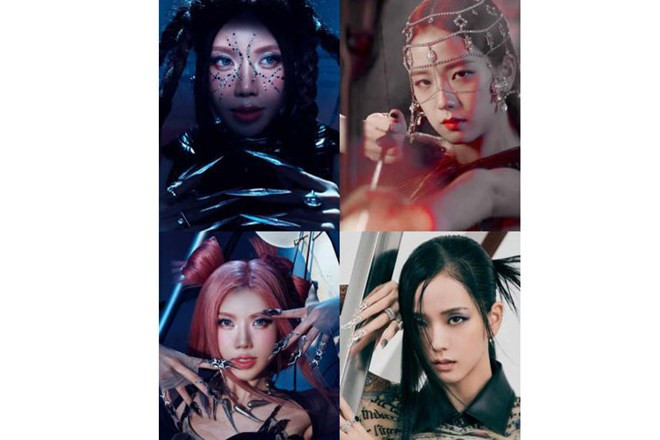
Was it accidental or intentional plagiarism?
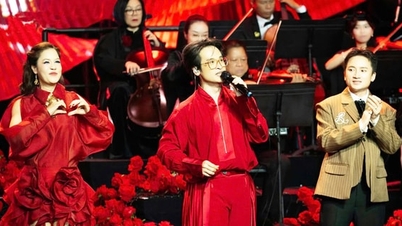
In recent days, allegations of plagiarism against Jungkook have caused Hung Huynh considerable trouble, forcing him to hide his newly released music video. The male singer has also faced criticism and ridicule from the online community. Similar controversies have also occurred with Trang Phap, the Mopius group (from the show "Anh trai say hi"), and the LUNAS group (from the first season of "Chi dep dap gio re song").
Music videos that are said to be "similar" to Korean idols, melodies reminiscent of K-pop hits, and outfits resembling the style of Korean stars... have become keywords associated with a segment of Vietnamese singers for many years.
In 2022, two female singers, MiiNa and Bao Uyen, were accused of copying Blackpink's image. After being criticized and condemned by the audience, their agency... young singer They had to issue an apology and announce the dismissal of the creative director. However, the projects of these singers were still boycotted and labeled as "copycats."
Not only rookies, but also many well-known stars in Vietnamese showbiz have faced backlash for "borrowing" Kpop too much, such as Erik, Duc Phuc, Chi Pu, Min, Thieu Bao Tram... Groups that emerged in Vietnam like Uni5, LIME, LipB, Zero9, have left Vietnamese audiences disappointed because they "copy-paste" Kpop styles but haven't quite succeeded.
Even Son Tung M-TP started his career with a series of accusations of copying and plagiarizing ideas. Between 2010 and 2015, Son Tung had at least six songs that were pointed out as having similarities to Korean artists, including "Em cua ngay hom qua" (Yesterday's Girl) which resembled "Every night" (EXID), "Nang am xa dan" (The Warm Sunshine Fades Away) which was similar to "As one," and "Chac ai do se ve" (Surely Someone Will Come Back) which was accused of plagiarizing Jung Yonghwa's "Because I Miss You"... all of which caused controversy for a long time.
Searching for a unique identity
Kpop is also a genre that blends musical elements from the United States, Japan, and other countries, developing its own unique characteristics. Combined with a strict management system and policies promoting the cultural industry, Kpop has become a force that has conquered the world music map, becoming an integral part of the spiritual lives of millions of viewers.
According to the Korea Times, the phenomenon of many singers "borrowing" or plagiarizing ideas from K-pop is no longer uncommon. Lee Gyu-tag, a professor of arts and sciences at George Mason University in South Korea, believes that record labels and management companies in Korea think that the emergence of these imitations is a growing trend. plagiarism This also proves the superiority of Kpop singers.
"Imitation singers usually can't surpass or replace the original artists. But their imitation partly shows that Kpop is their reference point, making audiences feel that Kpop is quality, unique content," Lee Gyu-tag emphasized.
The Vietnamese music industry has repeatedly witnessed singers being criticized for a lack of creativity, intellectual property theft, and disrespect for the audience by releasing patchwork, distorted, and plagiarized products. However, because they are not punished or boycotted to the point of losing their careers, plagiarism remains an easy way to gain fame in Vietnamese showbiz.
Learning from and referencing successful models is not wrong, but the challenge is to maintain one's own identity while simultaneously defining one's own unique style.
For a singer like Hung Huynh, trained in South Korea and deeply influenced by K-pop, participating in large-scale idol auditions, upon returning to Vietnam, he must find his own path, avoiding becoming a "copycat" of Korean stars. Similarly, Trang Phap, inspired by K-pop idols, needs to be mindful when creating her own unique style. Without a distinctly Vietnamese essence, it's easy to understand why a singer might fail to win over Vietnamese audiences.
Source


![[Image] Central Party Office summarizes work in 2025](/_next/image?url=https%3A%2F%2Fvphoto.vietnam.vn%2Fthumb%2F1200x675%2Fvietnam%2Fresource%2FIMAGE%2F2025%2F12%2F18%2F1766065572073_vptw-hoi-nghi-tong-ket-89-1204-jpg.webp&w=3840&q=75)

































































Comment (0)