

 |
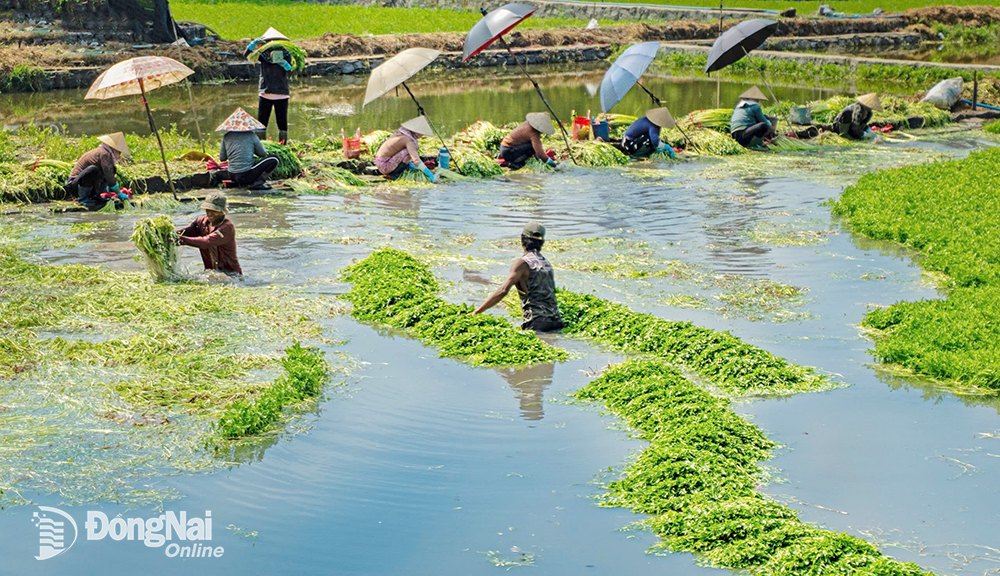
| Harvesting vegetables. Illustration photo: Le Huu Thiet |
1. My family moved to the new economic zone in the late 1980s. At that time, most of the land was privately owned but left fallow. There was no irrigation, no wells, relying solely on rainwater. However, the weather was favorable back then, allowing for a good harvest, so the crops thrived. When the dry season arrived, the scorching sun beat down relentlessly, drying up the plants and causing many wells to dry up completely, bringing agricultural production to a near standstill. Only tobacco and cashew trees persevered against the drought and intense heat, and the lives of the villagers revolved around these two drought-resistant crops.
But amidst the vast, arid land, there remains a clear body of water that the locals call a pond. The pond is circular in shape, easily 50 meters in diameter, nestled between rice paddies on one side and cornfields on the other. Before knowing its origin, I thought it was a wonderful gift from nature to the farmers. Because during the rainy season, birds, shrimp, crabs, fish, snails, frogs, and even lotuses, water lilies, water hyacinths, and algae gather there. The pond is a joyful symphony, lacking the conductor of bitterns, kingfishers, and toads… or a vibrant tapestry of pink lotuses, purple water spinach, white water lilies, blue water hyacinths, patches of yellow moss, and intertwined vines and branches.
During the dry season, when the surroundings are a desolate white and yellow hue of drought, the pond truly becomes a sparkling gem. At this time, the water level, which was once just above the rice fields, has dropped by several meters, revealing the basin-shaped bottom, jagged with rocks. The pond narrows towards the bottom, giving the impression of a giant drill boring into a barren body. However, this drill creates a lush green patch. As the water recedes, the land around the pond's edge is gradually exposed; this land, enriched with humus and mud during the rainy season, quickly turns green, especially with water spinach and water morning glory. After about half a month, the exposed land becomes dry and cracked, so the plants crawl and creep towards the water to continue their growth.
At this time of year, the pond is where the old cow tentatively stretches its legs and neck to drink. The playful dog jumps in for a quick swim after chasing its flock. The hen, leading her chicks to drink, sees her reflection in the green water, blending with the shadows of fish and shrimp, and utters startled, yet timid, "Cluck, cluck, chirp!" In the quiet of the night, weasels, rabbits, squirrels, and snakes silently come to drink, returning to their burrows, leaving behind clear tracks. The vegetable beds, gourd vines, and newly planted mung bean patches thrive in the dry season's sunshine and wind thanks to the pond's water.
Over time, the shape of the pond became increasingly distorted due to sedimentation and leveling, resulting in a strangely zigzagging form. The only thing that remained unchanged was that the water level, once it reached a certain depth, stopped and stabilized. The pond then became an open well, as clear, sparkling groundwater continued to flow in silently from somewhere.
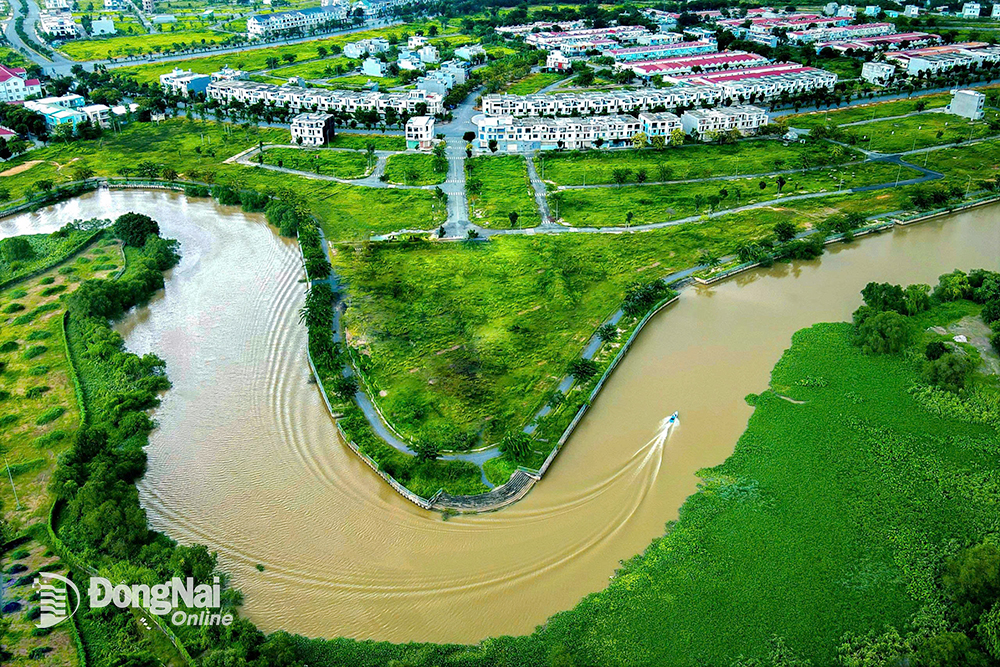 |
| Illustration photo: Nguyen Cao Tu |
2. It wasn't until one day that I learned the pond originated from a bomb crater. In the old days, this area was forest, a land often targeted by bombs and bullets because it provided shelter for soldiers. The new economic zone in the late 1970s was riddled with bomb craters; older people could vividly remember the craters behind Mr. Hai Quy's house, beside Mr. Tu Tho Duc's well, at the end of Mrs. Muoi San Xuat's field… but because they were quite shallow, time had filled them all in. Only the bomb crater on my land remained, a persistent testament, a wound in my heart, and then became a close friend of the farmers—I don't even remember when.
Sometimes, when I silently gaze at the pond – the bomb crater – I wander into the thought that the bomb must have been enormous and incredibly destructive; surely, when it left the plane's belly, it sped and hurtled like crazy; perhaps it even dragged along other bombs, allowing it to bore so deep into the earth, from which underground water sources gushed out.
As time passed, the hamlet's only bomb crater disappeared. Climate change, shifting weather patterns, and the receding groundwater sources, along with years of rains that eroded some areas and deposited sediment elsewhere, gradually caused the once clear pond to become shallower during the dry season, eventually drying up completely, just like the ponds belonging to Mr. Hai, Mr. Tu, and Mrs. Muoi in the old days.
3. The area where the pond once stood is now a mango orchard laden with fruit. The dry season is no longer as scorching hot as it once was. Under the shady trees, the cows lie peacefully, idly listening to the dog barking, the birds cooing, oblivious to the chickens climbing onto their backs, heads, and necks. The traces of the past have faded. The village has transformed, and few remember the pond and the bomb craters anymore. This shows how fortunate we are.
Essays by Tram Oanh
Source: https://baodongnai.com.vn/van-hoa/202504/ho-bom-ngay-cu-4d70fa1/
![[Photo] A breathtaking, "absolutely cinematic" fireworks display in the Hanoi sky celebrating the successful 14th National Congress of the Party.](/_next/image?url=https%3A%2F%2Fvphoto.vietnam.vn%2Fthumb%2F1200x675%2Fvietnam%2Fresource%2FIMAGE%2F2026%2F01%2F24%2F1769226526306_image.jpeg&w=3840&q=75)


![[Photo] Special art program 'Under the glorious banner of the Party'](/_next/image?url=https%3A%2F%2Fvphoto.vietnam.vn%2Fthumb%2F402x226%2Fvietnam%2Fresource%2FIMAGE%2F2026%2F01%2F24%2F1769217384206_image_20260124072702.jpeg&w=3840&q=75)


Comment (0)