Having weathered more than a millennium of ups and downs alongside the nation, Thang Long Imperial Citadel today has become a cultural and heritage tourism destination with many unique and creative activities.
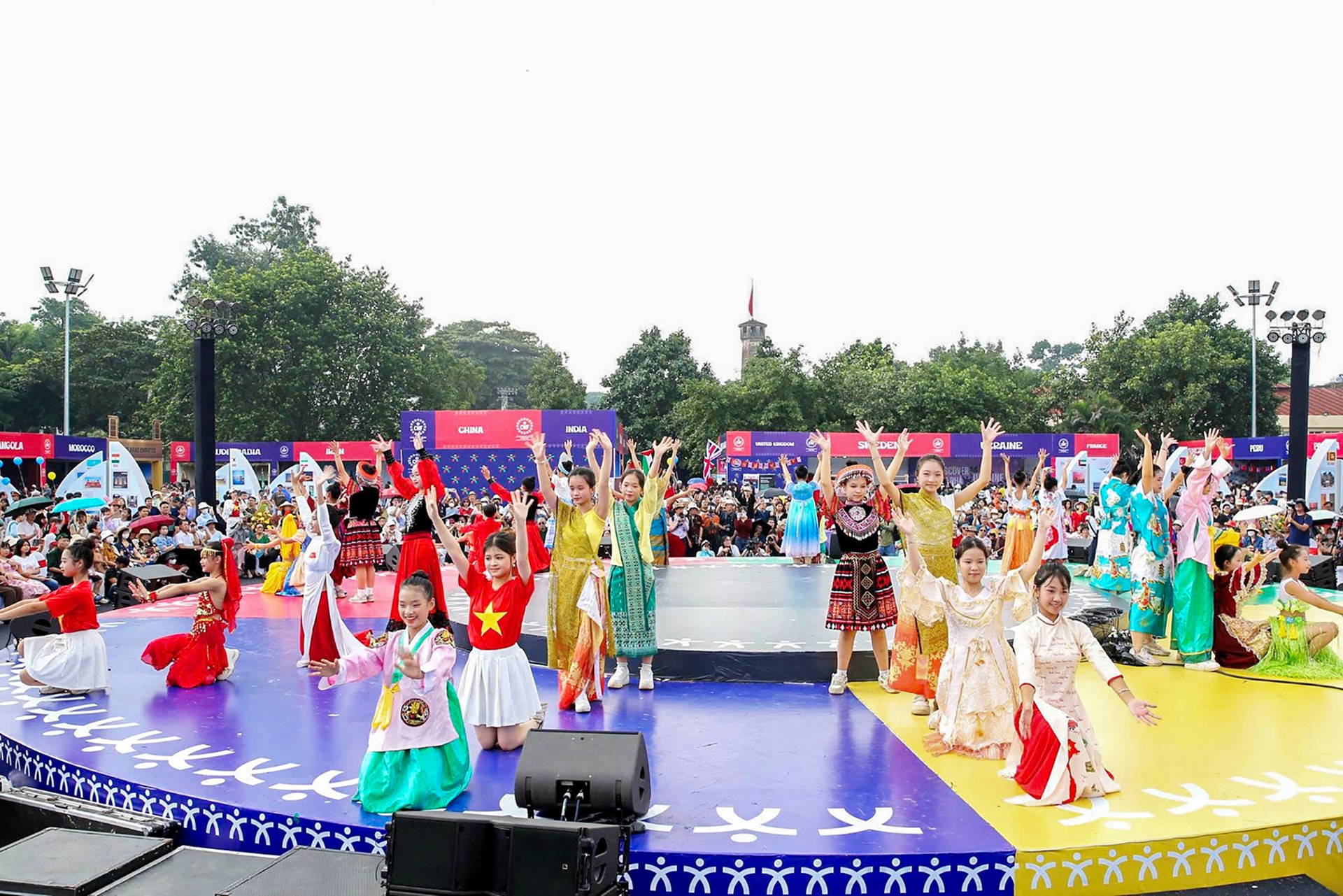
The first Hanoi World Culture Festival was held at Thang Long Imperial Citadel from October 10 to 12. Photo: Hoang Lan
Discover a thousand-year-old heritage.
The Thang Long Imperial Citadel was built in the 11th century, after King Ly Cong Uan moved the capital from Hoa Lu to Dai La and renamed it Thang Long in 1010. Since then, it has been the center of political, cultural, and ideological power for the country throughout many dynasties: Ly, Tran, Le, Mac, and Nguyen. Each period has left behind different architectural traces, artifacts, and cultural layers, creating a vibrant picture of Vietnamese history.
Through the vicissitudes of time, few intact structures remain, but the foundations, archaeological remains, and architectural features discovered at Thang Long Imperial Citadel clearly demonstrate the continuous succession of Vietnam's center of power for over 13 centuries. In 2010, coinciding with the 1000th anniversary of Thang Long - Hanoi, the Thang Long Imperial Citadel was recognized by UNESCO as a World Cultural Heritage site, affirming its outstanding global value in history, architecture, and culture.
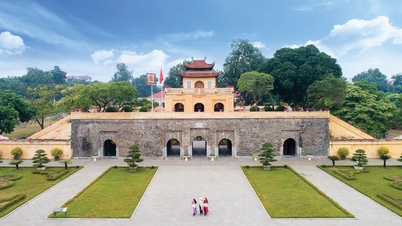
Visiting Thang Long Imperial Citadel, tourists can experience a vivid historical picture recreated through each historical relic. At the heart of the complex is Doan Mon Gate – the main gate leading into the central area, once the place the king passed through when entering the court. Beyond Doan Mon Gate lies Kinh Thien Palace – the political center of the Le Dynasty, now only the foundation remains, but still exuding an aura of majesty and sacredness.
On either side are the North Gate, the D67 House and Bunker - the command base of the Ministry of National Defense during the resistance war against the US. Recently, on the occasion of the 80th anniversary of the August Revolution and National Day on September 2nd, the Thang Long - Hanoi Heritage Conservation Center added a tour activity at the Cryptography Bunker and the Hanoi Flagpole.
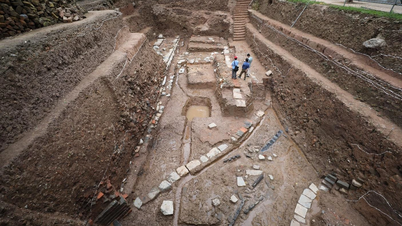
For heritage lovers, a visit to the 18 Hoang Dieu archaeological site is a must, where scientists have discovered thousands of artifacts, architectural foundations, and bricks and tiles bearing the distinctive patterns of various dynasties. From bricks inscribed with "Jiangxi Army" and "Dai Viet National Army Citadel" to fragments of exquisite pottery and ceramics, these sites tell the story of one of Southeast Asia's most prosperous capitals during the medieval period.
Here, visitors can not only admire ancient archaeological artifacts dating back thousands of years but also experience firsthand drawing water from ancient wells dating back to the Tran Dynasty. Today, the mysterious story of these thousand-year-old wells always full of crystal-clear water still holds an irresistible attraction for tourists.
A destination of cultural excellence.
Last weekend, the Thang Long Imperial Citadel Heritage Site became an attractive cultural and tourist destination with the first-ever Hanoi World Culture Festival. The festival featured participation from 48 countries and international organizations, with many unique cultural spaces and events such as the "Cultural Pathway" exhibition, the "Heritage Footsteps" program, film screenings, a book fair, activities showcasing the culinary arts of various countries, and 30 international art performances. The organizers reported that after three days, the festival attracted approximately 1 million visitors, demonstrating the appeal of a major cultural event held in the heart of the capital's heritage site.
For many years, the Thang Long Imperial Citadel heritage site has become a destination for numerous cultural and tourism events and festivals in Hanoi and throughout the country, a meeting point for international friends, such as the Monsoon International Music Festival, the Hanoi Tourism Ao Dai Festival, the Hanoi Pho Festival, the Hanoi World Culture Festival, etc.
Besides organizing creative festivals to attract tourists, the Thang Long - Hanoi Heritage Conservation Center also organizes activities to introduce the beauty of ancient Thang Long culture in new ways, such as organizing exhibitions, performing theatrical scenes, or applying 3D technology to recreate some aspects of ancient court culture and rituals such as the Fan-Giving Ceremony, the New Year's Day Ceremony, the Ceremony of Bidding Farewell to the Old Year and Welcoming the New Year...
According to Nguyen Thanh Quang, Director of the Thang Long - Hanoi Heritage Conservation Center, the center's policy is to preserve and promote heritage on a foundation of continuous creativity and innovation, with the aim of transforming Thang Long Imperial Citadel into a vibrant cultural, artistic, and tourism center of the capital - a familiar destination for domestic and international tourists.
Currently, along with developing new tourism products such as the "Decoding Thang Long Imperial Citadel" night tour, cultural tours exploring historical sites in strategic combat bunkers, and photo opportunities at the Hanoi Flagpole, the Thang Long - Hanoi Heritage Conservation Center is also effectively applying digital technology, digitizing data of collected artifacts, and introducing multilingual automatic audio guides on smartphones. With just a tap on the phone screen, visitors can easily learn about the history and information of the historical sites.
With a focus on sustainable development, Hanoi is continuing to plan, expand, and restore heritage sites, connecting Thang Long Imperial Citadel with the Co Loa area, Temple of Literature - National University, Hoan Kiem Lake, and the Old Quarter... creating a chain of distinctive tourism and cultural spaces of the capital. This is not only a great potential for tourism but also an opportunity for Hanoi to affirm its position as a "Creative City," where culture is placed at the center of development.
Source: https://hanoimoi.vn/hoang-thanh-thang-long-diem-hen-du-lich-van-hoa-720196.html



![[Image] Hanoi's urban life under the challenge of a "scorching hot" environment](https://vphoto.vietnam.vn/thumb/1200x675/vietnam/resource/IMAGE/2026/05/25/1779706979265_nang-nong-t5-2026-minh-duy-7-4636-jpg.webp)


![[Image] Close-up view of the interchange connecting the two expressways and Long Thanh Airport.](https://vphoto.vietnam.vn/thumb/1200x675/vietnam/resource/IMAGE/2026/05/25/1779703378210_ndo_br_z7863716673926-224453a31600126cce10622af6290afd-4549-jpg.webp)









































































Comment (0)