

Go to slow down, stay to reflect deeply.

In a world of increasingly fast-paced tourism, where destinations are measured by visitor numbers and spending patterns, Hue has chosen a different path. It's not a place for partying and shopping, but is gradually becoming a place to pause and find peace.
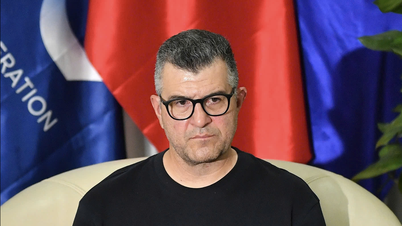
At Tu Hieu Ancestral Temple, beneath the ancient bamboo grove, the light falls in small patches, enough to see the footsteps of Mr. Matawa B. - a Zen practitioner over 70 years old - walking slowly. It's not a ritual, nor a tourist experience, but a part of his life that he has maintained for over four decades.
Mr. Matawa, originally from Denmark but of Italian descent, carries within him two streams of European culture yet finds balance in an Eastern land where he has practiced meditation for 45 years. He considers himself a disciple of Zen Master Thich Nhat Hanh. After the Zen Master's passing, he returns to Hue at least once a year, each time for 7-10 days or longer, as he puts it, to "rejuvenate body and mind" before returning to his work and daily life. For him, meditation is not a name, nor a religion; it is a way of understanding oneself and learning to live with what one has. Peace is not an absolute state, but the ability to navigate the vicissitudes of life without being swept away.

“Hue could integrate Zen meditation with tourism. For many people like me, the experience of meditating with monks and participating in courses during our time here is invaluable and can greatly benefit our lives. The foundation here is excellent, but there is a lack of clear programs that allow outsiders to access, practice, and connect with Zen meditation as part of a tourist experience,” Mr. Matawa commented.
Mr. Matawa's observation aligns with an emerging trend among international travelers. After years of constant travel, many are beginning to seek out alternative journeys.
Benjamin F., a tourist from Manchester (UK), after seven months traveling through many Asian countries, chose Hue as a place to settle down. It wasn't the package tours or the luxury services that he remembered most; what he cherished were the meals with the locals, the spontaneous conversations, and the village paths where he could cycle all day without encountering too many tourists. The most special thing wasn't the service, but the people, he shared.
Meanwhile, Katy, a tourist from the Jersey Islands, near the United Kingdom, views Hue from a different perspective. For her, Vietnam in general and Hue in particular are attractive because of their diversity, from nature and culture to cuisine and spiritual life. But what catches her attention is the connection between these elements. Hue has many temples, a rich cultural foundation, and a slow enough pace of life for people to engage in spiritual tourism and tranquil travel. This is a promising direction if well organized.
Development direction based on heritage and culture.

The emergence of the "quiet tourism" trend is not new globally, but it has only become prominent in Vietnam in recent years. Hue holds a special position in this context because it inherently possesses the right elements for such tourism.
As the former imperial capital, Hue is not lacking in heritage. But the heritage here is not just architecture or history; it also encompasses the spiritual life expressed through its temple and pagoda architecture, art, and rhythm of life. It is this foundation that creates a "deep layer" that is not easily replicated.
Benjamin and his friends chose to cycle through the peaceful villages of Hue. According to him, Vietnam not only boasts diverse landscapes but also possesses a unique culture. He believes Vietnam has more to explore than some other destinations in the region. It's not just about the beaches; there's also the culture, the people, and very different experiences. The food is truly delicious.

He was also impressed by the architecture – a highlight of his journey. The buildings in Vietnam are beautiful, colorful, and detailed, often situated right along the road. He has traveled extensively in Asia, but the most impressive structures were in Vietnam.
According to Tran Thi Hoai Tram, Director of the Hue City Department of Tourism, the locality clearly recognizes that tourism development must be based on culture, with spiritual tourism and meditation tourism being important pillars. Hue has a great advantage in its system of temples, pagodas, and spiritual relics. The Department aims to develop products associated with these spaces, combining relaxation and meditation experiences, and experiencing a tranquil life to create unique value. Besides cultural, heritage, and experiential tourism, Hue is targeting segments of tourists who seek deeper experiences, are willing to stay longer, spend more, and most importantly, interact with the destination in a more respectful way.

A noteworthy aspect is how Hue is implementing this strategy. Meditation tourism is not separated into a distinct product package, but is integrated into the overall development of green tourism, ecotourism, and community tourism. In its 2026-2027 plan, the city will create tourism spaces based on ecological zones: from the Perfume River area with its garden houses and traditional craft villages, to the Tam Giang lagoon area and traditional agricultural regions. In each space, the elements of "slow," "tranquility," and "depth" are not merely additions but are the core of the experience.
It can be said that Hue is in the right place on a changing tourism map. Amidst a bustling and fast-paced world of tourism, Hue still retains the ability to make people slow down and appreciate its unique values...
Source: https://baotintuc.vn/du-lich/hue-dinh-hinh-du-lich-tinh-lang-giua-dong-chay-soi-dong-20260430214744095.htm
![[Photo] Capturing the moment the tide recedes at Yen Binh Son rapids - a million-year-old scenic spot in Quang Ngai.](https://vphoto.vietnam.vn/thumb/1200x675/vietnam/resource/IMAGE/2026/05/19/1779175463885_yen9-1199-jpg.webp)
![[Photo] General Secretary and President To Lam presides over a meeting on the implementation of Directive No. 34-CT/TW of the Party Central Committee.](https://vphoto.vietnam.vn/thumb/1200x675/vietnam/resource/IMAGE/2026/05/19/1779187768672_a1-bnd-2350-631-jpg.webp)
![[Photo] National Assembly Chairman Tran Thanh Man attends the groundbreaking ceremony for the National Highway 1A spatial axis project.](https://vphoto.vietnam.vn/thumb/1200x675/vietnam/resource/IMAGE/2026/05/19/1779161360398_ndo_br_bnd-1412-jpg.webp)





































![[Photo] General Secretary and President To Lam receives Indian Defense Minister Rajnath Singh](https://vphoto.vietnam.vn/thumb/402x226/vietnam/resource/IMAGE/2026/05/19/1779184046302_anh-man-hinh-2026-05-19-luc-16-46-58.png)
















Comment (0)