

 |
| Medicinal plants in Ban Tru village, Thuong Minh commune, are thriving, opening up new economic development opportunities for people in the highlands. |
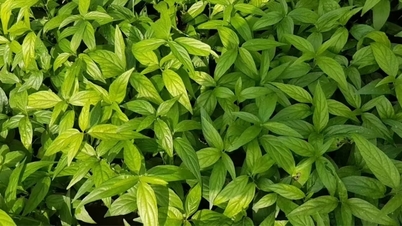
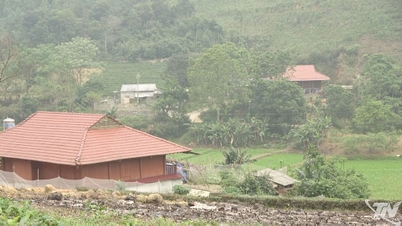
In Ban Tru village, Thuong Minh commune, areas of hilly land and rice paddies that previously yielded low-yield corn and rice crops have been converted by locals to cultivate medicinal plants such as ginseng, purple velvet antler, Polygonum multiflorum, and perilla. Over time, these plants have grown well and are beginning to yield positive economic results.
Mr. Trieu Thanh Ly, a resident of Ban Tru village, said: "The villagers have developed more than 4 hectares of medicinal plants. Compared to traditional crops, medicinal plants have higher economic value, and they are easier to care for and harvest."
In Cho Ra commune, the movement to develop medicinal plants is also being promoted. In Na Sam village, nearly 30 households have participated in planting more than 10 hectares of Solanum torvum (milk thistle). After two years of implementation, the plant has shown good adaptability to the local climate and soil conditions, bringing a stable source of income to many families.
Mr. Nong Van Gioi, a resident of Na Sam village, said: "Thanks to the technical guidance from the enterprise, from planting and caring to harvesting, the villagers have gradually mastered the production process, ensuring quality and increasing productivity."
In reality, many highland communes possess abundant natural medicinal resources, which have long been used by the local people as medicine. However, previous exploitation has been mostly spontaneous and on a small scale, thus failing to create economic value commensurate with the potential.
Given the growing market demand for natural healthcare products, many households have boldly incorporated medicinal plants into commercial production and have initially achieved promising results.
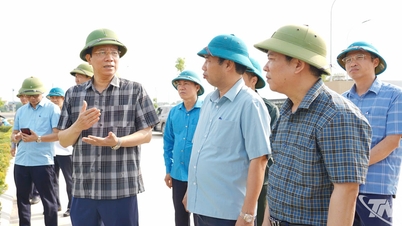
Ms. Nong Thi Uyen, Vice Chairman of the People's Committee of Thuong Minh commune, informed: Recognizing the development potential of medicinal plants, the locality is actively creating conditions for businesses to survey, invest, and link production with the people.
The commune is also ready to allocate suitable land for the construction of on-site preliminary processing and processing facilities, thereby reducing transportation costs, increasing product value, and creating peace of mind for the people.
 |
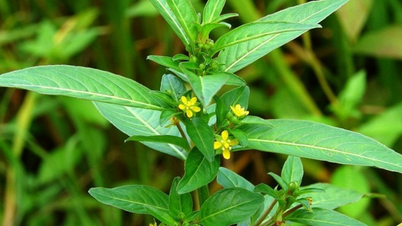
| Over 10 hectares of Solanum torvum (thorny bitter gourd) planted on hillside land in Na Sam village (Cho Ra commune) are thriving and preparing for harvest. |
Along with establishing consumption linkages, businesses also collaborate in technology transfer and the development of concentrated raw material areas.
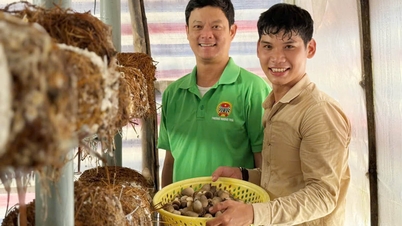
Ms. Nguyen Thi Oanh, Director of Dong Nam Viet Trading Co., Ltd., said: "We are currently collaborating with people in Thuong Minh, Cho Ra, Dong Phuc communes and some other localities to develop 18 types of medicinal plants on an area of more than 50 hectares. Nearly 200 households participating in the model are effectively utilizing hilly and garden land to develop production."
According to business assessments, many medicinal plants adapt well to local natural conditions, yielding economic benefits and contributing to raising awareness of forest management and protection, creating stable livelihoods for people in mountainous areas. The demand for medicinal products is increasing, opening up significant potential for the consumer market.
With favorable climate, soil, and forest resources, highland localities have many conditions to form concentrated medicinal plant production areas, linked to preliminary processing, processing, and product consumption.
With proper planning, the support of businesses, and appropriate policies, medicinal plants can become one of the key crops in mountainous regions. This is an effective approach to restructuring crop patterns, contributing to increased income for local people, rationally exploiting land potential, protecting forest resources, and promoting sustainable agricultural development.
Source: https://baothainguyen.vn/kinh-te/202605/khai-thac-tiem-nang-cay-duoc-lieu-quy-e576e40/
![[Photo] Admire the coral "masterpiece" amidst the million-year-old heritage of Dak Lak province.](https://vphoto.vietnam.vn/thumb/1200x675/vietnam/resource/IMAGE/2026/05/30/1780107638639_y25-jpg.webp)



























































































Comment (0)