

For many years, joining a trade union was almost a given for workers in many places. However, the current context is different. With a changing labor environment, workers have more channels of access, and legal regulations on worker representation continue to be improved in line with integration. The appeal of trade unions cannot rely solely on their status and historical tradition. The prestige and attractiveness of a trade union must be built on its representative capacity and the real value it brings to workers.
By the end of May 2026, the whole country will have more than 10 million trade union members and 62,061 grassroots trade unions and labor unions. From the beginning of 2024 to May 2026, trade unions at all levels have recruited more than 2.2 million new members and established over 15,000 new grassroots trade unions and labor unions. However, the rate of mobilizing workers in the non-state sector, the informal sector, and digital platforms remains relatively low. In some places, activities are still bureaucratized, and the focus is not truly on union members and workers.
This reality highlights thought-provoking issues. While trade unions have over 10 million members, they still face the challenge of expanding their influence to new labor groups in the modern economy . However, the current problem is not simply about increasing membership. More importantly, it's about making workers feel that trade unions are truly necessary for them. Workers don't join unions because of slogans or the number of levels or branches of the organization. What they care about is whether their rights are protected; whether someone will speak up when they are owed wages; whether someone will represent them when disputes arise; and whether there is an organization to support them when they face difficulties in life. In other words, workers are not bound to trade unions because of what the union says about them, but because of what the union actually does for them.
From that perspective, reorganizing according to the new model also requires a change in approach. If only the number of administrative layers is reduced without improving the quality of service to union members, the streamlining will be difficult to achieve the desired goals. Conversely, if the streamlined apparatus is closer to workers and responds more quickly to issues arising in labor relations, then this is an opportunity to improve the effectiveness of union activities. This requirement also places greater responsibility on the union officials. In the modern labor environment, union officials must not only be dedicated but also possess legal knowledge, dialogue and negotiation skills, communication skills, and the ability to apply digital technology .
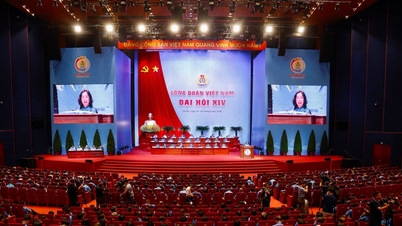
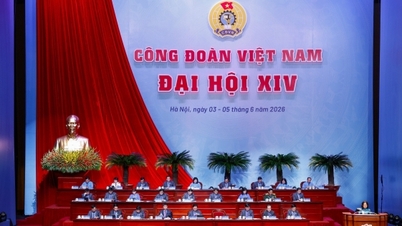
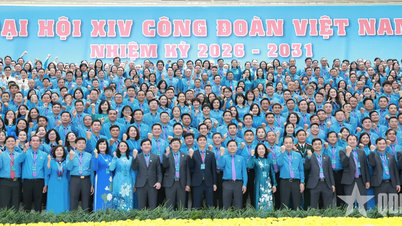
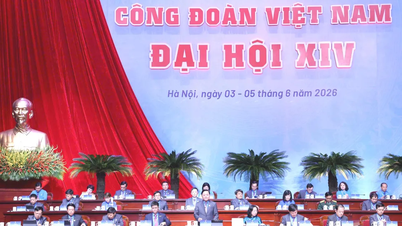
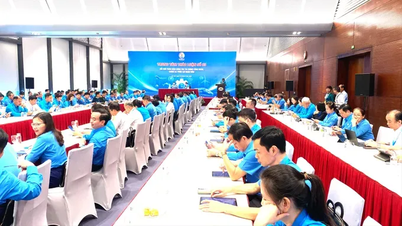
The 14th Congress of the Vietnam Trade Union is ushering in a new term with many demands for innovation. The future of the trade union organization is not about how many intermediate levels or organizational branches remain, but about the trade union always being a reliable support for workers. When workers need the trade union for protection, representation, and companionship, that is not only a success for the organization, but also a core value that has built the position of the Vietnam Trade Union throughout its development.
Source: https://www.sggp.org.vn/khang-dinh-vi-the-cong-doan-viet-nam-post855806.html

![[Photo] First session of the 14th Congress of the Vietnam Trade Union](https://vphoto.vietnam.vn/thumb/1200x675/vietnam/resource/IMAGE/2026/06/03/1780465947883_ndo_br_img-3852-jpg.webp)
![[Photo] General Secretary and President To Lam presides over a meeting with the Central Organizing Committee.](https://vphoto.vietnam.vn/thumb/1200x675/vietnam/resource/IMAGE/2026/06/03/1780482764658_a1-bnd-4741-3342-jpg.webp)

![[Photo] Secretary of the National Assembly Party Committee, Chairman of the National Assembly presides over the meeting of the Standing Committee and Executive Committee of the National Assembly Party Committee.](https://vphoto.vietnam.vn/thumb/1200x675/vietnam/resource/IMAGE/2026/06/03/1780480353201_ndo_br_bnd-2585-jpg.webp)











































![[Video] Sunset at Lap An Lagoon – Where the sun sets over the fishing nets](https://vphoto.vietnam.vn/thumb/1200x675/vietnam/resource/IMAGE/2026/05/31/1780192137701_beach-landscape-sea-water-nature-grass-745871-pxhere-com.jpeg)


































Comment (0)