

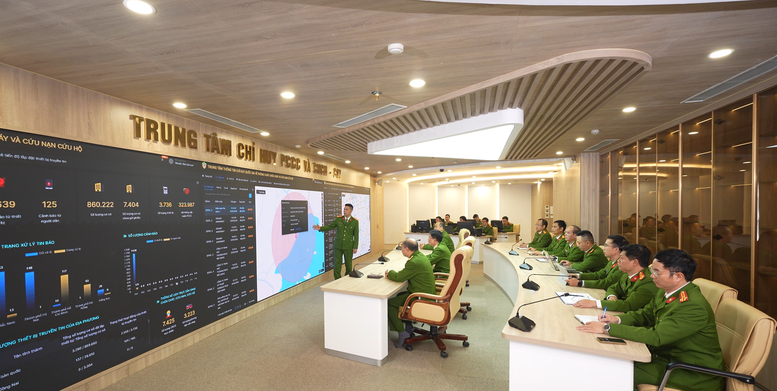
A tactical meeting at the Command Information Center of the Fire Prevention and Rescue Police Department ( Ministry of Public Security ) - Photo: VGP/Vu Phong
According to statistics from the Ministry of Public Security, in the last five years, approximately 13,200 fires occurred nationwide, averaging over 2,600 incidents per year, resulting in 482 deaths, 460 injuries, and estimated property damage exceeding 2 trillion VND. Notably, about 70% of fires causing casualties occurred at night, when people were asleep and their reflexes were slow, often delaying detection and reporting to authorities.
This delay causes many fires to pass the "golden 5 minutes"—a crucial period in firefighting and rescue operations. By the time the fire department arrives, the fire has already intensified and spread, making control difficult and significantly reducing the effectiveness of saving lives and property.
The problem of early detection and the need for "proactive fire alarm"
Based on that reality, Colonel Nguyen Thanh Diep, Deputy Director of the Fire Prevention, Fighting and Rescue Police Department (C07 - Ministry of Public Security), believes that the biggest challenge today lies not only in firefighting capacity but also in the initial detection and communication of information.
"The challenge is how to detect fires earlier, report them faster and more accurately, so that technology can help people reclaim every precious second in the fight against fires," Colonel Nguyen Thanh Diep analyzed.
According to him, the urgent requirement now is no longer just about "faster fire detection," but rather a shift to a "proactive, accurate, and continuous 24/7 fire detection" model, independent of human factors, which are easily affected by panic, sleepiness, or a lack of situational handling skills.
Practices in many developed countries such as the United States, Japan, and Europe show that fire prevention and firefighting have long ceased to depend on humans detecting and reporting fires. Instead, automated fire alarm systems are built on a centralized monitoring model, legalized, and implemented uniformly nationwide.
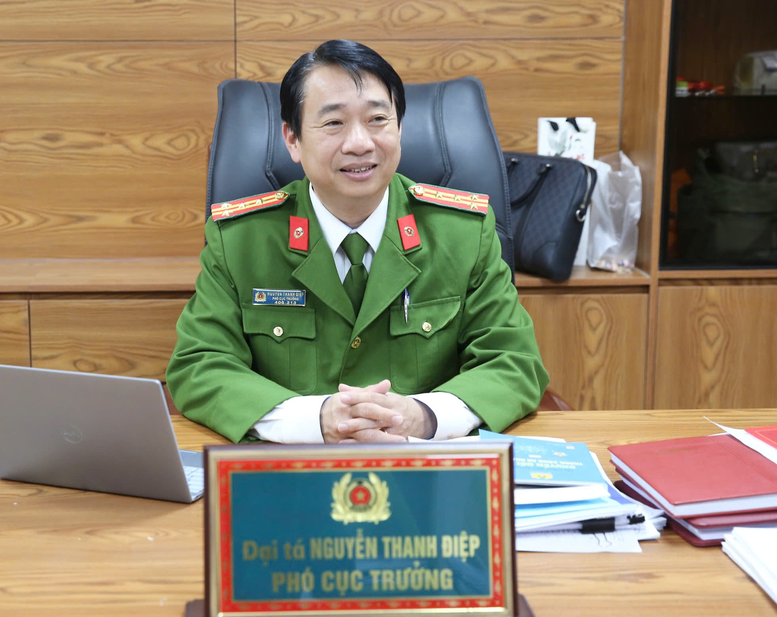
Colonel Nguyen Thanh Diep, Deputy Director of Department CC07 (Ministry of Public Security): The biggest challenge today lies not only in firefighting capacity but also in initial detection and information dissemination - Photo: VGP/Vu Phong
Based on international experience, along with the State's digital transformation policy and the regulations of the Law on Fire Prevention and Fighting, on October 14, 2024, the Ministry of Public Security approved the Project "Building a system for transmitting and reporting fire prevention and fighting incidents" under Decision No. 7481/QD-BCA, assigning the Fire Prevention and Fighting and Rescue Police Department to lead its implementation.
The system is built on a unified national architecture, with three main functional groups: receiving and processing fire alarms, supporting operational command on digital maps; monitoring and inspecting fire prevention and control work at facilities; and digitizing and standardizing fire prevention and control databases, ready for integration and sharing with national databases.
The operational model follows a multi-level command mechanism, in which the C07 Command Information Center plays the role of supervising and coordinating the entire system; the local PC07 units are the core force receiving and processing reports and operating in their respective areas; and the Fire and Rescue Police teams directly operate at the scene.
The fire alarm system at the facility is connected 24/7. Upon detecting an incident, it immediately sends a signal to the central control center and simultaneously alerts the facility via automated calls and the GSafePro application, enabling timely response from an early stage. The system also integrates notifications from the 114 emergency hotline and the "Fire Alarm 114" application, supporting authentication via VNeID, shortening the "critical time" for incident response.
To date, 37 Command Information Centers have become operational, and data from nearly 900,000 fire safety-related facilities has been standardized, along with the digitization of all forces, equipment, and water sources on the operational map.
According to Colonel Nguyen Thanh Diep, the short-term goal of the Project is to build a centralized, interconnected, and integrated data management system, enabling C07 and local police forces to command, operate, and supervise fire prevention and rescue work synchronously from the central level down to the level of the Fire Police Team.
In the long term, the system will become the core data platform serving all operational activities of the Fire and Rescue Police force, while also establishing information standards, connection standards, data sharing and security standards to support command and control in the new situation.
In other words, this is not just a fire alarm system, but the "digital brain" of fire prevention and control, where all information from the facility is digitized, standardized, and displayed in real time.
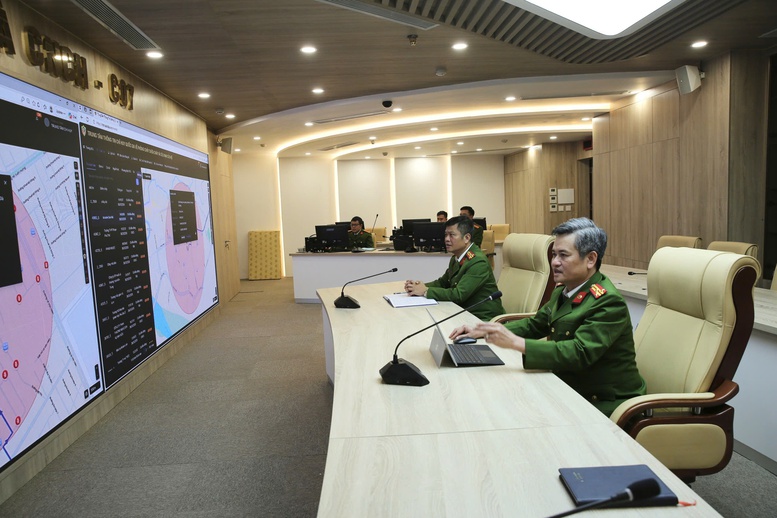
Lieutenant Colonel Tu Quang Duc, Deputy Head of the Firefighting and Rescue Department, C07 Bureau, directly commanded the operation of the system - Photo: VGP/Vu Phong
A closed-loop system, independent of human intervention.
As an officer directly operating the system at the C07 Command Information Center, Lieutenant Colonel Tu Quang Duc, Deputy Head of the Firefighting and Rescue Department, stated that the fire prevention and fighting incident reporting system is designed according to a closed-loop, automatic, and continuous mechanism.
Facilities are equipped with smoke, heat, gas, and flame detectors or emergency push buttons that operate 24/7. When an abnormality occurs, a fire alarm signal is activated and transmitted to the building's local fire alarm control panel. Immediately afterward, the communication device encrypts the data and sends it to the central server via various transmission channels such as 4G/5G or fiber optic internet.
"The information sent back is not just a notification sound, but a digital data package, including the facility name, the exact address on a digital map, and the time the incident occurred," Lieutenant Colonel Tu Quang Duc said.
After being processed and filtered according to standard procedures by the Customer Service Center, fire reports identified as genuine fires are immediately transmitted to the Command Information Center of the local PC07 and C07. There, the information is displayed instantly on a digital map, accompanied by visual and audio alerts, allowing on-duty officers to grasp the situation immediately without waiting for verification via telephone.
According to Lieutenant Colonel Tu Quang Duc, a pivotal change is the integration of digital data, maps, and GPS positioning into command and control operations.
As soon as a fire alarm is received, a flashing "flame" will appear on the Command Information Center screen along with complete information about the facility. The commander can see the floor plan, the location of escape routes, nearby fire-fighting water sources, as well as specific hazards of the building.
The system also integrates GPS positioning on fire trucks and specialized vehicles, allowing the Center to track their routes and real-time traffic conditions. This enables them to coordinate with the nearest and most suitable unit, while also guiding them along the shortest route to avoid congestion.
According to Lieutenant Colonel Tu Quang Duc, this represents a shift from command based on experience and fragmented information to command based on real-time data, aligning with the requirements for ensuring fire safety in today's densely populated urban areas.

Lieutenant Colonel Nguyen Dinh Duong, Team Leader of the Firefighting and Rescue Team (PC07, Hanoi City Police): The automatic fire alarm system is being gradually deployed by PC07, prioritizing high-risk areas - Photo: VGP/Vu Phong
In Hanoi – a densely populated area with many narrow alleys and complex transportation infrastructure – the automatic fire alarm system is being gradually implemented by PC07, prioritizing high-risk areas.
According to Lieutenant Colonel Nguyen Dinh Duong, Head of the Firefighting and Rescue Team (PC07, Hanoi City Police), the unit has organized many intensive campaigns to raise awareness and guide people in reporting and updating fire safety data, especially in apartment buildings and mixed-use residential and commercial properties.
To date, 134,638 establishments in the area have completed the declaration of all mandatory fire safety information, of which approximately 1,500 have been equipped with automatic fire alarm communication devices.

Lieutenant Colonel Nguyen Dinh Duong and other officers from PC07 Hanoi at the Hanoi City Police Command Center - Photo: VGP/Vu Phong
In practice, when a fire occurs, signals from the system are transmitted simultaneously to the Hanoi City Police Command Center, the PC07 Department, and the nearest fire brigade, eliminating intermediate steps and significantly shortening the communication time compared to before.
After receiving automatic fire alarms from connected facilities, information officers proactively contact the facility, providing guidance on initial firefighting and evacuation while forces are en route to the scene, helping to prevent the fire from spreading further.
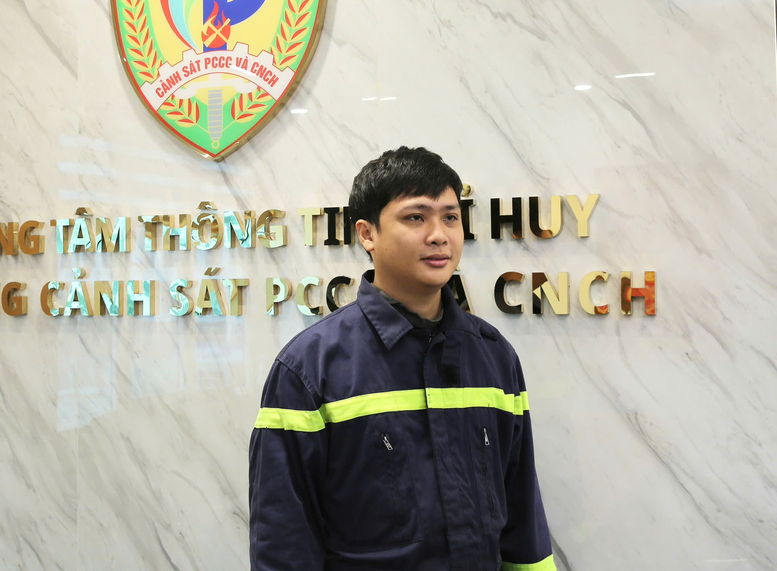
First Lieutenant Vu Thien Hai, officer of the Firefighting and Rescue Team: The new system has significantly changed the way fire reports are received and processed - Photo: VGP/Vu Phong
According to Lieutenant Vu Thien Hai, an officer of the Firefighting and Rescue Team, the new system has significantly changed the way fire reports are received and processed.
"Previously, upon receiving a fire report, the duty officer had to verify the information, determine the location, and check traffic and water sources. Now, when the system confirms a real fire, all the necessary information is displayed simultaneously on the screen," Lieutenant Hai said.
Even while the fire truck was in motion, the forces were able to understand the firefighting plan, water sources, and access routes, and could guide residents and facility owners to safety and handle initial risks via the phone number registered in the system.
The Lunar New Year holiday is a time when the risk of fires and explosions increases due to the high demand for electricity, heat sources, incense, and votive offerings, while many establishments close or reduce their staff. According to Lieutenant Vu Thien Hai, this is also the time of greatest pressure on the fire prevention and fighting police force.
In addition to their regular duties, the force also has to ensure the safety of fireworks displays, festivals, cultural and entertainment events, etc. Heavy traffic and restricted routes also create considerable difficulties in accessing the scene when incidents occur.
In this context, automatic fire alarm systems play an extremely important role in helping forces detect fires early, approach them quickly, and handle them more effectively, ensuring that people can celebrate Tet safely.
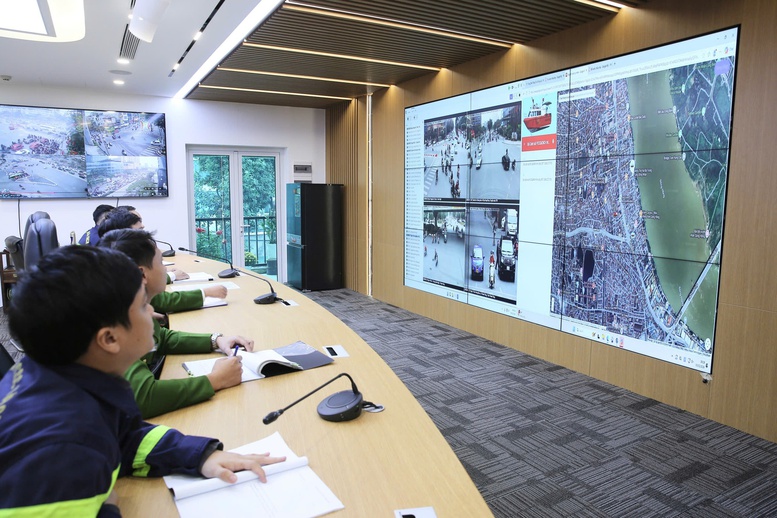
Officers from the Firefighting and Rescue Team, PC07 Hanoi, monitor maps and GPS positioning on the fire alarm communication system - Photo: VGP/Vu Phong
Technology is only effective when the community works together.
According to Colonel Nguyen Thanh Diep, participating in fire prevention and fighting is the responsibility of the entire society, with citizens, establishments, and businesses playing a decisive role on the front lines. Investing in and installing fire alarm systems that meet standards, maintaining regular operation, not disabling equipment, and fully updating fire prevention and fighting data will create a multi-layered early warning network.
Experience shows that in areas where people and businesses have a good sense of responsibility and cooperate closely with authorities, the number of major fires and serious damage has decreased significantly.
In the fight against fires, technology can help reclaim every precious second. But for the "golden 5 minutes" to truly be meaningful, the most important thing remains the proactiveness and responsibility of each citizen, so that every fire alarm is no longer a belated warning.
Anh Tho
Source: https://baochinhphu.vn/khi-cong-nghe-canh-lua-cho-con-nguoi-102260204143648348.htm
![[Photo] General Secretary and President To Lam presides over a working session with the Central Policy and Strategy Committee on the development of the materials industry.](https://vphoto.vietnam.vn/thumb/1200x675/vietnam/resource/IMAGE/2026/05/21/1779359935432_a3-bnd-3129-1412-jpg.webp)

![[Photo] National Assembly Chairman Tran Thanh Man working with the Standing Committee of the Law and Justice Committee](https://vphoto.vietnam.vn/thumb/1200x675/vietnam/resource/IMAGE/2026/05/21/1779378929214_ndo_br_1-4610-jpg.webp)






























































































Comment (0)