

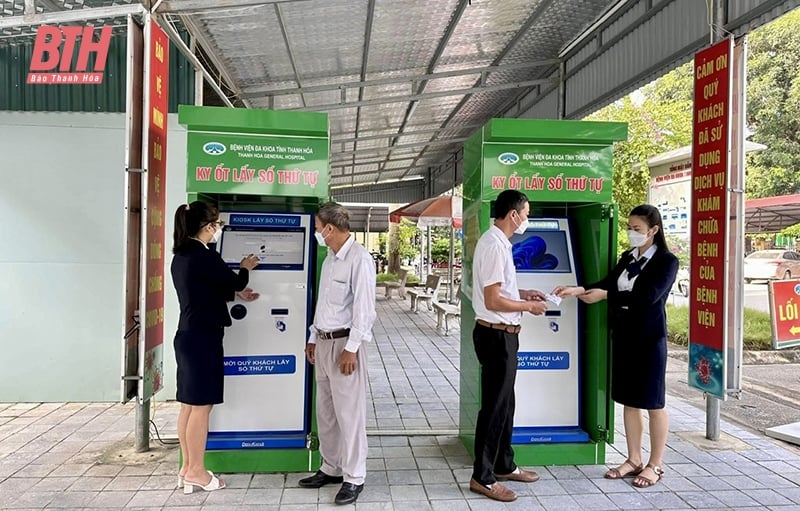
The Youth Union of the Provincial General Hospital is applying information technology and implementing electronic medical records to help people reduce administrative procedures when seeking medical examination and treatment.
Three pillars of the new era
Resolution 57-NQ/TW dated December 22, 2024, of the Politburo on breakthroughs in the development of national science and technology (S&T), innovation, and digital transformation (hereinafter referred to as Resolution 57) has established a strategic step forward, making Vietnam one of the few countries in the world pioneering the connection and synchronous development of three key areas: S&T, innovation, and digital transformation. These three areas are considered the three key pillars in Vietnam's era of strong rise. To implement these three strategic pillars synchronously, promptly, and effectively, Thanh Hoa province issued Action Plan 266-KH/TU dated April 26, 2025, to concretize the implementation of Resolution 57 of the Politburo (hereinafter referred to as Plan 266). This is an important document, demonstrating the province's strong political determination to anticipate new development trends and create a foundation for rapid and sustainable growth.
In the context of the Fourth Industrial Revolution (Industry 4.0), science and technology, innovation, and digital transformation are dialectically related and closely interconnected, mutually promoting each other's development. The core essence of each pillar can be identified as follows:
Science and Technology: The mission of science and technology is to research, discover, and create new knowledge using modern and appropriate scientific methods.
Innovation: Focusing on the creative application of scientific and technological achievements, technologies, and knowledge to improve efficiency, create new and sustainable added value, and directly serve socio-economic development.
Digital transformation is the comprehensive transformation of operating methods, management, and production through the application of digital technologies, especially the core technologies of the Fourth Industrial Revolution. Digital transformation first requires optimizing processes towards a streamlined, efficient model, minimizing intermediaries; followed by a transition to a digital environment through data digitization, process digitization, and the development of digital infrastructure.
In the current digital era, digital transformation plays the role of both an environment and a tool to effectively promote the development of science and technology and innovation. Today, the development of science and technology and innovation cannot be separated from the digital environment; according to statistics, about 50% of the components of Industry 4.0 are digital technologies, and the remaining technologies also develop based on digital technology [2]. Within the context of innovation, the rate of digital innovation accounts for up to 80%. This confirms that, in order to implement innovation effectively, it is mandatory to understand and creatively apply digital technologies and the digital transformation process.
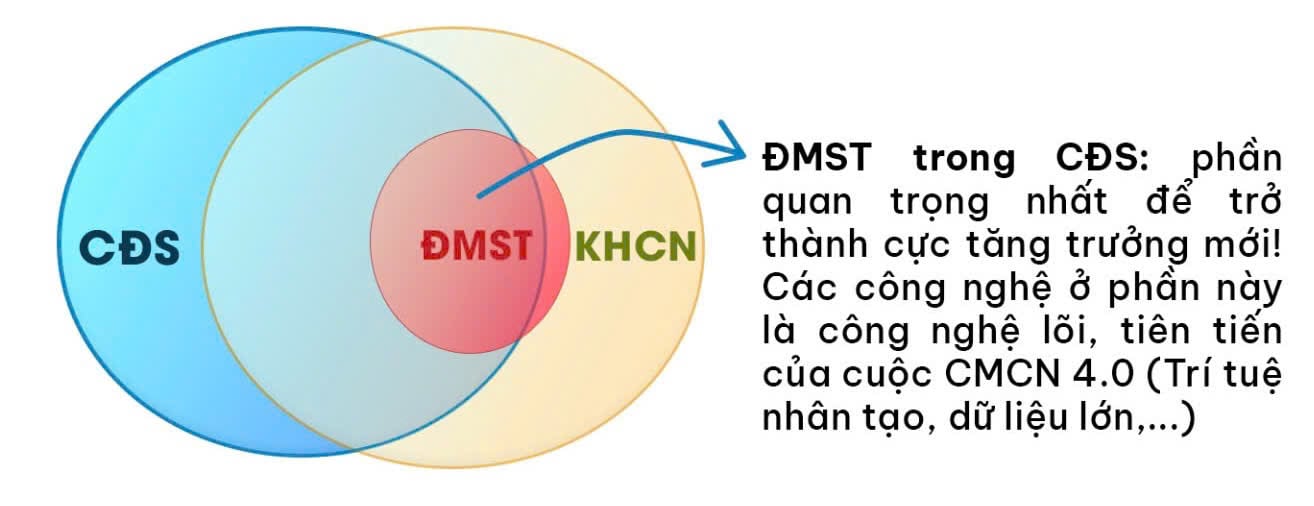
This image visually illustrates the relationship between science and technology, innovation, and digital transformation.
Therefore, if digital transformation is not linked to innovation, it will only remain at the level of digitizing traditional processes, reflecting the approach of the 3.0 Industrial Revolution (that is, informatization and the application of information technology) – but will not truly enter the era of the 4.0 Industrial Revolution. Conversely, when digital transformation is linked to innovation, it will strongly leverage the achievements of modern digital technologies (such as artificial intelligence, big data, virtual reality, the Internet of Things, etc.). Only then will digital transformation be truly effective, becoming a strategic driving force, promoting sustainable growth for the socio-economic development of the locality and the country.
Solutions for developing the three pillars of science and technology, innovation, and digital transformation in Thanh Hoa province.
Firstly, innovation must be the focus and core element of Plan 266: Science and technology, innovation, and digital transformation are considered the three pillars in Vietnam's development era, with science and technology playing the role of the foundation for development, innovation as the key driving force, and digital transformation as the connecting factor. Plan 266 clearly identifies 12 indicators for science and technology, 16 indicators for innovation, and 37 indicators for digital transformation.
Innovation is a groundbreaking pillar, crucial to the province's competitiveness and sustainable growth. Therefore, Thanh Hoa needs to place innovation at the center of its value creation process, demonstrating depth in its creative activities. The province must master modern technologies and gradually create core technologies, such as artificial intelligence in healthcare, transportation, education, and security. If it only focuses on importing technology and implementing software projects on order, Thanh Hoa will find it difficult to become a modern, knowledge- and innovation-based province.
Therefore, in implementing Plan 266, we need to set higher standards for the field of innovation, aiming for truly groundbreaking results in terms of creative value. Some product directions that could be considered include:
• Drive exceptional growth (50–80%) for key services such as digital tourism, e-commerce, traditional products, etc., through the application of new technologies such as artificial intelligence (AI), big data, virtual reality (VR), etc.
• Improve the operational efficiency of government agencies through the application of AI virtual assistants; aiming to streamline staffing by at least 30% by 2030 through intelligent and effective automation.
• Innovation in the application of biotechnology and blockchain to develop clean, high-yield agricultural products. The goal is that by 2026, 90% of Thanh Hoa's agricultural products will have clearly traceable origins through digital platforms, contributing to ensuring food safety for the people.
• Research and create new, low-cost, environmentally friendly building materials such as unburnt bricks and artificial sand from industrial waste to completely replace scarce natural sand,...
Secondly, it is necessary to maximize the mechanism of sharing, common use, and development of digital platform ecosystems: To effectively utilize digital infrastructure and resources for science and technology, innovation, and digital transformation, it is essential to maximize the mechanism of sharing, common use, and resource integration. Many investment items such as laboratories, data centers, server systems, and IT infrastructure in Plan 266 can be implemented in a shared manner, avoiding waste and improving operational efficiency.
In particular, many departments and agencies are currently developing digital transformation tasks, and they need to approach it by building a digital infrastructure framework for the entire sector and unit. Based on this, units can continue to develop, supplement, and integrate digital services according to a specific roadmap. This approach will optimize investment costs and facilitate the integration of digital services on a common platform, minimizing the situation of investing in fragmented, overlapping, and unsynchronized software and information systems.

Digital transformation at Hoa Sen Kindergarten (Trieu Son).
Thirdly, science and technology – the foundation of development – need to be placed in their rightful position: science and technology have the mission of creating new knowledge based on modern scientific research methods. The core of science and technology activities is basic research – a field that requires adherence to international standards for scientific publications, patents, and inventions in prestigious journals such as ISI/WoS or Scopus.
However, in practice, this field has not received adequate attention and investment. Current public resources are mainly focused on science and technology projects, while fundamental research has not been adequately invested in. To develop science and technology in line with its position as the foundation for innovation, a systematic, comprehensive, and groundbreaking investment policy is needed. Some specific directions include:
• Establishing incentive mechanisms and a transparent environment: There should be appropriate reward/incentive mechanisms for international publications, patents, and national and international scientific awards. The methods of the National Foundation for Science and Technology Development (NAFOSTED) should be utilized to the fullest extent to create a transparent and objective environment for scientists.
• Establishing an Artificial Intelligence (AI) Research Institute: This is a strategic step for Thanh Hoa to master core technologies in key areas such as healthcare, transportation, and smart tourism. Without a specialized research facility, it will be difficult to develop the capacity to master and create core technologies. For Thanh Hoa province, an effective approach is to establish an AI research institute within a university with a streamlined and efficient organizational structure. The research team would be built from reputable lecturers, experts, and scientists to optimize investment costs. Simultaneously, a change in management thinking regarding science and technology is needed, which involves being willing to accept risks in science and technology to maximize the potential and creativity of the province's intellectual workforce.
Fourth, digital government requires a flexible approach to ensure timely completion: From July 1, 2025, the two-tiered local government model will come into operation (the new commune level from July 1, 2025, and the provincial level from August 15, 2025). Therefore, the urgent requirement now is to complete the transformation of the digital government system, ensuring synchronized, smooth, and efficient operation. Priority areas include: online public services, e-office (paperless), document management and administration in a digital environment, and the application of electronic identification (VNeID).
Recent experience has shown that digital government brings many clear benefits, helping citizens and businesses carry out administrative procedures conveniently from home, contributing to building a service-oriented administration, and promoting development and entrepreneurship.
To achieve the goals on schedule, flexible and effective solutions need to be implemented. In the digital transformation roadmap, three key tasks are: digitizing processes, digitizing data, and upgrading digital infrastructure. Of these, digitizing processes and upgrading digital infrastructure should be prioritized, while digitizing data can be done in stages due to the large volume of work involved. Since public investment may take a long time to implement, the optimal solution currently available is to lease digital infrastructure from reputable technology corporations such as VNPT or Viettel. After the public investment is completed, all data will be backed up to the province's central server for long-term management. This approach ensures cost savings while meeting the deadline, readying the system to be operational from July 1, 2025.
Fifth, digital transformation needs to identify several key areas for pioneering implementation: To be effective, it is necessary to focus on selecting cutting-edge tasks that have the potential to create significant and widespread changes, thereby promoting digital transformation in other fields. Some priority areas include: digital tourism, digital healthcare, smart transportation, and smart agriculture.
Developing digital and smart tourism: With its abundant tourism resources, Thanh Hoa has a great opportunity to make a breakthrough if it effectively applies digital transformation and innovation. In particular, it is necessary to promote digital solutions to attract international tourists and contribute to the province's digital economic growth. Some key tasks include:
• Updating data on national and global digital tourism platforms: Currently, data on Thanh Hoa's tourism industry is quite limited on online digital tourism platforms in Vietnam and around the world (such as VnTrip, Agoda.com, Trip.com, Booking.com, Airbnb, etc.). Therefore, tourists face many difficulties in finding information about rooms, pricing policies and promotions, and service quality. Meanwhile, many tourism-developed localities such as Quang Ninh, Hai Phong, and Da Nang have complete, detailed, and regularly updated data systems on these platforms. Therefore, to promote the development of Thanh Hoa tourism, regulations are needed requiring tourism service businesses to coordinate with the Department of Culture, Sports and Tourism to organize the updating of data on the aforementioned digital platforms, thereby improving accessibility, promotion, and attracting tourists.
• Applying digital technology for promotion and digital communication: Utilizing modern digital technologies of the 4.0 Industrial Revolution such as Artificial Intelligence (AI), Virtual Reality (VR, AR, etc.) to build virtual tourism and smart tourism models for Thanh Hoa's famous scenic spots and tourist destinations. In particular, these smart tourism models need to support multiple languages (English, Chinese, etc.) to attract international tourists. Integrating Thanh Hoa's tourism information and digital tourism models onto a single, unified digital platform will avoid the current fragmented information situation.
• Prioritize the development and application of artificial intelligence (AI) technology in automated monitoring at tourism establishments to build a friendly and civilized tourism environment. The AI system will support increased awareness of environmental protection, monitor information on prices and service quality, and promptly receive and process feedback from tourists, thereby contributing to enhancing the experience and satisfaction of visitors to Thanh Hoa.
Developing digital healthcare: Thanh Hoa is the third most populous province in the country, and for many years its healthcare system has been overloaded, causing many difficulties for the people. Therefore, priority should be given to building a smart digital healthcare ecosystem with the following key tasks:
• Digital hospitals and electronic medical records: Implementing a digital hospital system and electronic medical records to improve management efficiency, support remote consultations, appointment scheduling, and home visits.
• Digital doctors, digital diagnostic experts: Applying artificial intelligence (AI) to build in-depth diagnostic models, helping to analyze medical images (X-rays, CT scans, MRI scans, etc.) quickly and accurately, supporting doctors in improving the quality of treatment.
• Digital patients: Developing electronic health records, digital medical records, digital health cards, and digital insurance to manage health information seamlessly and conveniently.
• Online pharmacy: Building a digital drug supply system, supporting ordering, providing treatment guidance, and tracking medication history.

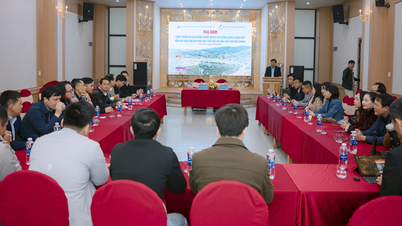
Delegates attending the workshop "Accelerating Digital Transformation in Healthcare - Technology and Solutions for Electronic Medical Records in Private Healthcare Facilities" organized by the Vietnam Private Hospitals Association.
Investing in the development of digital healthcare brings clear benefits: people gain access to modern, high-quality medical services right in their local area, reducing pressure on hospitals, saving costs and time, and significantly improving the healthcare experience.
Developing intelligent transportation: Strongly applying digital technology, especially artificial intelligence (AI), to build an intelligent transportation system. Specifically, the province has sufficient resources to develop intelligent and automated traffic monitoring technologies and solutions such as: license plate recognition, facial recognition, traffic violation detection via cameras, and monitoring vehicle entry and exit at key agencies and areas. Simultaneously, data from surveillance camera systems will be integrated into the smart city operations center for management, analysis, and timely decision-making. Promoting the application of biometric technology at key airports and border crossings will improve management efficiency, ensure security, shorten processing times, and facilitate entry and exit for citizens and tourists. These solutions contribute to raising awareness and compliance with traffic laws, reducing accidents, and increasing transparency in administrative penalties.
Developing smart agriculture: Promoting the application of digital technology, biotechnology, automation, and big data in agricultural production to increase productivity, quality, and ensure food safety. Focusing on deploying smart farming systems, remote monitoring using sensors, weather forecasting, and monitoring of nutrition and diseases in crops and livestock.
In particular, blockchain technology needs to be applied to trace the origin of products, building trust among consumers both domestically and internationally. Thanh Hoa province can aim to have at least 90% of its key agricultural products strictly controlled for origin by 2026, with transparent traceability available on mobile devices. This is a crucial step in building the brand of Thanh Hoa agricultural products in the national and international markets.
Conclude
A powerful nation cannot have a weak science and technology base - this has been clearly demonstrated through the development process of humanity [3]. In the context of the digital age, science and technology and innovation must be developed simultaneously on the foundation of digital technology. The knowledge economy, including the digital economy and the green economy, will be the development trend in the new era of humanity. Correctly identifying and approaching these three pillars will help each country and locality develop sustainably, efficiently and have long-term competitiveness.
Thanh Hoa province has early identified and concretized these three pillars in its Action Program for implementing Resolution 57. To realize the goal of becoming a new growth pole, it is crucial to correctly identify the role of each pillar and choose a breakthrough approach. In particular, innovation needs to be placed at the center, creating a foundation for building a new, modern, efficient, and highly replaceable workforce. AI virtual assistants, intelligent diagnostic technology, AI in education and management... will gradually replace unskilled labor, improving productivity and service quality.
To achieve this, the province must master technology, gradually create core technologies, and form a pioneering research force. Establishing specialized research institutes, along with mechanisms for attracting and retaining talent, will be a strategic and long-term step. Simultaneously, it is necessary to quickly develop appropriate mechanisms, policies, and legal frameworks to create a favorable environment for the three pillars of science and technology, innovation, and digital transformation to develop strongly and make a practical contribution to Thanh Hoa's breakthrough in the coming period.
Assoc. Prof., Dr. Pham The Anh
Head of the Faculty of Engineering, Technology and Communication - Hong Duc University
Reference [1] https://xaydungchinhsach.chinhphu.vn/toan-van-nghi-quyet-ve-dot-pha-phat-trien-khoa-hoc-cong-nghe-doi-moi-sang-tao-va-chuyen-doi-so-quoc-gia-119241224180048642.htm
[2 https://vjst.vn/vn/tin-tuc/18301/ket-noi-khoa-hoc-cong-nghe--doi-moi-sang-tao-va-chuyen-doi-so--dinh-huong-phat-trien-ben-vung-dung-xu-the-thoi-dai.aspx
[3] https://laodong.vn/thoi-su/khong-the-tro-thanh-quoc-gia-hung-cuong-voi-nen-khoa-hoc-cong-nghe-yeu-kem-1514613.ldo
Source: https://baothanhhoa.vn/khoa-hoc-cong-nghe-doi-moi-sang-tao-va-chuyen-doi-so-ba-tru-cot-thuc-day-thanh-hoa-tro-thanh-cuc-tang-truong-moi-251037.htm




















![[Photo] General Secretary To Lam visits the exhibition space showcasing books, photo exhibitions, and achievements of digital transformation in journalism.](/_next/image?url=https%3A%2F%2Fvphoto.vietnam.vn%2Fthumb%2F1200x675%2Fvietnam%2Fresource%2FIMAGE%2F2025%2F12%2F19%2F1766110879215_1766110240024-jpg.webp&w=3840&q=75)







































































Comment (0)