


SCMP According to information from Chinese scientists , a smart drilling technology has accurately detected oil and gas underground in China's Tarim Basin and guided drills to the best extraction points, resulting in a fivefold increase in production.
Smart drilling is supporting new technologies for the development of oil fields in northwestern China.
The Chinese Academy of Sciences (CAS) reported on production trials applying smart drilling technology that were conducted in early August 2023.
The report stated: "The TP259-2H well in the western Tarim Basin produces 13.5 tonnes of oil and 42,000 cubic meters of natural gas daily, nearly five times the output of neighboring wells."
The geological reserves in the area have been confirmed to contain approximately 510 million cubic meters of natural gas and 160,000 tons of oil condensate from the lower Shushanhe Formation of the Cretaceous period.
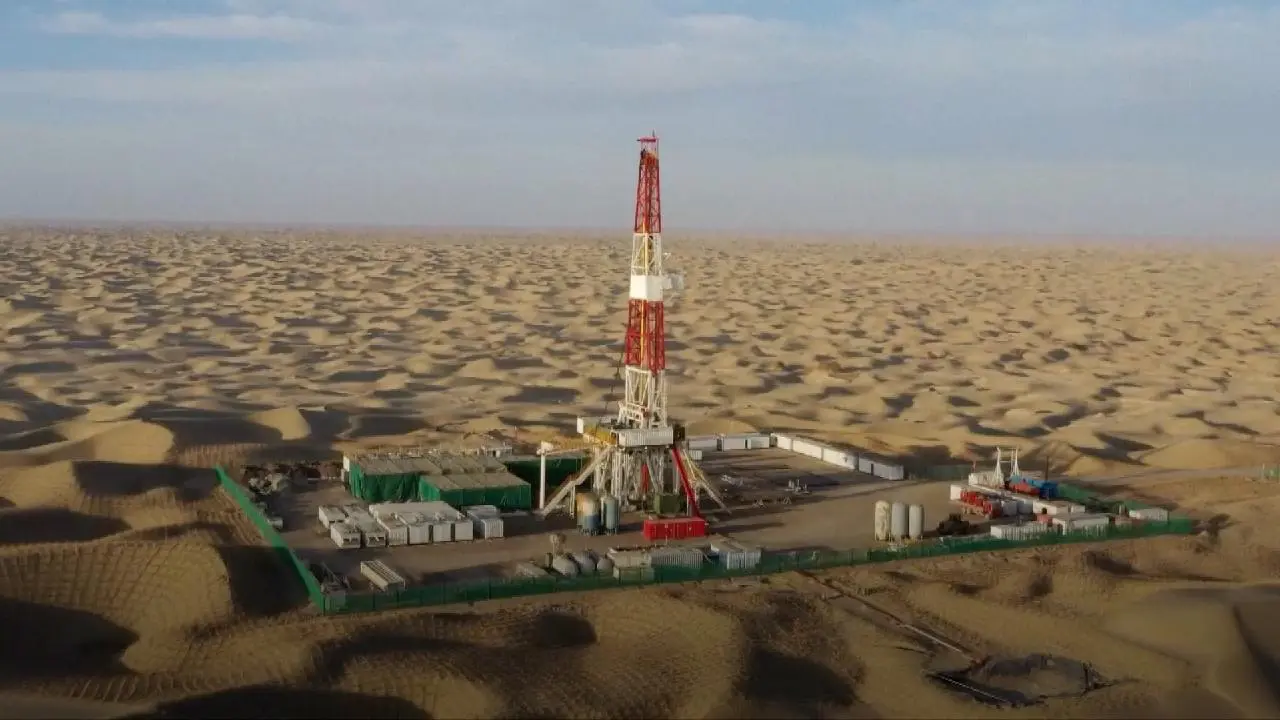
Image of a Chinese borehole. Photo: CGTN
This smart drilling technology marks the first successful breakthrough in extracting oil and gas from these specific reserves, demonstrating the reliability of emerging technology enabling efficient, low-cost drilling of China's deep oil and gas resources.
The project, led by experts Zhu Rixiang and Di Qingyun from CAS, was carried out in collaboration with the Northwest Oilfield Exploration and Development Research Institute and Sinopec Zhongyuan Petroleum Engineering Ltd., a Chinese oil and natural gas exploration, production, and distribution company.
The outstanding feature of smart drilling technology: "Brain - Eyes - Hands - Feet"
The Cretaceous oil and gas reservoirs of the Tarim Basin are over 4,000 meters deep and have a complex, uneven distribution. They are separated in a layered cake structure, in which rock layers are only 2-5 meters thick but vary in depth from over 10 meters.
Traditional directional drilling techniques have been limited in their ability to extract these resources.
A team of Chinese scientists has developed a three-dimensional geological model with meter-level resolution, encompassing "rock structure, properties, and composition" using intelligent algorithms.
This model allows them to pre-set drilling targets, design horizontal well paths, and predict potential geological structures and underground oil and gas 'encounters'.
The intelligent drilling system, guided by 3D target positioning technology – acting as its "brain" – utilizes various tools as its "eyes" and "limbs." All work together to complete the drilling task with precision.
An electromagnetic wave imaging device is fitted onto the drill as its "eyes." This device sends electromagnetic waves into the geological strata and receives the reflected signals to explore the electrical properties and boundaries of the rock.
During its July 2023 exploration operation, the instrument ran continuously for 229 hours at depths up to 4,538 meters, accurately identifying low-resistance formations such as sand bodies and providing crucial decision-making information for the system.
China Electric Power News According to a Chinese scientist, one of the challenges in deep well drilling is the complex geological structure along with the extremely high temperatures and pressures at a depth of 10,000 meters.
Below 10,000 meters, temperatures of 224 degrees Celsius can make metal drilling tools "as soft as noodles." And the immense pressure (138 MegaPascals) is described as similar to "diving to a depth of 13,800 meters," far exceeding the enormous water pressure in the Mariana Trench – the deepest ocean trench on Earth – which is 10,994 meters deep.
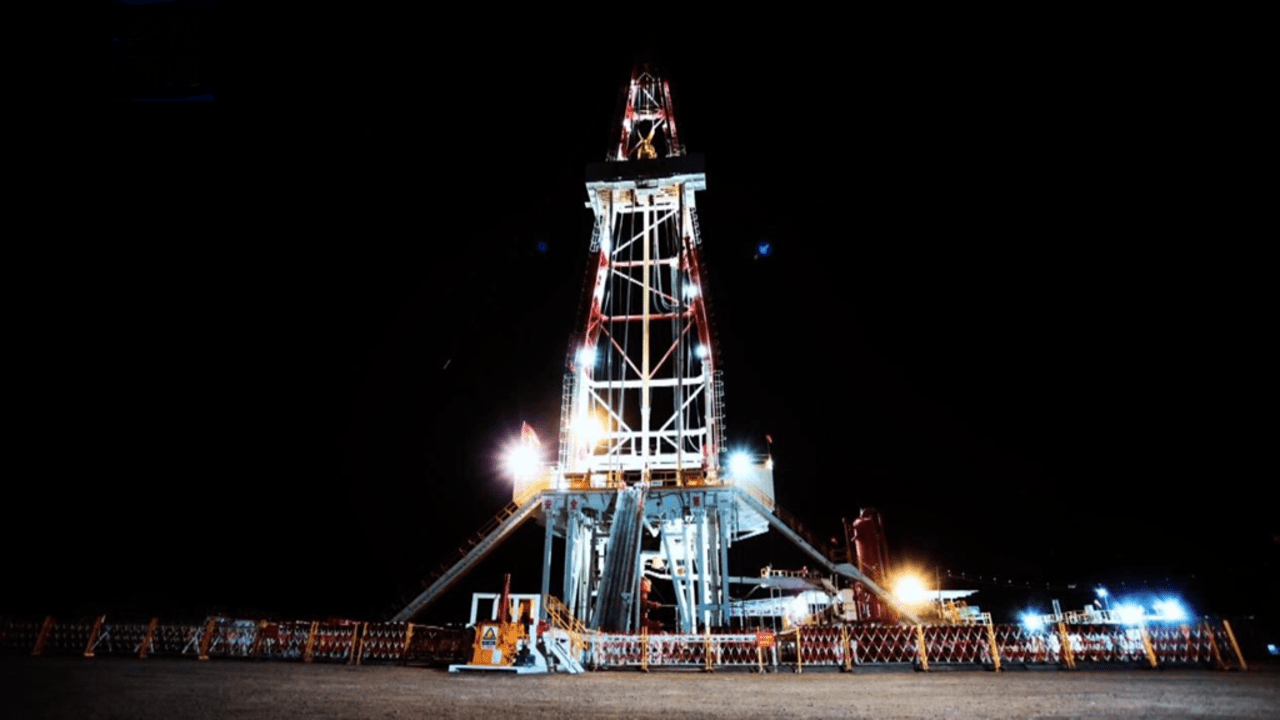
The smart drilling technology developed by the Chinese Academy of Sciences (CAS) has made significant progress in its application at a production well in the Xinjiang Uygur Autonomous Region, Northwest China. Photo: CMG
The emergence of 3D precision navigation technology using pre-built models of the structure of underground oil and gas layers can guide drill bits to the best production points.
The flexible rotating guidance system and subsequent geological positioning system then guide the drill bit to the designated targets using a flexible mechanical structure.
"The project, initiated in 2017, has now formed a complete solution with its own intellectual property rights. It has achieved the goal of intelligent deep drilling with a super-new support system," the report from the Chinese Academy of Sciences (CAS) stated.
"This smart drilling technology is the result of the persistent efforts of hundreds of researchers over more than 6 years."
"Many of the self-developed devices have achieved technical perfection after hundreds of trials and iterations in the field, moving from prototypes to engineering models," CAS stated.
This technology emerged at a perfect time, following China's commencement of drilling the two deepest wells in Asia in May and July 2023.
Xinhua News Agency According to information, on May 30, 2023, China National Petroleum Corporation began drilling a well deeper than 11,000 meters in the Tarim Basin – a very oil-rich region of China.
If completed (in over 400 days), this will be the deepest well in Asia. The well will penetrate 10 continental layers, reaching the Cretaceous system in the Earth's crust – a series of stratified rocks dating back 145 million years.
Less than two months later, on July 20th, PetroChina Southwest Oil and Gas Company commenced drilling a 10,520-meter-deep well in Sichuan, China. This will be the second deepest well in Asia if completed. Sichuan is home to China's largest shale gas reserves.
Source: SCMP, CGTN
Source




























































![[Photo] Coc Ly market bustling on the eve of Tet](https://vphoto.vietnam.vn/thumb/402x226/vietnam/resource/IMAGE/2026/02/14/1771062261424_baolaocai-br_img-6457-jpg.webp)


















Comment (0)