

The significance of remittances
Remittances help the State increase foreign exchange reserves, significantly contributing to stabilizing and enhancing the supply of foreign currency. This, in turn, helps balance the trade balance and the balance of payments, reduces dependence on foreign investment, and limits pressure on foreign exchange rates.
Thanks to remittances, a segment of the population in the country has improved their income and raised their living standards. Remittances not only contribute to personal consumption but also serve as capital for investment in production, business, and the stock market.
Conditions for sending remittances back to the country.
To send remittances to Vietnam, the sender needs to meet the following conditions:
- A valid Citizen Identification Card/National Identity Card/Passport, birth certificate, and household registration certificate are required.
- Documents proving the purpose of transferring money to another country.
- Provide recipient information such as: Full name, recipient account number, and recipient bank name.
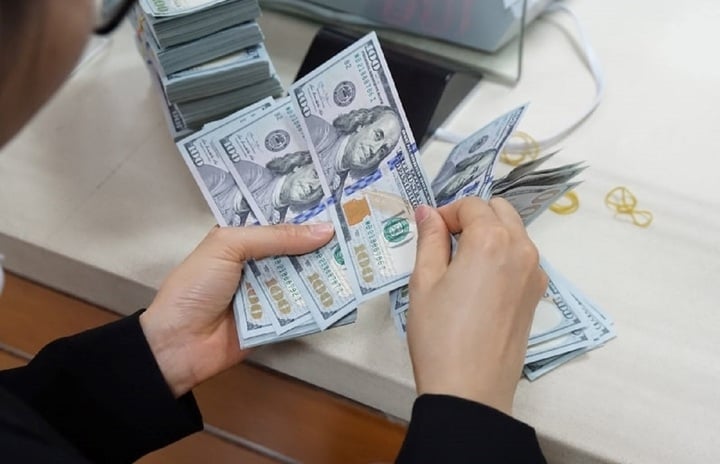
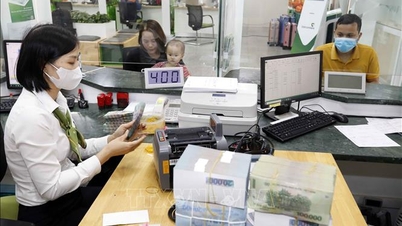
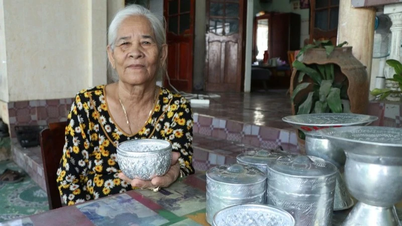
Remittances are foreign currency sent back to Vietnam by Vietnamese people living abroad. (Illustrative image).
How to send remittances to Vietnam
- Transfer via international credit institutions: Reputable international credit institutions with extensive global networks are suitable channels for remittances, such as Western Union, MoneyGram, or UniTeller. The procedure for transferring money abroad through these institutions is very quick and simple. The total time from sending to receiving is only 2-5 days (depending on the currency).
- Transfer via bank:
Banks are considered a convenient method of remittance transfer for both senders and recipients, even if the recipient does not have a bank account. This is especially true if the recipient needs to exchange, sell, or deposit foreign currency into a savings account; sending remittances through a bank is the most convenient and optimal option. Furthermore, banks often offer various preferential policies for those receiving and depositing remittances into savings accounts.
Those sending remittances simply need to go to a bank abroad, provide information about the recipient including their full name, account number, and the name of the domestic bank, and complete the money transfer procedure. If the recipient does not have an account at the bank, the sender needs to provide additional personal information (citizen identification number/passport/equivalent document) along with a photo so that the bank can process the remittance.
Currently, most banks in Vietnam offer services for sending and receiving remittances from countries around the world.
- Transfer via international postal services: For those needing to send remittances quickly and with simple procedures, transferring foreign currency through international postal services is a popular option. The service fee at these organizations ranges from 4-6%, depending on each institution's policy. Additionally, if both the sender and recipient possess international payment cards (VISA, Mastercard, etc.), remittances can be transferred via these cards.
- Individuals bringing remittances back to Vietnam
Remittances brought into Vietnam by individuals abroad account for a significant proportion of the total annual remittances. However, individuals bringing remittances to Vietnam must comply with certain legal regulations, specifically Article 2 of Circular 15/2011/TT-NHNN:
Remittances must be declared to customs at border crossings: Any amount of foreign currency exceeding 5,000 USD must be declared to customs when going through immigration procedures at international border crossings in Vietnam.
Exception: If an individual carries valuable documents such as savings passbooks, traveler's checks, or means of payment such as bank cards, they do not need to declare them to customs at the border.
Eligible recipients of remittances
According to the law, the entities authorized to receive remittances from Vietnamese citizens abroad and to disburse remittances to beneficiaries include:
- Licensed credit institutions, or agents of credit institutions.
- Economic organizations authorized by the State Bank of Vietnam to operate foreign exchange services.
- Businesses providing financial services and international postal services.
Source: https://vtcnews.vn/kieu-hoi-la-gi-ar913452.html

![[Photo] Delegation attending the 14th Congress of the Vietnam Trade Union visits the Mausoleum of President Ho Chi Minh.](https://vphoto.vietnam.vn/thumb/1200x675/vietnam/resource/IMAGE/2026/06/03/1780451842301_ndo_br_img-3824-jpg.webp)





























































































Comment (0)