

The patient, Mr. BP (84 years old, Ban Thach ward), was admitted to the hospital with drooping eyelid, severe headache, and complete loss of vision in his left eye.
According to his family, about a month before being hospitalized, Mr. P. experienced persistent left-sided headaches, accompanied by decreased vision and drooping eyelid. Vision in his left eye deteriorated rapidly, while his right eye remained normal.
Previously, the patient had been examined at numerous medical facilities in and outside Da Nang city, in the fields of Ophthalmology and Neurology, but no clear lesions were detected; at one point, the patient was diagnosed with trigeminal neuralgia and received prolonged medical treatment, but without improvement.
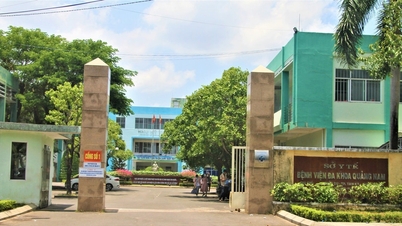
According to Dr. Nguyen Thanh Tien, Head of the Ear, Nose, and Throat Department at Quang Nam General Hospital, clinical examination revealed that the patient's left eye no longer had a light reflex, but the eye structures such as the cornea, conjunctiva, retina, and eye movement remained normal.
Recognizing the potential location of the lesion along the optic nerve pathway, the patient was scheduled for a contrast-enhanced MRI of the brain to rule out parenchymal causes.
The MRI results did not reveal any hemorrhage or brain tumor, but showed inflammation of the left sphenoid and posterior ethmoid sinuses, extending into the apex of the orbit, suggesting a mucocele of the sphenoid sinus.
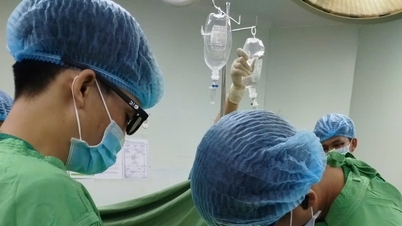
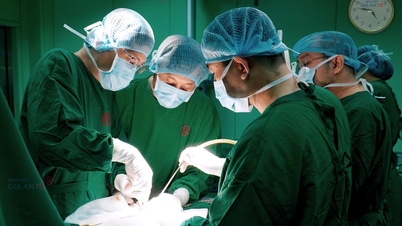
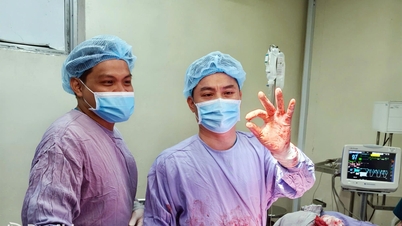
The ENT team decided to perform endoscopic sphenoid sinus surgery to remove the entire mucocele and release the optic nerve. The surgery went smoothly. After the surgery, the patient's health stabilized, and they began to perceive light and distinguish shadows; the ptosis gradually improved.
Doctors believe that if the patient had arrived later, the optic nerve could have suffered irreversible damage, leading to permanent blindness.
The patient is currently being monitored and treated at the Ear, Nose, and Throat Department.
Doctors advise people experiencing persistent headaches, reduced or lost vision in one eye, especially when ophthalmologists and neurologists fail to identify the cause, to consult an ENT specialist and undergo imaging diagnostics such as MRI or CT scans of the sphenoid sinus to avoid missing any lesions and reduce the risk of blindness.
Source: https://baodanang.vn/kip-thoi-phau-thuat-cuu-thi-luc-cho-benh-nhan-cao-tuoi-3319361.html
![[Photo] Capturing the moment the tide recedes at Yen Binh Son rapids - a million-year-old scenic spot in Quang Ngai.](https://vphoto.vietnam.vn/thumb/1200x675/vietnam/resource/IMAGE/2026/05/19/1779175463885_yen9-1199-jpg.webp)
![[Photo] National Assembly Chairman Tran Thanh Man attends the groundbreaking ceremony for the National Highway 1A spatial axis project.](https://vphoto.vietnam.vn/thumb/1200x675/vietnam/resource/IMAGE/2026/05/19/1779161360398_ndo_br_bnd-1412-jpg.webp)
![[Photo] General Secretary and President To Lam presides over a meeting on the implementation of Directive No. 34-CT/TW of the Party Central Committee.](https://vphoto.vietnam.vn/thumb/1200x675/vietnam/resource/IMAGE/2026/05/19/1779187768672_a1-bnd-2350-631-jpg.webp)































































![[Photo] General Secretary and President To Lam receives Indian Defense Minister Rajnath Singh](https://vphoto.vietnam.vn/thumb/402x226/vietnam/resource/IMAGE/2026/05/19/1779184046302_anh-man-hinh-2026-05-19-luc-16-46-58.png)

































Comment (0)