

The lever is still... waiting to be used.
Among the solutions to seize opportunities to revive the tourism industry, Minister of Culture, Sports and Tourism Nguyen Van Hung proposed expanding the list of cities piloting the development of the night-time economy . At the same time, he suggested researching policies to support the development of night-time tourism alongside other types of tourism. This is not the first time the night-time economy has been mentioned as a solution to seize opportunities when the economy is facing challenges.
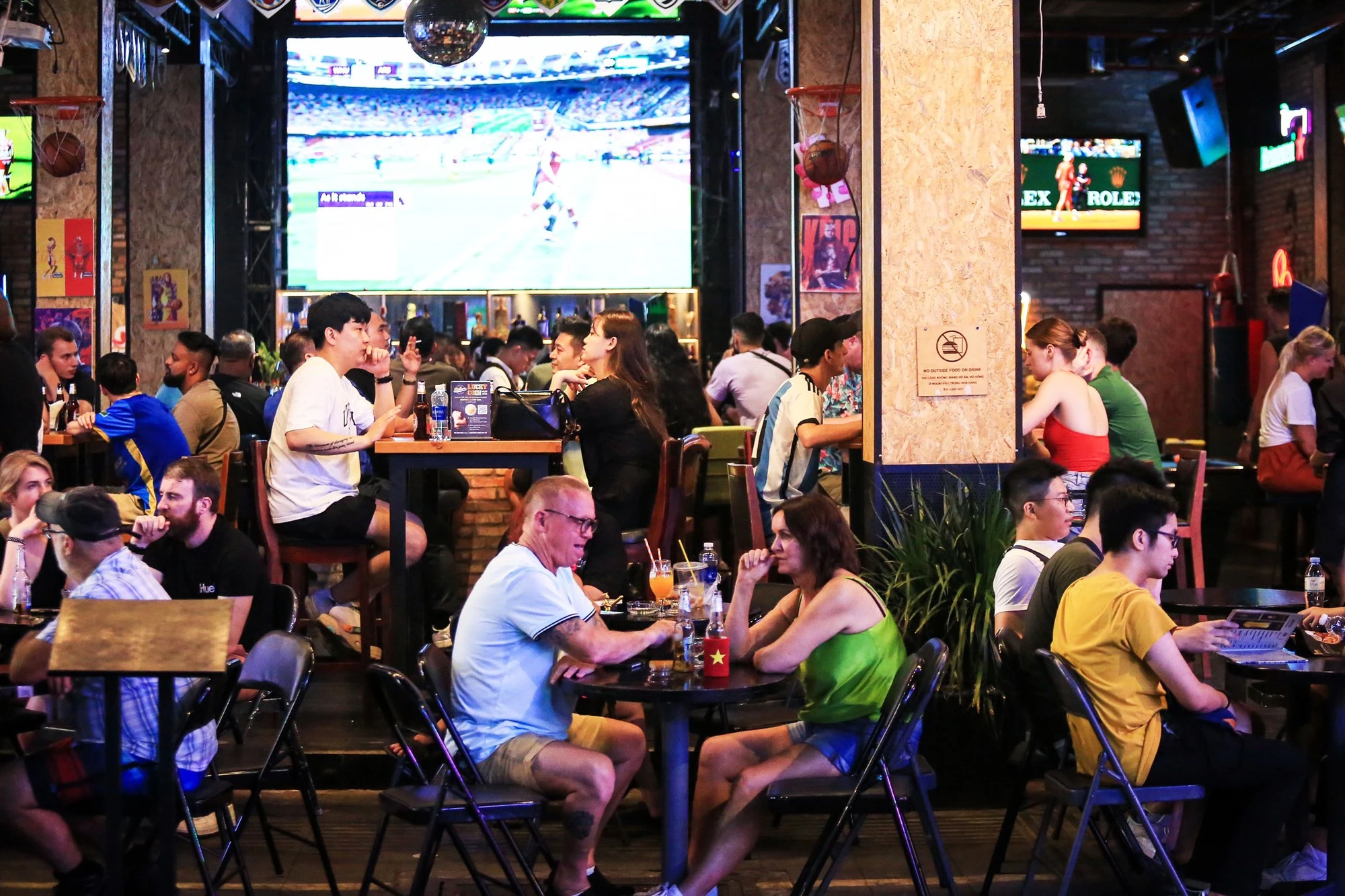
The current formula for planning nighttime product offerings remains confined to pedestrian streets, with the addition of food and drink activities.
At the end of 2020, as the pandemic began to be brought under control, the Prime Minister signed a decision approving the Nighttime Economy Development Plan with the goal of maximizing new economic development opportunities and improving people's incomes and living standards. Immediately afterwards, a series of tourist cities made efforts to activate the nighttime economy, keeping tourists "awake." Large-scale nighttime music festivals and street carnival performances were organized in Da Nang, along with the opening of My An beach at night, An Thuong pedestrian street, and the addition of Fridays for the water/fire show on the Dragon Bridge in addition to Saturdays and Sundays… Ho Chi Minh City also accelerated with a series of night market and pedestrian street projects. Ben Tre, Can Tho, Hue, Binh Thuan… also successively issued Nighttime Economy Development Plans with budgets of hundreds or thousands of billions of dong.
However, the common denominator in all local night-time economic development projects is that they only focus on night markets, food streets, and entertainment events that, at best, only last until after 11 PM before closing. The night-time economy was expected to revitalize tourism and create a post-pandemic economic breakthrough, but in reality, it is facing increasing difficulties. One of the reasons many economic experts believe is that localities are still mainly operating on a small scale, in a fragmented manner, lacking a central coordinating body and the necessary mechanisms and policies to build a systematic and meaningful night-time economic model.
It wasn't until July of this year that the Ministry of Culture, Sports and Tourism officially issued a plan to develop night-time tourism products in 12 famous destinations. The plan aims for Hanoi, Quang Ninh, Hai Phong, Thua Thien-Hue, Da Nang, Khanh Hoa, Hoi An (Quang Nam), Da Lat (Lam Dong), Can Tho, Phu Quoc (Kien Giang), Ho Chi Minh City, and Ba Ria-Vung Tau to have at least one model of night-time tourism product development by 2025. Hanoi, Da Nang, and Ho Chi Minh City are required to establish separate night-time entertainment complexes. Besides increasing tourist numbers and spending, the tourism industry also wants to extend the length of stay (by at least one night) of both domestic and international tourists. Coinciding with the National Assembly's approval of a new, more liberal visa policy, the Ministry of Culture, Sports and Tourism's comprehensive plan for developing the night-time economy is expected to create a major breakthrough for tourism and the Vietnamese economy.
According to Associate Professor Tran Dinh Thien, former Director of the Vietnam Institute of Economics, the night-time economy is a new competitive advantage for modern urban development. When visiting a city or urban area, observing the closing times of shops and restaurants can provide some insight into the "health" of its economy. Developing the night-time economy requires localities to quickly promote tourism, diversify entertainment and commercial activities, and revitalize deserted urban areas at night. Therefore, with determination and thorough implementation, the night-time economy will be a solution to seize economic opportunities and a lever to quickly revive the tourism industry. Unfortunately, the unpredictable economic fluctuations of recent times, coupled with declining spending and tourism, are posing significant challenges to this driving force.
Unlocking mindsets and policies.
The Ministry of Culture, Sports and Tourism's project to develop night-time tourism products at 12 destinations mentions researching adjustments to service operating hours, allowing night-time activities to continue until 6 AM the following day. This is considered a groundbreaking proposal because, after many years of debate, nightclubs in Ho Chi Minh City – the country's most vibrant economic center – have only recently been allowed to extend their operating hours to 2 AM instead of midnight. Karaoke, arguably the most popular form of nighttime entertainment, is only permitted to operate until midnight. Movie theaters have been constantly threatened with fines if they open after midnight, and a proposal to extend operating hours to 2 AM the following day has yet to be approved after more than a year.
While Vietnam is still hesitant to lift its curfew, the Thai government recently decided to pilot a policy allowing entertainment venues such as pubs, bars, restaurants, and karaoke establishments to stay open until 4 AM each day, instead of the current 2 AM. The new policy will be implemented from December 15th in four tourist cities: Bangkok, Chonburi, Phuket, and Chiang Mai. The Thai government believes that allowing entertainment venues to stay open later will help increase tourism revenue, and the peak tourist season at the end of the year is the ideal time to expand the number of visitors. Before extending the hours for tourists, in addition to traditional nightlife options like clubs and night markets, Thailand has also been striving to develop new nighttime programs in recent years, combining retail with culture, creativity, and organizing international exhibitions.
Looking at the example of Thailand, Professor Vo Dai Luoc, former Director of the Institute of World Economics and Politics, believes that for Vietnam to develop its night-time economy, it must first address the needs. Southeast Asian countries generally share similar weather conditions and customs, characterized by long nights and people not staying up too late. However, Thailand has successfully developed night-time tourist areas and a strong night-time economy due to the large number of tourists. With tourists seeking nighttime entertainment, the government can plan for areas with high tourist traffic to create attractive and diverse products based on open and flexible policies. Vietnam also wants to develop its night-time economy, raising the issue 5-7 years ago, but remains uncertain because it hasn't yet identified a suitable model and hasn't dared to break free from constraints in its thinking and policies.
"The night economy needs entertainment, food, shopping, bars, pubs, nightclubs, casinos, shopping malls… everyone knows that. But where and how should it be done appropriately? For example, Ta Hien Street in Hanoi is crowded with tourists, and Westerners like it. They enjoy partying all night long, but if it's mixed in with residential areas and has such a negative impact, how can it be sustainable in the long run? Not to mention, if it's just eating and drinking, they'll get bored after 2-3 hours at most. If you want them to party all night, what other activities are needed?" Professor Vo Dai Luoc questioned.
According to him, given Vietnam's customs and the relatively small number of international tourists compared to Thailand and Singapore, it's not yet possible to develop nighttime activities extensively and vigorously. Therefore, selective development is necessary. Authorities and local governments should learn from other countries' models, surveying actual needs to determine which localities have the most potential. Within those localities, which areas, streets, and avenues attract many international tourists and are suitable for developing all-night entertainment zones? Which locations are suitable for organizing cultural activities and events? Once the locations are planned, there must be open policies and mechanisms to allow localities to develop diverse and unique nighttime entertainment products and services.
With proper planning, it's possible to mobilize human resources, build infrastructure, develop specialized nighttime products, and manage them centrally... Only after a successful pilot model can it be gradually replicated nationwide.
Professor Vo Dai Luoc , former Director of the Institute for World Economics and Politics Research.
Source link


![[Photo] Golden season of organic farming under the canopy of the vast Mang Den forest.](/_next/image?url=https%3A%2F%2Fvphoto.vietnam.vn%2Fthumb%2F1200x675%2Fvietnam%2Fresource%2FIMAGE%2F2026%2F01%2F24%2F1769247398190_ndo_br_cam-15-jpg.webp&w=3840&q=75)





Comment (0)