


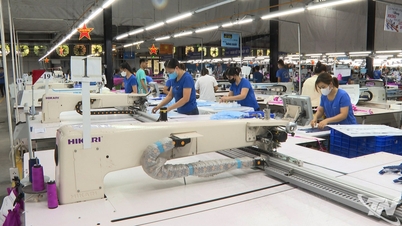
Workers at Phuc Sinh Joint Stock Company process Vietnamese pepper for export to the EU market – Photo: QUANG DINH
There is no reason why we shouldn't decentralize power and authority, and no reason why we shouldn't eliminate the "request-and-grant" mechanism. The implementation process may encounter obstacles and conflicts, but we will continue to resolve them.
Prime Minister Pham Minh Chinh
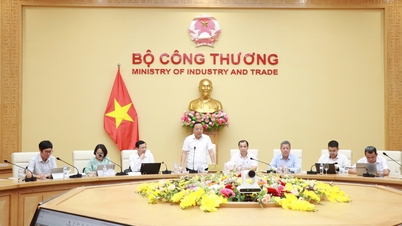
These were the key directives of Prime Minister Pham Minh Chinh at the regular government meeting in September 2024, held online with 63 provinces and cities yesterday, October 7th.
Many provinces overcome difficulties and achieve positive growth.
According to a report by Minister of Planning and Investment Nguyen Chi Dung, GDP growth in the third quarter is estimated at 7.4% compared to the same period last year.
This figure is 0.7% higher than the scenario in Resolution No. 01, equivalent to a 7% annual growth scenario.
Notably, some localities severely affected by Typhoon Yagi still maintained high growth rates, such as Hai Phong (9.77%), Quang Ninh (8.02%), Phu Tho (9.56%), Lao Cai (7.71%), Cao Bang (7%), and Yen Bai (7.15%).
Analyzing the growth drivers, Mr. Dung said that supply-side factors have shown positive changes.
In particular, agriculture grew, meeting demand; services saw significant growth; and industry recovered quickly, acting as a driving force for economic growth. Approximately 183,000 businesses entered the market, higher than the 163,800 that withdrew.
According to a survey conducted by the General Statistics Office, 82.6% of businesses in the processing and manufacturing sector believe that business conditions in the fourth quarter will remain stable or improve. This indicates confidence in a positive recovery.
Furthermore, demand-side growth drivers have also recovered more positively. Total social investment has recovered, notably private investment increasing by 7.1% (compared to a 2.1% increase in the same period last year); FDI attraction continues to be a bright spot with registered capital of US$24.8 billion and implemented capital of approximately US$17.3 billion, an increase of 8.9%.
Among the localities, Bac Giang and Thanh Hoa are two "bright spots" in the socio-economic picture of the first nine months of the year nationwide, leading in GRDP growth. Bac Giang Provincial Party Secretary Nguyen Van Gau stated that the growth rate for the first nine months is estimated at 13.89%, leading the country.
However, the province is still facing some difficulties due to the impact of Typhoon Yagi. Therefore, the province requests that the Government and relevant ministries and agencies pay attention to supporting localities in overcoming the consequences of the typhoon in order to quickly stabilize the situation and restore production.
Meanwhile, Chairman of the People's Committee of Thanh Hoa province, Do Minh Tuan, said that the province's GRDP reached 12.46%, ranking second nationwide.
Mr. Tuan stated that the focus will be on removing bottlenecks in mechanisms and institutions with the spirit of "removing obstacles wherever they arise, addressing whatever is causing the problem" in accordance with the law but also in line with reality, quickly and effectively.

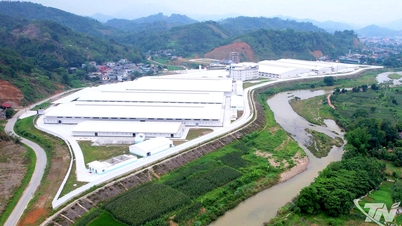
In recent years, manufacturing and business enterprises in Ha Long City (Quang Ninh) have developed rapidly – Photo: NAM TRAN
Promote the principle of "local authorities decide, local authorities act, and local authorities take responsibility."
Commending the efforts and perseverance of several ministries, sectors, and localities, especially Hanoi and Ho Chi Minh City, which contributed over 51% of the total national budget revenue, Prime Minister Pham Minh Chinh stated that the efforts and sharing in overcoming the consequences of natural disasters by localities, especially Lao Cai, Quang Ninh, and Hai Phong, in the process of recovering from Typhoon Yagi, were of great significance.
Although the economy has achieved positive results, with each quarter surpassing the previous one, and the first nine months of this year exceeding the projected targets, the Prime Minister acknowledges that many difficulties and challenges remain.
Notably, Typhoon Yagi caused significant damage, and the consequences of the COVID-19 pandemic are still ongoing. The pressure to manage and direct macroeconomic policies remains high.
The disbursement rate of public investment capital remains low, and production in some sectors is still facing difficulties. Legal obstacles have not been resolved, some officials and civil servants are avoiding responsibility, shirking their duties, and are afraid of accountability; in some cases, the process of gathering information, providing advice, and responding to policies is still hesitant…
Given the significant challenges ahead, the Prime Minister requested that ministries, sectors, and localities closely monitor the international and domestic situations in order to formulate appropriate policy responses and implement timely, flexible, and effective solutions.
In this context, it is necessary to strongly promote decentralization and delegation of power as required by the 10th Central Committee Conference with the viewpoint of "local authorities decide, local authorities act, and local authorities take responsibility".
"There's no reason why we shouldn't decentralize power and authority, no reason why we shouldn't eliminate the 'request-and-grant' mechanism. The implementation process may encounter obstacles and conflicts, but we will continue to resolve them," he said.
The Prime Minister emphasized solutions, first and foremost focusing on preventing and mitigating the consequences of natural disasters, storms, and floods, stabilizing people's lives, and promoting the recovery of production and business. He also stressed the need to prepare proposals and reports for submission to the National Assembly, and to build and improve the institutional framework.
The priority is to promote growth while maintaining macroeconomic stability, controlling inflation, and ensuring major balances. The goal is to achieve an annual GDP growth rate of over 7%, with Q4 growth ranging from 7.5% to 8%.
Focus on accelerating and creating breakthroughs in the disbursement of public investment capital, strongly promoting the three national target programs, and striving to achieve a disbursement rate of at least 95%.
Focus on revitalizing traditional growth drivers (investment, exports, consumption) and strongly promoting new growth drivers such as regional economies, regional linkages, and urbanization.
Strengthening institutional and legal frameworks, removing legal obstacles, reforming administrative procedures, and promoting digital transformation…


Source: General Statistics Office – Compiled by BAO NGOC – Graphics: T. DAT
* Dr. Nguyen Bich Lam (former Director General of the General Statistics Office):
Public investment must be given the highest priority.

Achieving the 7% GDP growth target this year will be very difficult given the current economic growth drivers.
First, to achieve the target of disbursing 95% of the allocated capital, the amount disbursed in the last three months of the year must exceed the amount disbursed in the previous nine months.
If 95% of public investment capital is disbursed, the country's GDP will increase by an additional 0.6%.
Achieving this is very difficult; it is highly likely that the disbursement rate of public investment this year will only be the same as last year, reaching around 81% of the plan. Therefore, at this time, the goal should be to try to disburse public investment at the highest possible level in the remaining three months to contribute to growth.
In addition, while foreign investment has shown some improvement, it currently accounts for a relatively small proportion, approximately 17-18%, of total social investment.
A noteworthy point in the past nine months is that non-state investment accounted for a large proportion of total social investment.
In the first nine months, non-state sector investment reached over 1.33 trillion VND, accounting for 55% of total social investment (a 7.1% increase compared to the same period last year). Therefore, one of the important solutions to boost growth from now until the end of the year is to promote private investment.
If we look at the growth drivers, which are exports and imports, to achieve growth in export and import turnover this year, it must be higher than last year, and especially, the contribution to growth must be a trade surplus. These figures up to this point in 2024 are somewhat lower than in 2023.
The next driver of economic growth this year is final consumption; total retail sales of goods in the first nine months at constant prices increased by only 5.8%, compared to a 7.6% increase in the same period last year.
In other words, the drivers of final consumption by households and the government (budget spending) for the whole year are only about 6%. Therefore, significant efforts are needed to boost the three aforementioned growth drivers in order to achieve the set GDP growth target for the whole year.
* Mr. Dinh Quang Hinh (Head of Macroeconomics and Market Strategy Department, VNDirect Securities):
Exports in the first three months made a significant contribution to the year's growth.

Data shows that the US market led in export growth during the first eight months of this year, with an increase of 26% compared to the same period last year.
At the same time, investment flows from Singapore, Hong Kong, and China have also grown positively, indicating that the trend of shifting manufacturing to Vietnam is being promoted.
Not to mention the global monetary easing cycle, led by major central banks in the US, Europe, and China, which will boost consumption in these markets, thereby increasing demand for Vietnamese exports.
In addition, cooling inflation in many parts of the world has also contributed to the improvement in consumer spending.
Recent macroeconomic data on IIP (Industrial Production Index), PMI (Procurement Managers' Index), export orders, disbursed FDI, etc., are gradually revealing a positive export outlook for the remaining months of 2024.
Based on the above factors, it is projected that Vietnam's export turnover this year could grow by approximately 15% compared to the same period last year.
However, Vietnam's exports still face challenges in the coming period, primarily the impact of the strikes at ports in the eastern United States.
If this issue is not resolved soon, it will have a certain impact on Vietnam's exports to the US, Vietnam's largest export market.
At the same time, geopolitical competition among major powers can cause disruptions in global value chains, thereby having negative impacts on Vietnam's production and exports.
Therefore, for exports to continue to be a key driver of growth this year, Vietnamese businesses need to proactively expand their markets and diversify their supply chains to minimize risks and impacts from over-reliance on a single market or supplier.
In addition, the State Bank of Vietnam should manage the exchange rate to be stable and predictable in order to support the operations of import and export businesses.
How can legal obstacles be overcome to facilitate decentralization and delegation of power?
Deputy Minister of Home Affairs Truong Hai Long said that some ministries and agencies have a tendency to be hesitant and avoid decentralization to local authorities, often fearing that local authorities may not be able to implement it.
Therefore, the Prime Minister directed that progress be accelerated, obstacles be promptly removed, resources be unlocked, and momentum be created for localities to focus on socio-economic development and meet the set targets.
The Prime Minister has established a steering committee to review and address obstacles in the legal system, a task advised by the Ministry of Justice. When reviewing practical obstacles to resolve them and unlock resources, it is required that authority be delegated in accordance with the principle that each level of government is responsible for its own actions, with clear responsibilities for each person and task.
Simplify administrative procedures and reduce compliance costs when adhering to procedures outlined in legal documents.
What solutions are there to reduce housing prices caused by inflation?
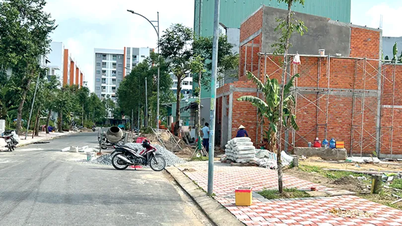
Regarding the causes of rising real estate prices, Deputy Minister of Construction Nguyen Viet Hung stated that the primary reason is the imbalance between supply and demand. This is coupled with price manipulation, inflated prices, and increased real estate investment costs (construction costs and land use fees).
To address this situation, the law has clearly stipulated regulations on price gouging and market manipulation in many laws. The Prime Minister issued Directive 82 on promptly rectifying the auctioning of land use rights.
Based on that, the ministry has issued a circular outlining solutions to strengthen the management and control of real estate price fluctuations. It has also proposed that competent authorities consider and pilot a model for a state-managed real estate and land use rights transaction center.

Rescue teams from Phu Tho province are conducting a search in the Phong Chau bridge area – Photo: T. QUAN
Localities unaffected by storms and floods need to share resources and compensate for losses.
At the regular government press conference on the afternoon of October 7th, Deputy Minister of Planning and Investment Tran Quoc Phuong stated that, according to preliminary assessments, Typhoon Yagi is estimated to have caused damage of 81,500 billion VND, reducing the index by 0.15 percentage points. Many public infrastructure projects and major local infrastructure projects were severely affected.
Regarding the 7% growth target for this year, the Deputy Minister of Planning and Investment stated that if there had been no storms or floods, the growth figure could have been higher. Therefore, based on the results achieved, the ministry maintains its target of striving for 7% or higher for the whole year.
To achieve the goal, Mr. Phuong said that one of the solutions proposed is that localities unaffected and with potential need to share resources and make greater efforts to compensate for the damage, such as Hanoi and Ho Chi Minh City.
Source: https://tuoitre.vn/lam-gi-de-tang-truong-ca-nam-hon-7-20241008085405311.htm

![[Photo] General Secretary and President To Lam meets with National Assembly delegates from ethnic minorities.](https://vphoto.vietnam.vn/thumb/1200x675/vietnam/resource/IMAGE/2026/04/20/1776696701056_a1-bnd-8331-3342-jpg.webp)
![[Image] National Assembly discusses the implementation of the socio-economic development plan.](https://vphoto.vietnam.vn/thumb/1200x675/vietnam/resource/IMAGE/2026/04/20/1776696707422_ndo_br_img-20260420-185419-jpg.webp)









































































Comment (0)