

Narrow alleys, small streets, the old village still remains…
Although streets and roads have full names, when referring to the area to the left of the Han River Bridge ( Da Nang City) on the eastern bank, people still commonly call it the An Tan and An Don fishing villages in An Hai Bac Ward, Son Tra District, rather than residential blocks or neighborhoods. And strangely, despite being only a few dozen meters from the fireworks viewing stands and the row of high-rise buildings along Tran Hung Dao Street, these two villages still retain their old, intact features, with their traditional village structures. The villages still have communal houses, banyan trees, and wells…
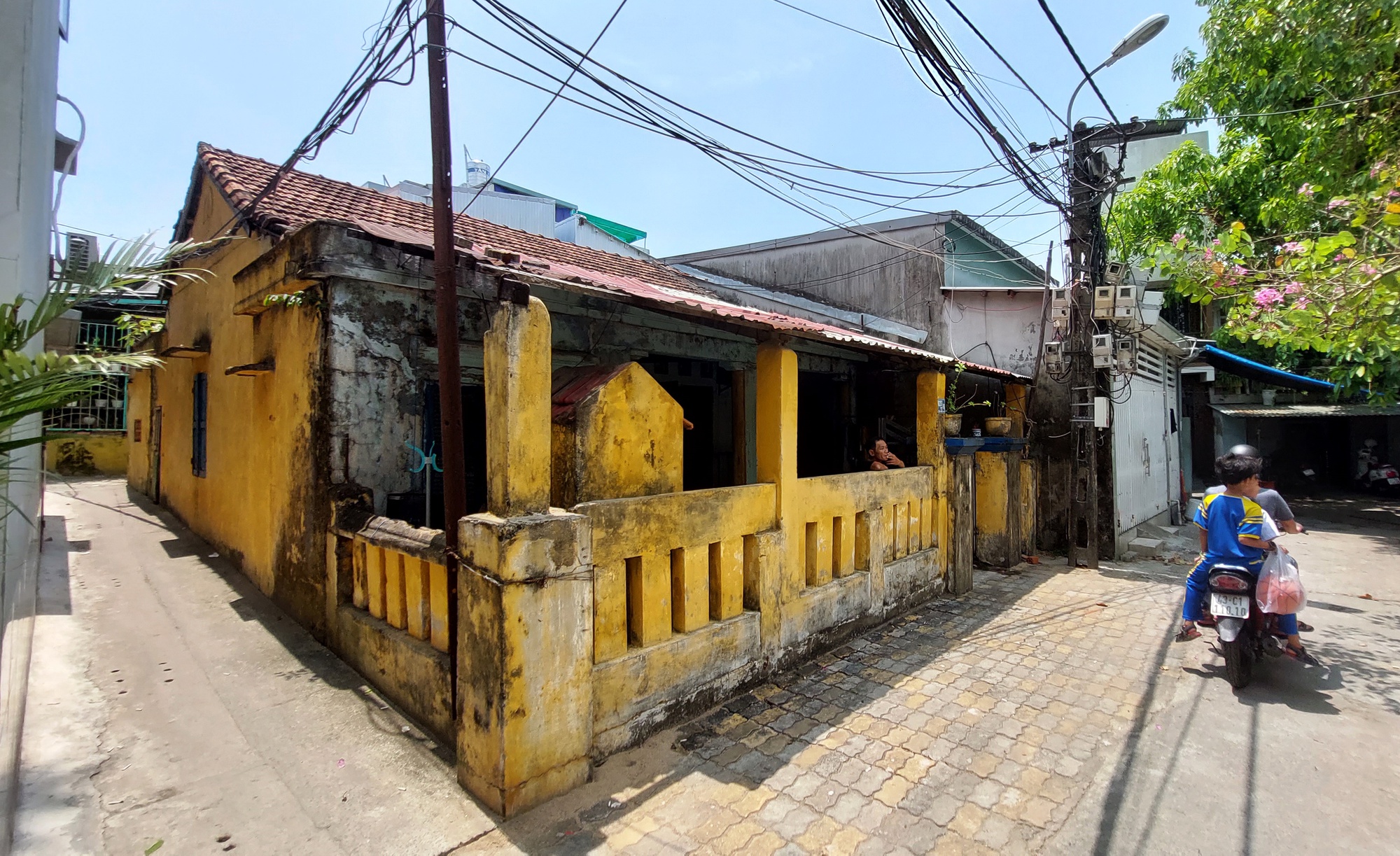
Mr. Nguyen Van Hoa's family home is steeped in the traditional style of the old fishing village residents.
The whirlwind of urbanization in Da Nang has almost completely forgotten these two villages, leaving behind charming small alleys, narrow streets, and winding roads of varying elevations. Interestingly, despite their spontaneous architectural style, both An Tan and An Don still retain many houses reflecting the characteristics of the old coastal inhabitants, built decades or even centuries ago. It's not difficult to find ancient houses that were once the residences of four generations, now used as ancestral halls.
The house of Ms. Le Thi Quoc (50 years old, residing at K10/21 Nguyen The Loc Street, An Tan village) is meticulously and elegantly maintained, from the old yellow lime paint on the fence to the dark, time-worn yin-yang tiled roof. Stepping inside, the central altar exudes an old-fashioned charm with Chinese couplets and a worship style typical of traditional houses in rural areas. "This house was built by my great-grandfather over 100 years ago. My grandfather, my father, and now I live here to take care of the ancestral worship. Because I am a woman, I work as a fish seller at Han Market, but previous generations were skilled fishermen... There are still many houses like this in this neighborhood, and they use them as places of worship," Ms. Quoc shared.
Although somewhat younger in age, the house of Mr. Nguyen Van Hoa (51 years old, residing at 257/16 Tran Hung Dao Street, An Don village) still retains the old-fashioned charm of the 1970s. From his grandfather's generation, through his father's, to his own, the house has only undergone a few renovations. A few dozen meters diagonally to the left of his house is a large banyan tree, where locals still take advantage of its shade to sell drinks, small amounts of food, and snacks – a scene reminiscent of the old days in rural areas. Next to the banyan tree is the sacred temple of Ba Than Ha Xu, a revered figure for the coastal residents for generations. An Tan village also has its own communal house and shrines clustered along Nguyen The Loc Street.
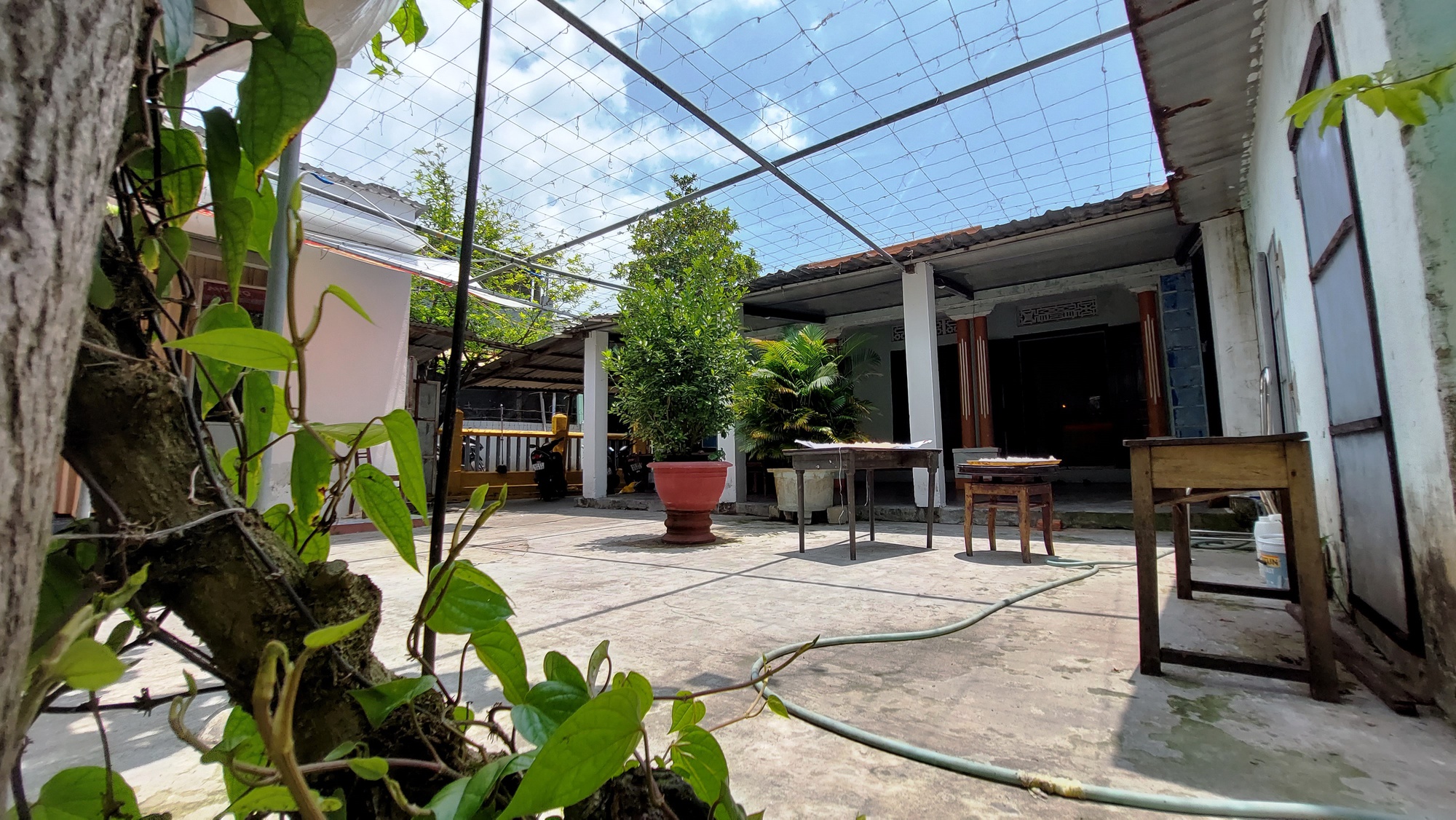
The approximately 100-year-old house of Mrs. Le Thi Quoc's family still retains its old-world charm.
The dream of a "living museum"
Six years ago, after five years of fieldwork, surveying, and researching the architecture, infrastructure, and intangible heritage of the two coastal villages of An Tan and An Don, photographer My Dung proposed the idea of "Bringing community art into living spaces - Preserving the old coastal villages of Da Nang" in the quadrilateral formed by the four streets Tran Hung Dao - Nguyen The Loc - Ngo Quyen - An Don (approximately 5.2 hectares). The main principle was to maintain the status quo, absolutely not demolishing old structures or building new ones.
Photographer My Dung also suggested designing a master plan, renovating and naming alleys to facilitate traffic; investing in streetlights, ensuring environmental hygiene and drainage; creating artwork for each house, road, fence, alley, and applying installation art... "Having traveled from the coastal villages of Quang Ninh to Ca Mau to create this photo book, I noticed that in addition to preserving tangible architectural values, the two villages still retain their intangible cultural heritage such as worship, rituals, and prayers for a good fishing season... The people still practice these traditions in their original form. Although the people today no longer work in the fishing industry, their family traditions and the salty spirit in each person remain. They will be the ones who both preserve and promote the values of these two old coastal villages," photographer My Dung remarked.
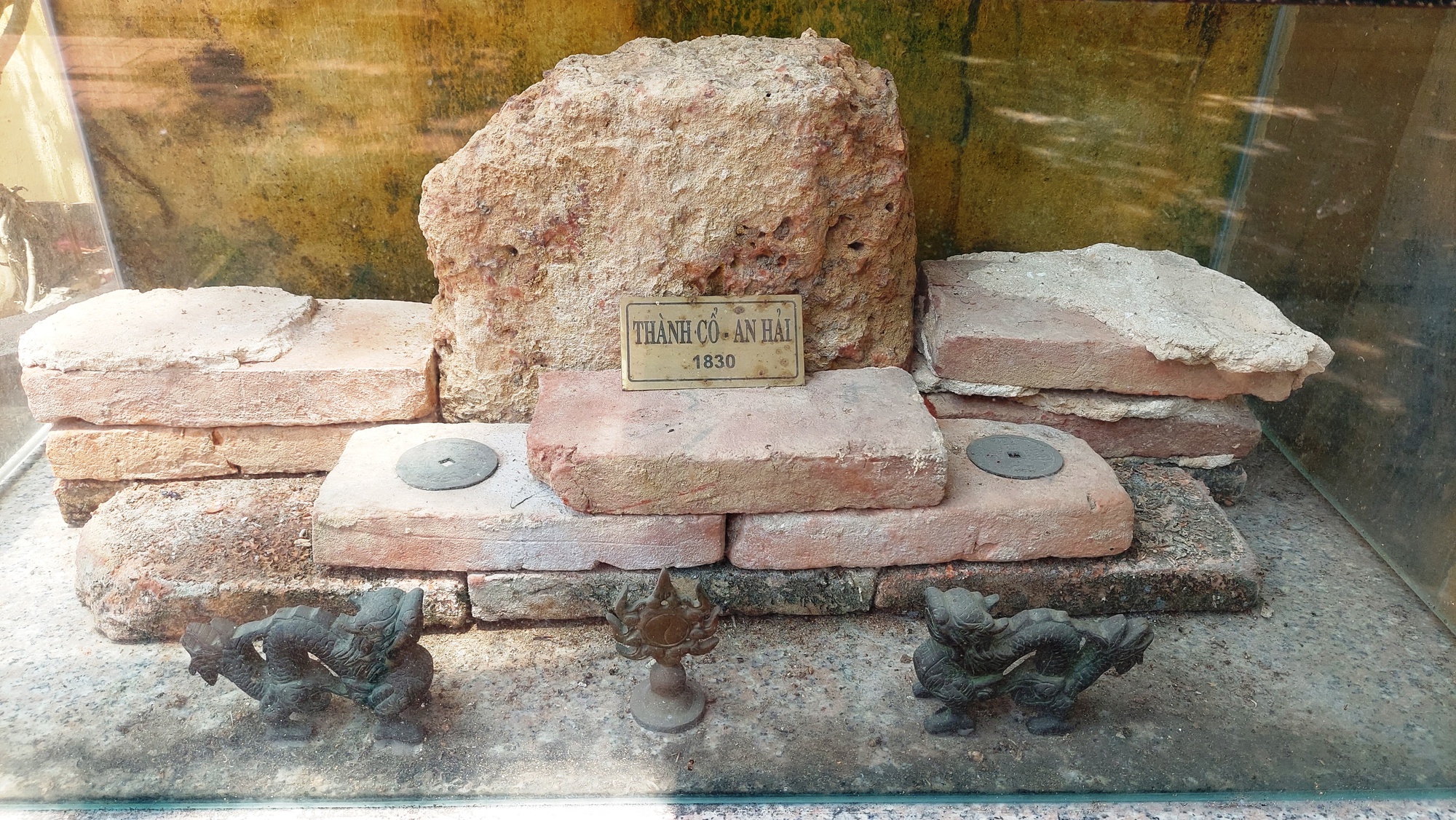
The remnants of the ancient An Hai citadel contribute to the rich historical significance of the two villages.
However, according to the artist, the residential area has long been neglected and is now dilapidated, with low living standards for residents, even a disorganized version of a civilized lifestyle. Therefore, it is necessary to provide systematic training for residents to engage in community tourism. The biggest goal of his project is to contribute to preserving the cultural features of the old Da Nang fishing village, diversifying the city's tourism products, and thereby improving and raising the living standards of the people through the sale of souvenirs, dried seafood, art products, food , homestay services, etc.
The people support the project.
Since 2017, Mr. My Dung's idea has been highly appreciated by the then Standing Vice Chairman of the Da Nang City People's Committee, Mr. Dang Viet Dung. Mr. Dung assigned the Son Tra District People's Committee to coordinate with the author and relevant functional departments to design the concept and conduct surveys to identify the identity and lifestyle of the people in the two fishing villages in order to guide its development. However, to date, this idea has not been implemented. Mr. Hoang Son Tra, Chairman of the Son Tra District People's Committee, said that he is currently reviewing the aforementioned proposal.
"I hope the project will be implemented so that foreign tourists will come to us because this coastal city has memories and a soul. The fishing villages of An Tan and An Don still exist there with their old-world charm and people with the distinctive character of the coastal region. In other words, I want to transform these two villages into a 'living museum' with people living their everyday lives, simple yet unique in the eyes of tourists," said photographer My Dung. With a relatively small budget, he is willing to work with the local government to seek socialized investment.
Mr. Huynh Dinh Quoc Thien, Director of the Da Nang Museum, also supports the idea of transforming An Tan and An Don into a living museum to preserve and promote the values of these two ancient fishing villages. The area surrounding the two fishing villages includes the temple of Ba Than Ha Xu (a city-level cultural and historical relic) located near the site of An Hai Citadel. This citadel, along with Dien Hai Citadel, was considered one of the two key defensive positions of the Nguyen Dynasty army during the resistance against the French in Da Nang. Combined with the historical significance and existing values of the two ancient fishing villages, this area, if renovated and preserved, will become an attractive tourist destination. "The most important issue is to create a cultural heritage space to provide a foundation for promotion," Mr. Thien emphasized.
Source link




























































































Comment (0)