

This was the concern expressed by Mr. Le Hoang Chau, Chairman of the Ho Chi Minh City Real Estate Association, at a seminar on the topic "Handling bad debts: What is the harmonious solution?", organized by Tien Phong Newspaper on May 27th.
Mr. Vo Hong Thang, Deputy General Director of DKRA Group, said that as of May, outstanding real estate loans in Vietnam reached over 1.56 trillion VND, an increase of approximately 260,000 billion VND compared to the end of last year, equivalent to a 20% increase. If the entire system's credit growth meets the target of 16% this year, the total outstanding real estate loans could reach 3.8-3.9 trillion VND. However, credit still mainly flows to real estate businesses, while people are not yet enthusiastic about borrowing to buy houses due to high prices.
Notably, the rate of non-performing loans in the real estate sector is increasing rapidly. Statistics show that the total non-performing loans of 27 listed banks have exceeded VND 265,000 billion, an increase of 18.5% compared to the same period last year.
"Real estate businesses are facing a 'mixed bag' situation. Loan interest rates have decreased by more than 2 percentage points compared to the end of 2023, helping to lower capital costs. The introduction of the 120,000 billion VND credit package for social housing and credit support policies from the State Bank of Vietnam have also contributed to this. However, many difficulties still weigh heavily on businesses, with increasingly stringent loan conditions, especially in the context of many companies' financial reports revealing weaknesses," said Mr. Vo Hong Thang.

Amid rising bad debts, businesses report that many banks are becoming increasingly cautious, only accepting real estate as collateral and remaining inflexible with other assets such as stocks or property rights.
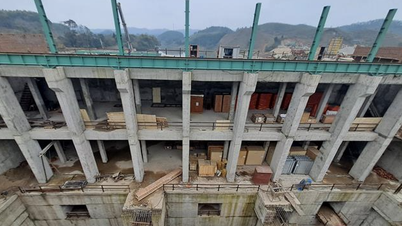
Mr. Le Hoang Chau observed that the situation of non-performing real estate loans is becoming increasingly complex, significantly impacting the stability of the financial market and the health of businesses. Without comprehensive and groundbreaking solutions, numerous unfinished projects will continue to be stalled, leading to a chain reaction affecting banks, investors, and workers.
"Handling bad debts is not just about debt recovery, but also about creating opportunities for market recovery. We propose that the Government consider issuing a specific mechanism to handle bad debts decisively and comprehensively. Many large-scale projects are stuck in a whirlwind of procedures and legal disputes, preventing banks from foreclosing and businesses from restructuring. The legal framework for handling collateral assets needs to be improved to ensure transparency and shorten the foreclosure process, including through public auctions or project transfers," said Mr. Le Hoang Chau.
According to Fulbright experts, when finalizing the Law on Credit Institutions, a balance should be struck between the bank's right to seize assets and the borrower's property rights.
This balancing act must be based on principles including: increasing risk coverage for banks, reducing the cost of capital for borrowers, and improving access to credit for the economy .
Dr. Do Thien Anh Tuan from the Fulbright School of Public Policy and Management noted that bad debt, also known as a "blood clot," persists year after year, causing damage to banks and those with collateral.
Assets that are frozen, seized, or sealed are clearly unusable and unprofitable, leading to waste. During the period 2017-2023, Resolution 42/2017/QH14 on piloting the handling of bad debts of credit institutions opened up a special mechanism, helping credit institutions handle assets more quickly and effectively.
"However, when the resolution expired at the end of 2023, the legal system immediately fell into a state of lacking effective handling mechanisms. It is necessary to codify the successes of Resolution 42 to ensure the legal right of banks to seize assets and also to ensure that the property rights of borrowers are protected," said Mr. Do Thien Anh Tuan.
Source: https://nld.com.vn/lo-du-an-bat-dong-san-dap-chieu-neu-no-xau-gia-tang-196250527143612139.htm



























![[Video] The craft of making Dong Ho folk paintings has been inscribed by UNESCO on the List of Crafts in Need of Urgent Safeguarding.](https://vphoto.vietnam.vn/thumb/402x226/vietnam/resource/IMAGE/2025/12/10/1765350246533_tranh-dong-ho-734-jpg.webp)
































































Comment (0)