Incense burning in the ground
And from there, I recall the days gone by, from the distant past when Can rice was cultivated in Quang Nam province. I say distant past, but only about half a century ago, Can rice, along with other varieties like Chiem rice, Loc rice, and Tri rice, reigned supreme on the scorching, sun-drenched, and flood-prone fields of Quang Nam. Speaking of Can rice, who doesn't remember the saying, "First, Can rice; second, the liver of the goby fish." The sweet, delicious, and nutritious qualities of Can rice seem to have been mysteriously accumulated in nature through harsh sun and rain, passed down from generation to generation.
When rice seeds are sown in the ground, they adapt to the climate, weather, and soil, "adjusting" themselves to germinate, grow ears, pollinate, and flower, as a natural process of survival.
To prepare for the dry rice crop, the fields are plowed and tilled under the scorching summer sun after the Dragon Boat Festival. After plowing or hoeing, farmers use heavy wooden mallets to break up the soil before harrowing it horizontally and sowing the seeds. The dry soil, with its large, lumpy clumps, is flung open by the harrow's teeth; dust blankets the fields in the intense heat, clinging to the faces and backs of the farmers' sweat-drenched, faded shirts… Thus, one can better understand the hardship and toil of cultivating dry rice during the dry season.
After being sown in the dry, barren fields, the rice plants huddled together, waiting. When the raindrops, accompanied by thunder, finally fell, they began to sprout and grow, breathing in the essence of the earth and sky to flourish. But the challenges didn't end there. When the rice plants had formed panicles, bloomed, and were in their milky stage, storms began to sweep across the fields. The rice plants silently endured, bending and falling with the water to protect themselves. After the flood, they rose again, basking in the sun until the grains ripened.
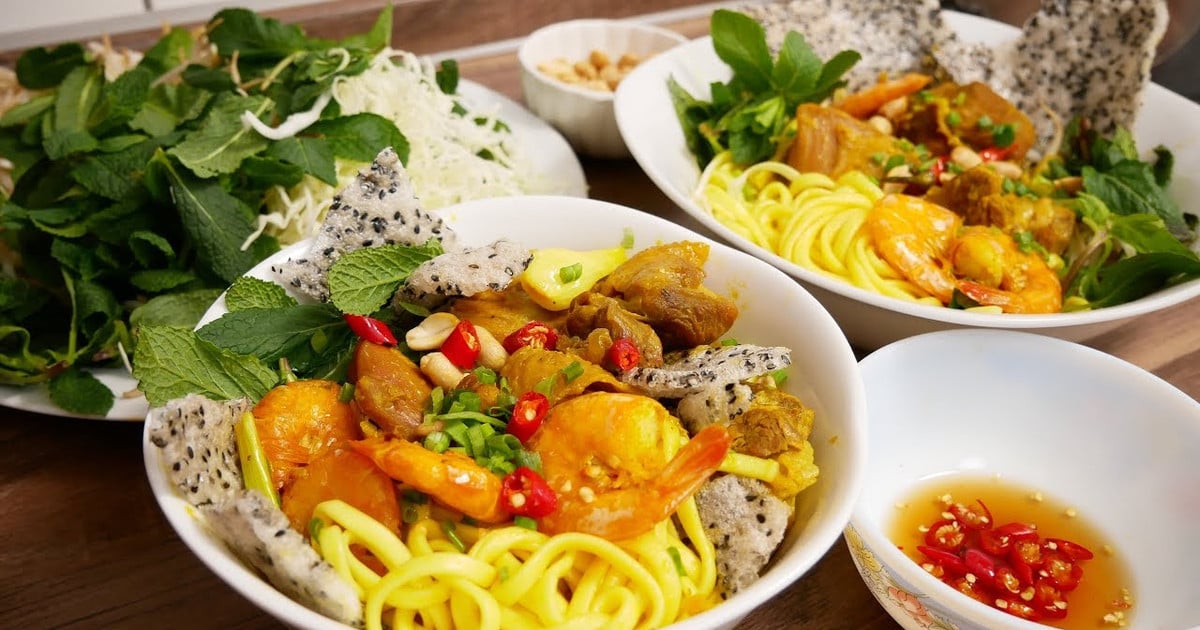

The fragrant rice, nurtured in the hot earth, battered by storms and floods, blends with nature to thrive, thus absorbing the essence of heaven and earth. The offering of the new rice crop in the tenth lunar month each year is also a celebration of the long-term rice harvest finally being harvested and stored. The new rice offering ceremony is a custom passed down through generations from the Cham people who practiced agriculture , and adopted by the Vietnamese when they came to new lands. Because the soul of the rice is like the soul of the people. It is also a way to thank heaven and earth for the abundant sunshine and rain that allowed the rice to grow, in harmony with the relationship between humans, nature, and the divine. And an indispensable dish on this occasion is Quang noodles.
Steeped in memories
Now, with life changing, sitting and picking up a strand of Quang noodles made from Can rice, I reread the notes still preserved on each page to remember more. For example, the book "Quang Cuisine" compiled by the Da Nang Folk Arts Association states: "Quang land has a top-quality rice variety that has entered the proverb 'Can rice is the best, second only to the liver of the goby fish'"; or the book "Traditional Crafts and Villages of Quang Land" by the same association also records: "The land is mainly used to cultivate Can rice, black rice, Loc rice, and Ngu rice, among which Can rice is famous for its delicious aroma."

But that's just a story from books. The sun and rain that accumulate in the rice grains have given the rice a unique sweetness, a sweetness that is now even more deeply ingrained in the distant memories of those who have passed through that region.
Since the Phu Ninh large-scale irrigation project provided ample water and the agricultural revolution flourished, short-duration rice varieties and high-yield crops have taken over the fields of Quang Nam province. Traditional rice varieties have been pushed out of the race. Only those who are nostalgic for the past, who lived in harmony with nature to cultivate goodness and live in tune with the earth and sky, still "play" with this rice variety. Among them, the farmers of Dai Loc district are still the ones who "dare to play" with this rice variety.
Sitting beside a smoky rice husk-fired noodle-making oven, Mrs. Tao Thi Nhon from My Hao village, Vu Gia commune, confided: "Making noodles by hand with rice is very hard work. Even an old woman like me can only make about fifteen kilograms a day, but I'm happy because I'm still preserving my old rural traditions."


She explained that her family's business isn't the only Quang-style noodle maker using can rice in the area. However, making delicious noodles requires a secret recipe. During the harvest season, she goes directly to can rice growers to buy the rice, then stores it in earthenware jars or mills it and mixes it with other types of rice, such as xuyet rice, in a specific ratio. Only then will the noodles have the right consistency – smooth, chewy, and fragrant, not hard, mushy, or falling apart. A bowl of Quang-style noodles made with can rice is therefore not only nutritious but also evokes a rich memory of the countryside… The noodles she makes are partly for restaurants and locals, and partly sent to those who have left their hometowns to work in distant cities, to help them feel less homesick…
Picking up strands of rice noodles in the spring sunshine, after months of relentless rain and flooding, the scent of the village lingers warmly in my mind…
Source: https://baodanang.vn/lua-can-am-mai-huong-lang-3328091.html