


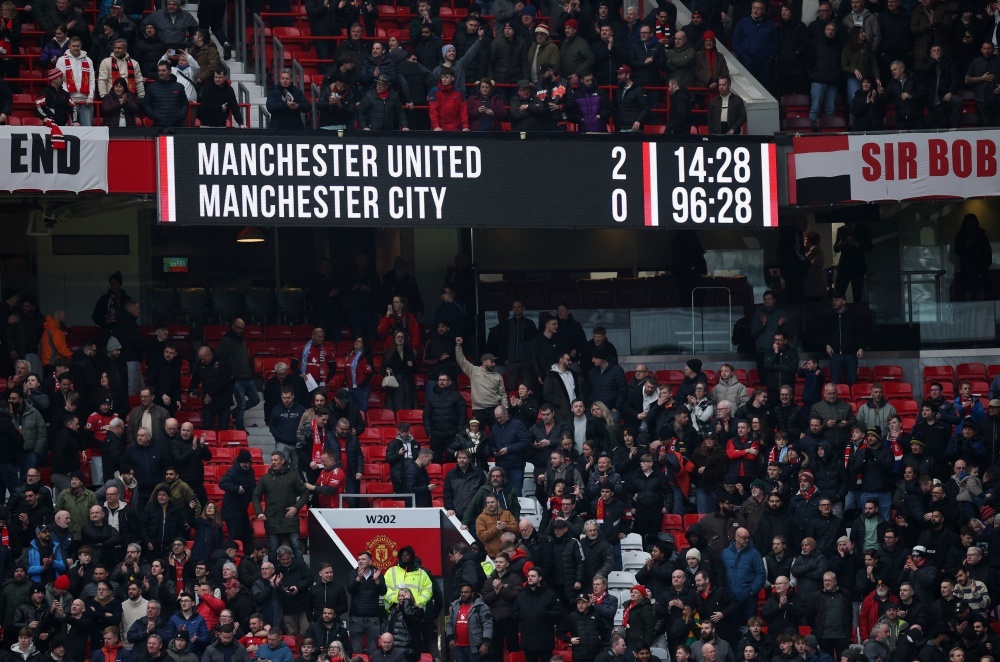
Carrick only started working directly with the Manchester United squad mid-week, but what his team showed in the 2-0 victory in the Manchester derby demonstrates a clear shift in their playing philosophy. This is no longer the hesitant, indecisive, and directionless team that has plagued Manchester United throughout a turbulent 2025.
Clear structure, clear discipline
The Manchester Derby has long had the potential to expose Manchester United's true nature. When the opponent is Manchester City, all tactical disguises become meaningless. Either play with clear conviction, or the team will be swept away. This time, MU chose to enter the game with a rare sense of certainty and proactiveness.
Gone was the persistent feeling of deadlock that often plagued MU in matches where they were forced to control possession and break down low defensive blocks. Against Manchester City, they didn't try to dominate the game. They accepted space, accepted pressure, but in return, they displayed clarity in every action.
Fans at Old Trafford were quickly drawn into the intensity of the home team's defense. Every time they lost possession, MU immediately huddled together, concentrating their players to protect their four-man backline.
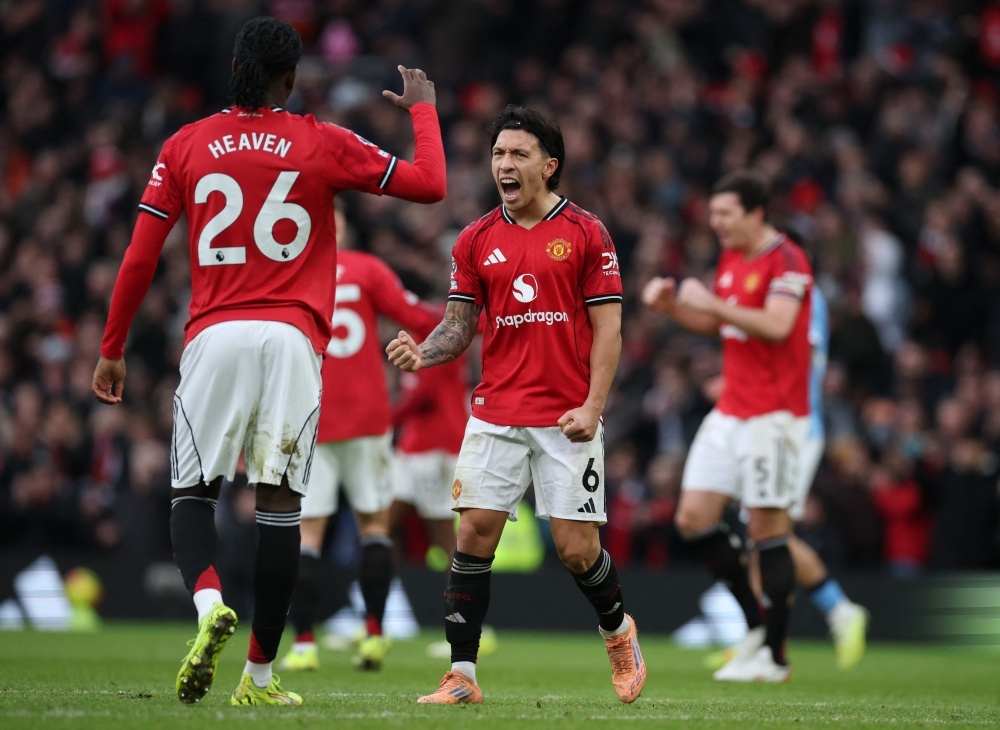
Casemiro, Harry Maguire, Lisandro Martínez, and their teammates didn't hesitate in tackles, blocking shots, and engaging in one-on-one challenges. This is a Manchester United team ready to "throw themselves" into the game, ready to endure pain to survive in a big match.
|
MU won 2-0 in the Manchester derby on the evening of January 17th. |
In the context of modern Manchester derbies, which often follow a familiar pattern of Manchester City controlling possession and MU defending and counter-attacking, Carrick didn't try to break that pattern. He capitalized on it.
MU started with a 4-2-3-1 formation, with Bryan Mbeumo playing as the lone striker. When out of possession, the system quickly switched to a 4-4-2. Bruno Fernandes played a central role in regulating the intensity of the pressing: when to push forward to apply pressure, and when to drop back to maintain the team's shape. MU didn't press indiscriminately, nor did they passively wait for opportunities.
The two flanks were the tactical highlight. Diogo Dalot and Amad Diallo constantly sought to penetrate the space behind the Manchester City defense on the right wing. On the opposite side, Lisandro Martinez not only defended but also proactively launched early long passes, exploiting the space behind the opposing midfield.
MU ended the first half with only 28% possession. But that wasn't a sign of inferiority. Carrick didn't want his players to pass the ball to "maintain the tempo." He wanted them to pass the ball to break through. Every attacking move had a clear purpose, targeting Manchester City's weaknesses as the visitors were forced to adapt in transitional phases.
That approach allowed MU to defend in an organized manner, without panicking, while simultaneously launching quick and direct attacks. The only thing missing in the first half was a goal.
Harry Maguire nearly opened the scoring with a header that hit the crossbar from a corner. Amad Diallo had a goal disallowed for clear offside. Bruno Fernandes was then denied a goal in a much closer chance, believing he had timed his run perfectly. But the positive signs are undeniable.
Manchester City were lackluster, while MU were sharp.
Conversely, Manchester City were not themselves. This was partly due to the pressure exerted by MU, and partly due to the intense atmosphere at Old Trafford, which stifled the visitors' usual rhythm.
|
MU deserved to win 3 points against Man City. |
Manchester City tried to ease the game by bringing Bernardo Silva and Rodri into the center of possession, while also bringing Rico Lewis inward to support build-up play. But this wasn't a game where they could just close the door as they pleased.
Rodri had a poor first half, with a rare careless pass creating a dangerous opportunity for MU. Even after improving after the break, Manchester City still had major problems with ball control around the penalty area. Their lack of sharp passing left them with almost no hope of scoring despite the flow of the game.
Manchester United is different. They build a solid foundation from the first half to explode in the second. The goals that follow are not moments of improvisation, but the inevitable result of a consistently executed plan.
One match is certainly not enough to definitively say that Michael Carrick has completely solved Manchester United's biggest problems. But with 17 games remaining to compete for a Champions League spot, this is a strong statement.
Carrick didn't promise anything grand. He simply brought MU back to its old habits: discipline, organization, fighting spirit, and courage. Sometimes, to move forward, a team just needs to remember who it used to be.
Source: https://znews.vn/ly-do-mu-thang-derby-manchester-post1620633.html































































































Comment (0)