A new direction from coconut nectar
Born and raised in Can Gio, a region famous for its mangrove forests recognized by UNESCO as "Vietnam's first World Biosphere Reserve," Tran Thanh Lieu was deeply concerned to see the area of nipa palm forests in her hometown shrinking. The potential of the nipa palm tree remains largely untapped; only the leaves are used by locals for roofing, while the coconut flesh is sold to tourists.
Driven by a desire to promote her hometown's specialties to a wider audience, Tran Thanh Lieu and a friend came up with the idea of producing canned products from coconut pulp. Initially, Thanh Lieu balanced her job at the Vietnam National University Ho Chi Minh City while starting the business. While her friend handled technical research, Thanh Lieu focused on sales and production. The more she worked, the more passionate she became about business. They continued their research and discovered that the sap of the coconut tree could be used to produce vinegar, wine, spirits, and sugar. This discovery opened up a new direction for them. In 2019, Ms. Lieu decided to quit her job at the university to dedicate herself entirely to the business.
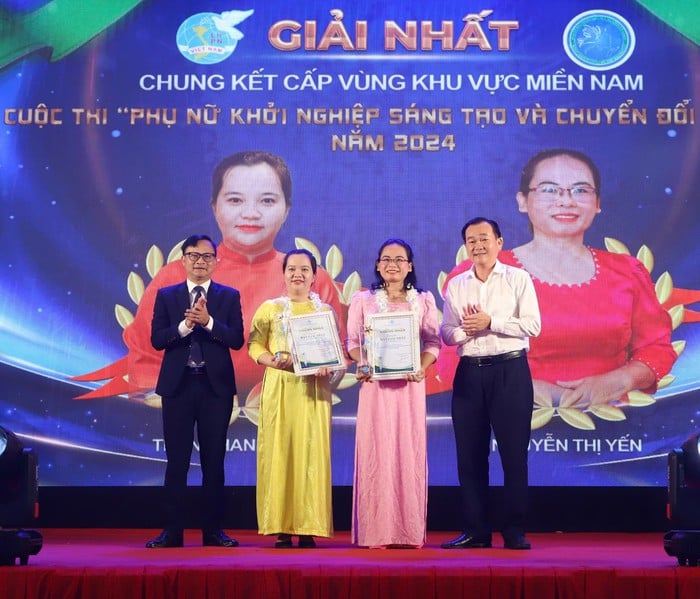
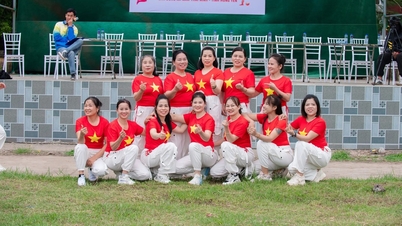
In 2024, Ms. Tran Thanh Lieu's project (second from the left) won first prize in the "Women's Creative Entrepreneurship and Green Transformation" regional competition in Southern Vietnam.
"It took about two years of research, both caring for the coconut trees and monitoring the sap extraction process, before we produced our first bottles of coconut sap. Despite the many difficulties, when we thought about how we could contribute to the sustainable development of our homeland's mangrove forests and see people have jobs right on their native land, we overcame all the hardships," recalled Tran Thanh Lieu, Deputy Director of Vietnipa Coconut Joint Stock Company.
In fact, in the early days of their startup, very few people saw the opportunity in the project that her team had painstakingly researched. Ms. Lieu shared: "Once, I met a farmer. He was surprised when I suggested keeping the coconut stem to cultivate the sap. He even laughed and said, 'I've been cutting coconuts since before you were born. For generations, no one has ever done that; coconut trees don't produce sap.' But with our perseverance, especially when people saw the product and tried it, they changed their minds."
"I realized that you should never think you've done your best because you can always do better. Every task completed is a learning experience, every step taken is an opportunity to improve yourself. Entrepreneurship is a journey of continuous learning, and you can't afford to be complacent."
Ms. Tran Thanh Lieu , Deputy Director of Vietnipa Coconut Joint Stock Company
Not only outsiders but even family members were skeptical about Thanh Lieu's decision to change direction. Her parents' worries were understandable, as their daughter had a stable job, yet suddenly wanted to give it all up to pursue a business selling a type of tree that many people in her hometown were planning to cut down to clear land or switch to aquaculture… Thanh Lieu faced a difficult choice. "I had to persistently convince my parents, and only when they saw my product becoming more and more well-known, and saw me participate in startup competitions and win high prizes, did my parents feel reassured. And now, wherever they go, my parents bring my products to introduce," Ms. Lieu confided.
After 6 years of establishment and development, Vietnipa Coconut Joint Stock Company has increasingly diversified its products, with product lines such as: ready-to-drink coconut water, organic coconut water syrup, organic concentrated coconut water syrup, organic diet coconut water sugar… Currently, the company's products are sold in many supermarket chains such as CoopMart, Go, Satra Mart, Emart... In 2024, Ms. Lieu's "Organic Coconut Water Sugar" project won first prize in the "Women's Creative Entrepreneurship and Green Transformation" competition at the regional level in the South and third prize at the national level. Ms. Lieu said: "The difference of the product is that it contains many natural minerals, helping to replenish water and minerals when tired, and supporting weight loss according to medical guidelines. Coconut water syrup is suitable for people on diets and people with diabetes."
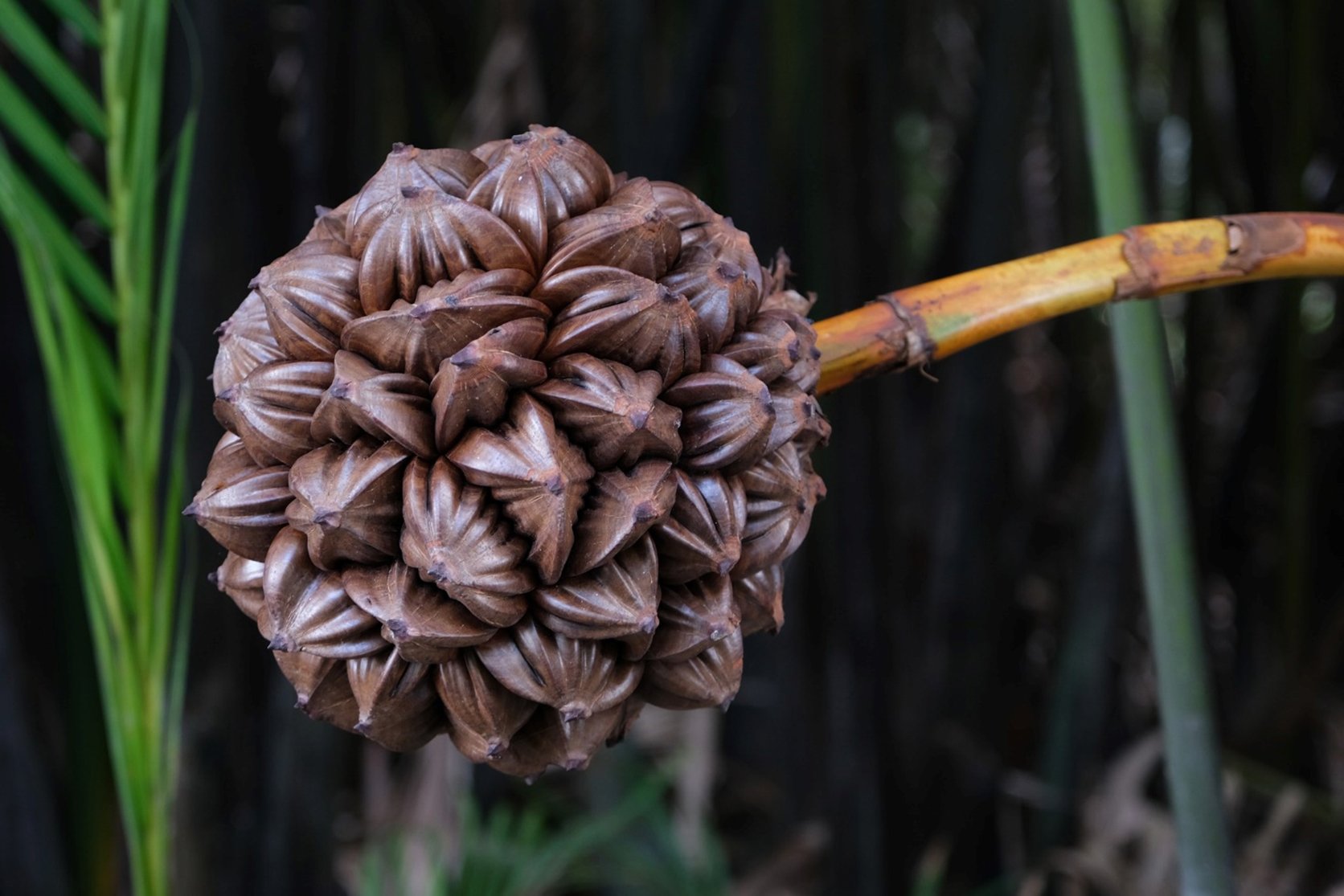
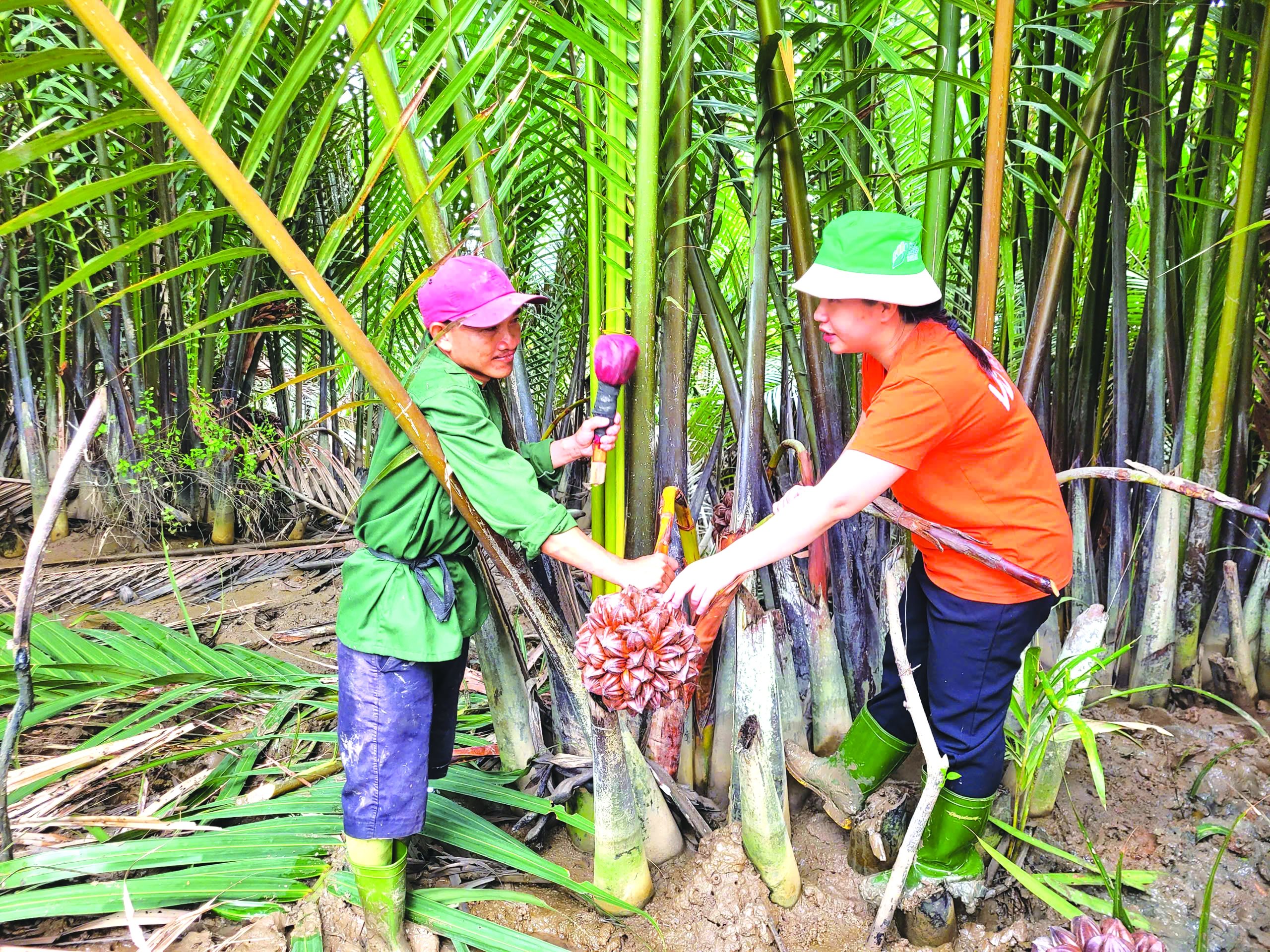
Ms. Lieu instructs farmers on harvesting coconuts and the process of extracting coconut sap.
Beyond profit, her project also aims to protect the riverside ecosystem, enhance the value of nipa palm trees, and promote sustainable development. Nipa palm trees grow naturally, with each clump producing many bunches of fruit, which sprout into seedlings when they fall. Thanks to a rational harvesting process combined with technical guidance, Ms. Lieu and her colleagues have implemented a model of greening empty areas by cultivating seedlings, contributing effectively to the development of the raw material region. Currently, the project provides employment for 25 permanent workers and dozens of seasonal workers.
"My greatest joy is creating jobs for local women. Previously, many women were only housewives or had to leave their hometowns to make a living. Now, they have livelihoods right in their hometowns, with various jobs such as packaging products or caring for plants. Our project has partnered with local farmers, guiding them on techniques for caring for coconut trees, helping them earn a stable income without having to leave their hometowns to work far away," Ms. Lieu said excitedly.
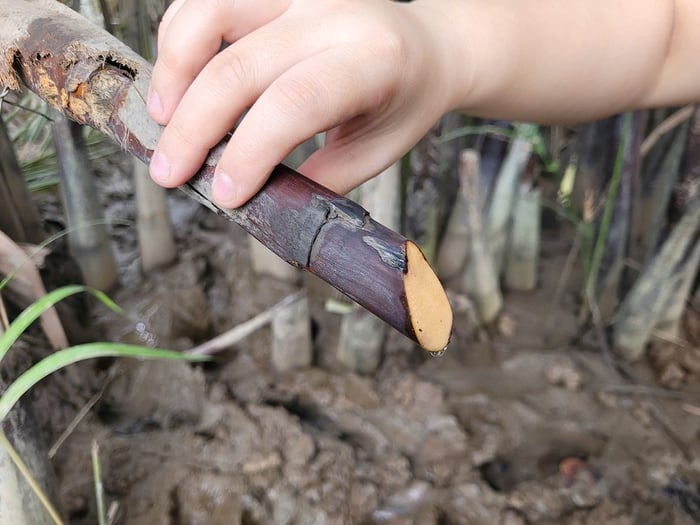
Coconut nectar is secreted from the stem of the coconut tree.
Opportunities to promote products through startup competitions.
For Ms. Lieu, participating in "Women Entrepreneurs" competitions is not only a channel for promoting her products but also an opportunity to reflect on her entrepreneurial journey and learn valuable lessons for the future. In fact, the process of preparing her application for the "Women Entrepreneurs" competition helped her assess her achievements and determine her next steps. Entrepreneurship competitions also open up opportunities to introduce her project to the community of women entrepreneurs – a potential customer group that her company is targeting. In particular, when presenting her project to the judging panel, she was able to introduce and promote the value of the unique plant species of Can Gio.
One of the lessons Ms. Lieu has learned from her entrepreneurial journey is that, in addition to external factors, internal strength is also very important. A project that wants to develop sustainably needs to be connected to the community, not only in terms of economic value but also in terms of linking and attracting the participation of local farmers. Entrepreneurs themselves must constantly strive and learn every day; each completed task is an opportunity to learn from experience, and each step is a chance to improve themselves.
You may not know this, but the lifespan of a nipa palm tree can reach 50 years. However, due to its continuous growth, the nipa palm fruit falls off and is replaced by a new sapling, so it can be harvested indefinitely. If properly cared for after harvesting, the nipa palm stem can continue to live for another 30 days, secreting about 1 liter of sap per day.
Source: https://phunuvietnam.vn/mat-ngot-tu-vung-dat-can-gio-20250411122758504.htm













































































Comment (0)