

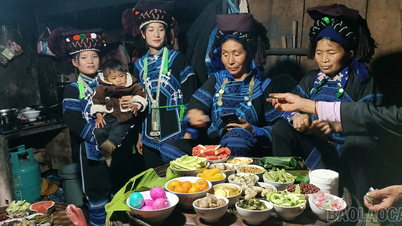
According to the Cao Lan people's beliefs, after a year of hard work in the fields and hills, Tet (Lunar New Year) is a time for everyone to rest, reunite, visit, and wish each other good fortune. Therefore, preparations for Tet are always very thorough. Every household stockpiles plenty of food and supplies, hoping for a prosperous and peaceful new year.
In the final days of the year, the Cao Lan villages are bustling with preparations for the Lunar New Year. Women in the villages take turns helping each other with the work, completing the spring rice planting and cleaning their houses. The elderly and children also participate in tasks within their capabilities, everyone hoping their homes will be as tidy as possible to welcome the New Year.
From around the 24th day of the 12th lunar month, many families begin wrapping banh chung (traditional Vietnamese rice cakes). Banh chung is an indispensable dish in every Cao Lan family. Unlike the square banh chung popular with the Kinh people, Cao Lan banh chung is usually wrapped in a long, cylindrical shape, not only for eating during Tet (Lunar New Year) but also as offerings to ancestors and gifts to relatives on both sides of the family.
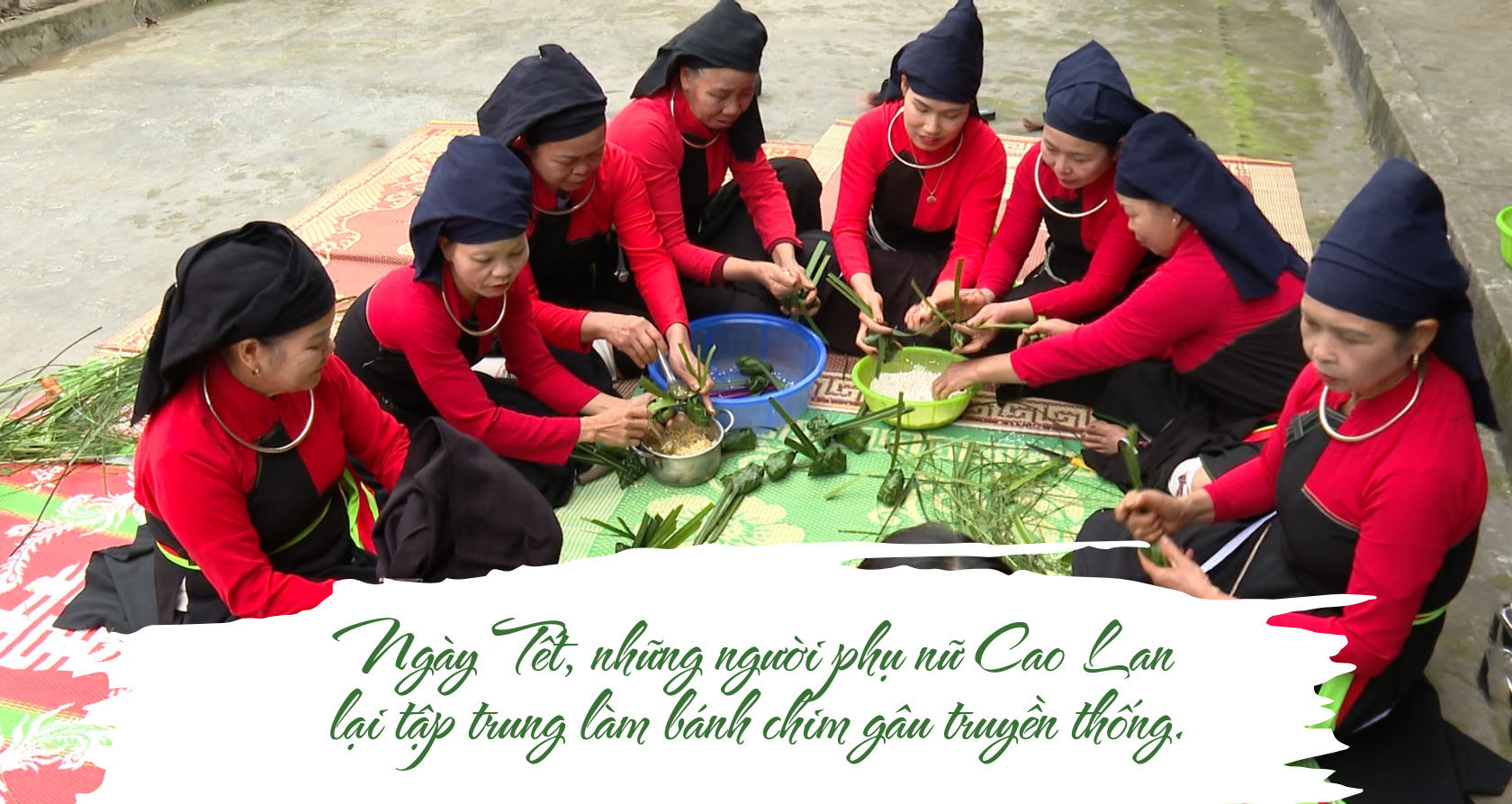
Besides banh chung (square sticky rice cake), banh gai (thorny sticky rice cake) and banh mat (honey sticky rice cake) are also familiar cakes in the Tet (Lunar New Year) feast of the Cao Lan people. All are made from sticky rice, but each type of cake has its own unique flavor, creating richness in Tet cuisine .
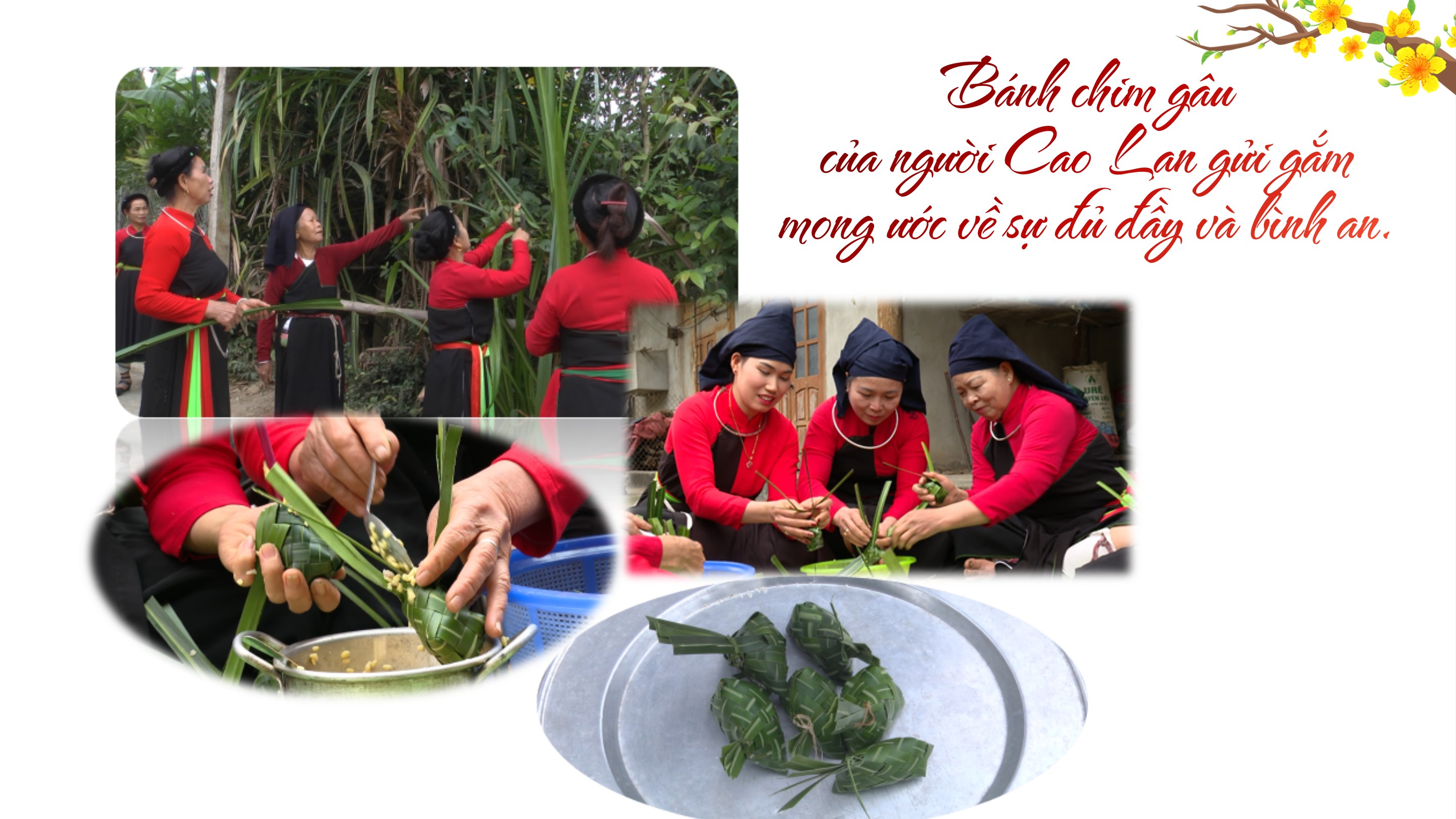
In particular, the Cao Lan people have a type of cake that bears the strong imprint of their ethnic culture: the "chim gâu" cake, made from glutinous rice with a filling of mung beans and meat. The most elaborate part of making this cake is creating the mold. The mold must be woven from wild pandan leaves (a plant that usually grows in the forest, but now many people also cultivate it around their homes for easier harvesting). The leaves are washed, the thorns are removed, and they are split into small strips, then skillfully woven into the shape of a "chim gâu" bird. Next, the baker fills the mold with rice, mung beans, and meat, then boils it until cooked. "Chim gâu" cake is an indispensable dish on the Tet (Lunar New Year) feast table, during festivals, or as a gift at the beginning of spring, conveying wishes for abundance and peace.
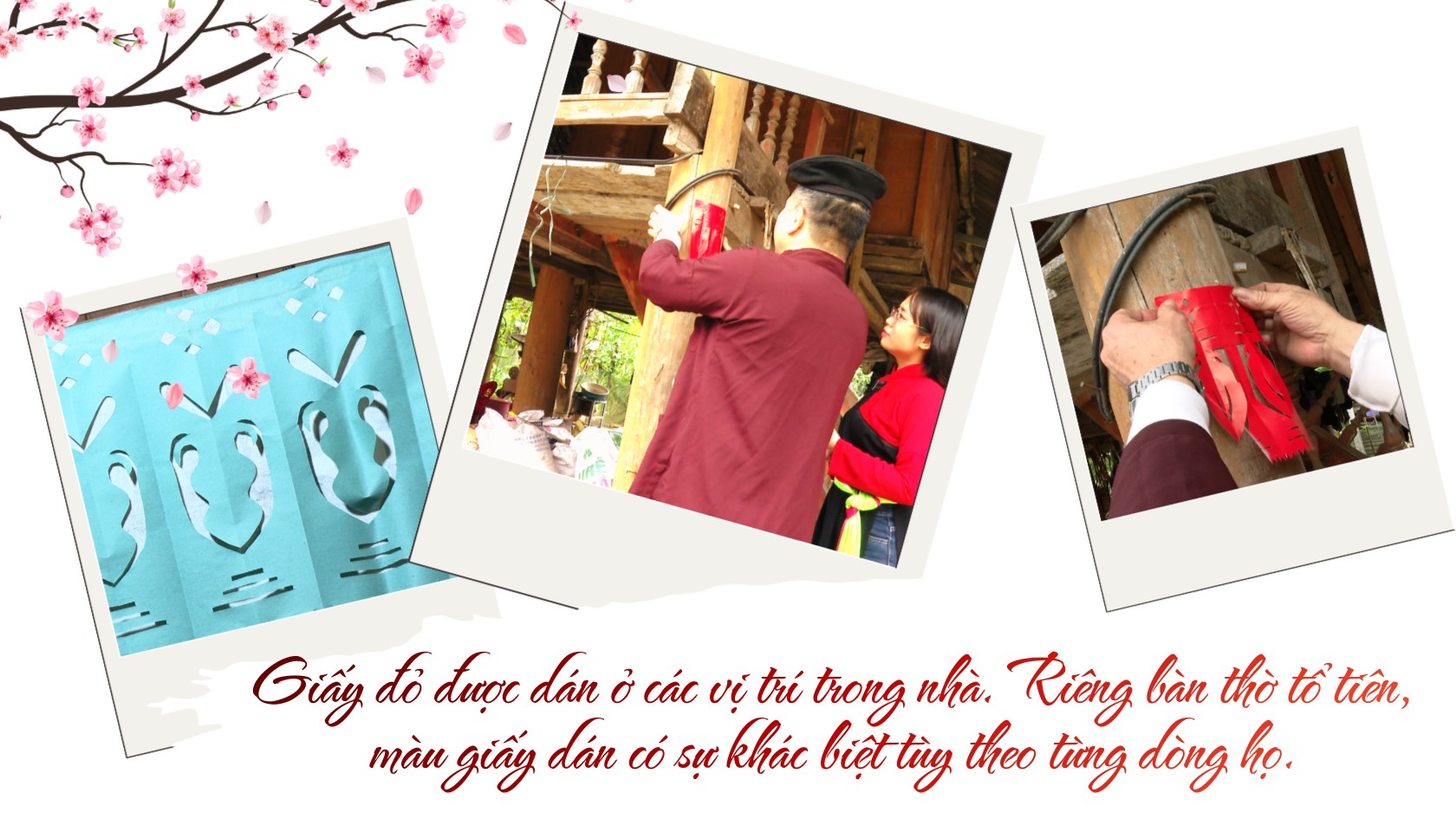
Another unique custom of the Cao Lan people during Tet (Lunar New Year) is the practice of pasting red paper. This task is usually undertaken by the men in the family. The red paper is cut into various patterns such as five-petaled flowers, serrated edges, circles, zigzags, etc., depending on each family's choice. The people believe that red, the color of luck and happiness, will bring vitality and energy to the new year.
Around the 28th or 29th of the twelfth lunar month, most items associated with daily life and production in families are decorated with red paper, such as house doors, gates, millstones, knives, hoes, plows, livestock sheds, and even fruit trees in the garden... The entire house and garden seem to be "dressed" in vibrant red, signaling the arrival of spring.
According to the Cao Lan people's beliefs, pasting red paper is not only meant to ward off evil spirits, wild animals, and insects, but also a way to show gratitude to the tools that have accompanied them throughout the year. Red paper symbolizes joy, good fortune, prosperity, and a bountiful harvest.
Regarding the ancestral altar, the color of the paper covering varies depending on the lineage, and can be red, blue, or white. This detail clearly reflects the spiritual element and respect for age-old customs within the Cao Lan community.
The 30th day of the Lunar New Year is the most important day of the year. From early morning, all family members are busy cleaning and decorating the house and setting up the ancestral altar. The altar also features a tray of five kinds of fruit, sweets, peach blossoms or fresh flowers, expressing wishes for a peaceful and happy new year.
On the afternoon of the 30th day of the Lunar New Year, families are busy preparing the ancestral worship feast and the New Year's Eve meal. Depending on the lineage, the offerings vary, but a pig's head or a rooster is an indispensable offering. This is how descendants express their respect and gratitude to their ancestors for protecting and blessing the family throughout the past year.
On the first day of the Lunar New Year, the Cao Lan people mainly spend their time offering incense to their ancestors and wishing their relatives a happy new year. After the ceremony, the whole family gathers around the feast, children and grandchildren wish their grandparents a happy new year, and adults wish the younger ones a happy new year.
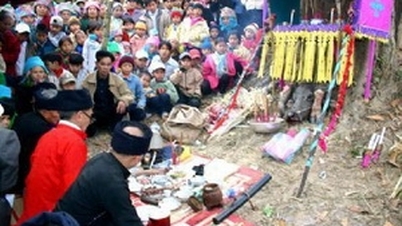
On the second day of Tet (Lunar New Year), families gather at the village communal house to prepare offerings to the village guardian deity. The village elder presides over the ceremony, praying for a year of favorable weather, bountiful harvests, and peaceful lives for the entire village. Each person who comes to the communal house contributes 300 grams of pork; after the elder's ceremony, everyone prepares the feast, eats, celebrates Tet, and welcomes spring.
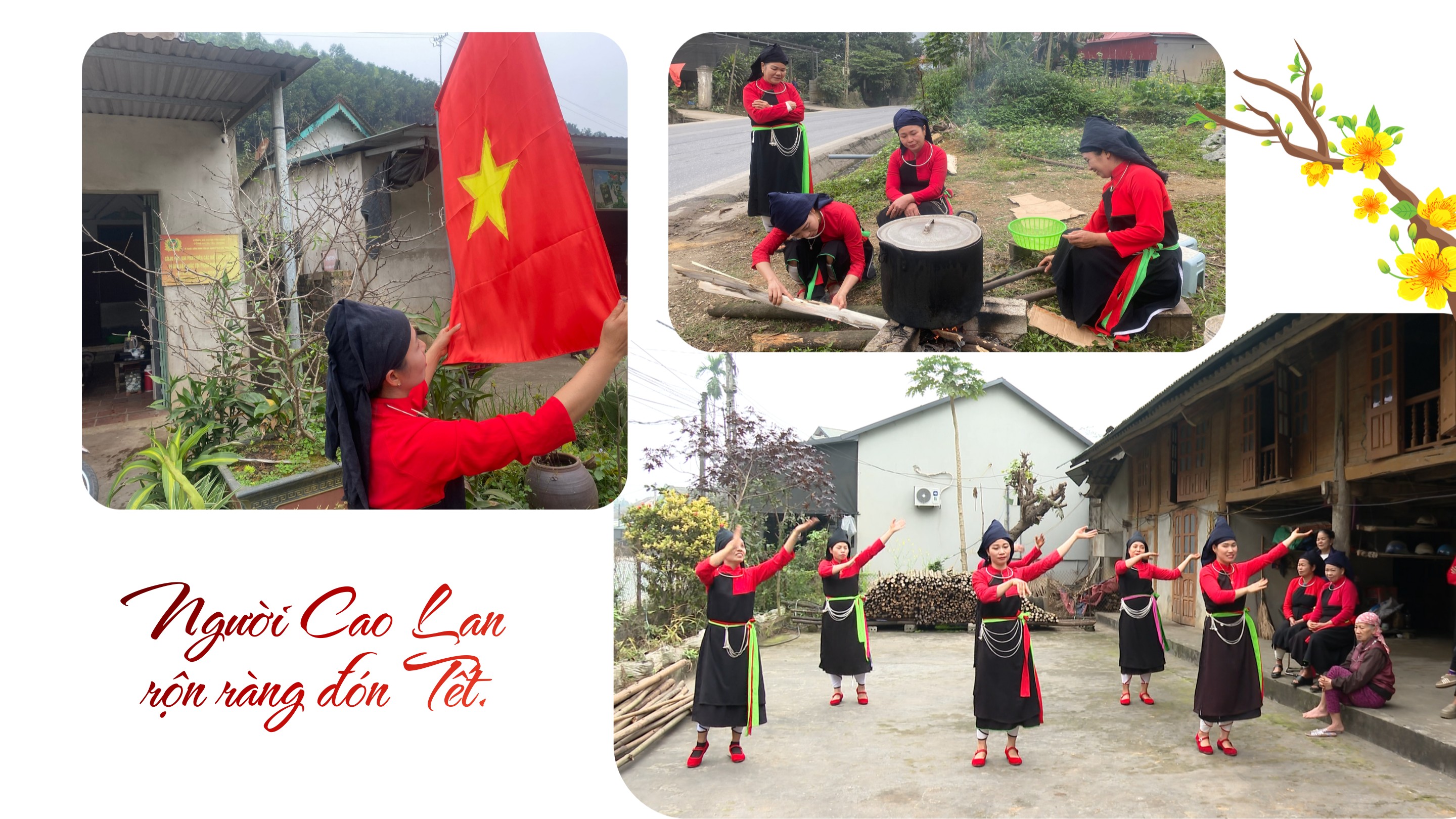
In the early days of spring, the Cao Lan villages are bustling with the Rice Planting Festival. Women, dressed in their traditional ethnic costumes, participate in folk games such as tug-of-war, stick pushing, spinning tops, and rice planting competitions. The spring atmosphere is further enlivened by cultural performances, familiar dances such as the shrimp-catching dance, the dove dance, and especially the smooth and soulful Sinh Ca melodies.
Today, some of the Cao Lan people's Tet customs have been adjusted to suit new living conditions. However, the core values of culture, beliefs, and community spirit are still preserved and passed down through generations, creating a unique identity for the Cao Lan people amidst the flow of modern culture.
Source: https://baolaocai.vn/tet-cua-nguoi-cao-lan-post893424.html





















































Comment (0)