

Addiction is getting younger and younger.
Recently, on the afternoon of March 30th in An Giang , a 23-year-old man exhibiting signs of methamphetamine-induced psychosis stabbed his own father, causing serious injuries. Prior to that, on March 29th, the police in Thu Dau Mot City (Binh Duong) arrested a young man under the influence of methamphetamine who attacked police officers and set fire to a convenience store. These are just two of many heartbreaking incidents resulting from the effects of methamphetamine.
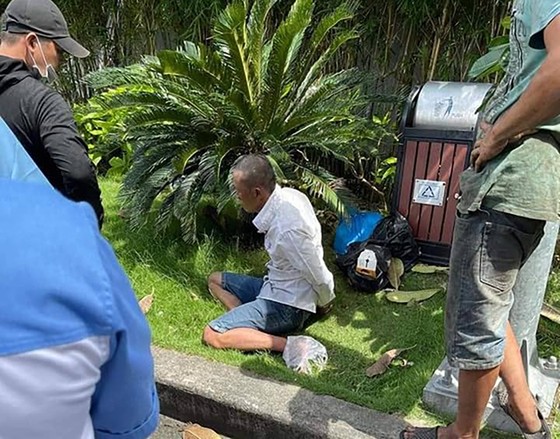 |
Police in Binh Tan District, Ho Chi Minh City, apprehended a suspect who tested positive for drugs and used a knife to stab three people, causing injuries. (Photo: CHI THACH) |
Statistics from the Department of Social Evils Prevention (Ministry of Labour, Invalids and Social Affairs) show that in 2022, there were more than 262,000 drug addicts, people under post-rehabilitation management, and people illegally using drugs nationwide. According to a representative from the Drug Crime Investigation Department of the Ministry of Public Security , currently, 70%-80% of drug addicts in Vietnam use synthetic drugs. Alarmingly, the number of addicts is getting younger and younger. Among registered drug addicts, those under 16 years old account for 0.1%; those between 16 and under 35 years old account for 76%. Surveys in three major cities – Hanoi, Ho Chi Minh City, and Hai Phong – show that the age at which many teenagers begin using methamphetamine is between 16.4 and 17.3 years old. Another survey shows that 47% of students believe that methamphetamine and synthetic drugs are not harmful or addictive.
At the Nhi Xuan Social Center (Ho Chi Minh City), from 2017 to the present, the unit has received an average of 6,000 drug addicts for detoxification and healthcare each year. Among these, the number of drug addicts exhibiting mental disorders has increased over the years. According to the doctors treating them, synthetic drug addicts share common characteristics such as complex psychological states like depression, anxiety, obsessions, irritability, poor memory, delirium, incomprehensible speech, and self-harm. Many trainees exhibit aggressive behavior, shouting during interactions, and engaging in fights with other trainees. 90% of the incidents involving disruptive trainees have a history of psychosis or are currently undergoing treatment for psychosis. Ms. LXM (55 years old, residing in District 8, mother of a 19-year-old patient undergoing drug detoxification treatment at Nhi Xuan Social Facility) expressed: "Crystal meth has driven my son insane. Sometimes he sits dejectedly crying alone, other times he screams, smashes things, and chases after his parents and siblings."
Causes psychosis and brain damage.
According to Associate Professor Dr. Nguyen Van Tuan, Director of the Institute of Mental Health, Bach Mai Hospital, previously, the main addictive substance was opium, later heroin was added, but now there are hundreds of different synthetic drugs disguised in many forms such as e-cigarettes, marijuana, synthetic cannabis, "happy water," ecstasy, hallucinogenic mushrooms, laughing gas, etc. According to Dr. Huynh Thanh Hien, from the Ho Chi Minh City Mental Hospital, methamphetamine stimulates the central nervous system and causes hallucinations in users, altering their behavior and attitude. More dangerously, the stimulants in methamphetamine have high toxicity to the brain; long-term use can easily lead to mental illnesses, depression, and panic attacks. Psychosis, also known as "meth psychosis," is divided into two main states: those experiencing methamphetamine psychosis may suffer from depression, constant anxiety, sadness, solitude, and may even attempt suicide. In addition, those under the influence of methamphetamine experience hallucinations, delusions, and severe mental and neurological agitation. They often scream, climb on things, attack people without reason, and even commit murder…
Currently, there is no specific drug to treat methamphetamine addiction worldwide, and there is no fixed standard for the duration of treatment to completely cure psychosis. The treatment time for psychosis varies from case to case; some respond well, others poorly, or not at all. According to Dr. Le Thi Thu Ha, Head of the Addiction Treatment Department at the Institute of Mental Health, Bach Mai Hospital, the most important factor in treating drug addicts, especially methamphetamine addicts, is family and community support. Patients with attentive family care and close cooperation with doctors have much better treatment outcomes and a reduced likelihood of relapse. “Currently, patients with mental disorders caused by methamphetamine and ecstasy are treated according to a specific protocol from the Ministry of Health , lasting from 7 to 12 days. Depending on the patient's condition, treatment includes chemotherapy, psychotherapy, and brain modulation. Brain modulation involves using electrical currents to stimulate the patient's brain, and when combined with medication, the patient's condition improves,” said Dr. Le Thi Thu Ha.
Clinical manifestations of methamphetamine-induced psychosis.
According to Dr. Nguyen Manh Hung of Mai Huong Day Psychiatric Hospital (Hanoi), the clinical manifestations of drug-induced psychosis are very diverse, depending on the drug used and the type of psychosis. Initially, drug-induced hallucinations often manifest as occasional "o...o..." or "u...u..." sounds in the patient's ears. Gradually, these rudimentary hallucinations become more frequent throughout the day, their intensity increases, and they develop into speech hallucinations. Patients hear whispering voices in their ears. These voices may speak about the patient: praising, criticizing, cursing, threatening, or instigating and ordering the patient to do something dangerous such as hanging themselves, climbing a high-voltage power pole, or committing murder. Therefore, many patients, unable to control themselves, are controlled by the hallucinations and engage in actions dangerous to themselves and those around them.
The buying, selling, and use of drugs is becoming increasingly complex.
According to statistics from the Ministry of Public Security, in 2022, specialized forces combating drug crimes under the Ministry of Public Security, the Ministry of National Defense, and the Ministry of Finance detected 26,967 cases, arrested 41,308 drug offenders; seized 809 kg of heroin, 6.1 tons of synthetic drugs, 867 kg of cannabis, and over 1 ton of other drugs; dismantled 417 drug dens and 43 complex drug hotspots; and investigated 1,563 cases of exploiting businesses with security and order conditions and sensitive services for drug use.
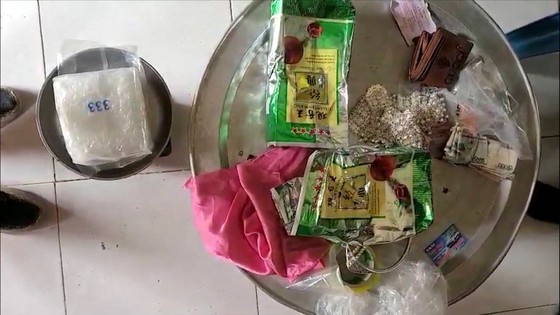 |
Drugs and related evidence were seized by the police. |
Source

![[Image] Hanoi's urban life under the challenge of a "scorching hot" environment](https://vphoto.vietnam.vn/thumb/1200x675/vietnam/resource/IMAGE/2026/05/25/1779706979265_nang-nong-t5-2026-minh-duy-7-4636-jpg.webp)


![[Image] Close-up view of the interchange connecting the two expressways and Long Thanh Airport.](https://vphoto.vietnam.vn/thumb/1200x675/vietnam/resource/IMAGE/2026/05/25/1779703378210_ndo_br_z7863716673926-224453a31600126cce10622af6290afd-4549-jpg.webp)













































































Comment (0)